
Darkness Element Overview
| Element | Tier | Polarity | Function | Energy Direction | Synergy | Opposition | Zodiac Expressions | Theme | Concept | Mythic Correspondence |
| Darkness | Prime | Masculine | Memory, protection, boundaries, containment | Inward and compressive | Nether | Light | Libra: Air + Darkness Taurus: Earth + Darkness Cancer: Water + Darkness | Gravitational Wisdom | Boundaries | Hades (Greek) Yama (Hindu/Buddhist tradition) Hel (Norse) Ereshkigal (Mesopotamian) |
The Element of Boundaries
Darkness is the power that determines what must be protected from exposure.
It contains what is fragile, conceals what is not yet ready to be revealed, and creates the boundaries through which identity, intimacy, memory, and inner life can remain intact. Darkness governs privacy, protection, caution, wisdom, reflection, nurture, secrecy, silence, restraint, and the human need to possess a space that does not belong to everyone.
But Darkness is not evil, corruption, sadness, or the simple absence of Light.
It does not exist merely to hide, frighten, suppress, or deny. Real Darkness can withhold, but it can also preserve. It can close a door, but it can also create sanctuary behind it. It can refuse exposure, but only because some truths lose their integrity when made available to every gaze.
Darkness asks a necessary question:
What must remain protected before it can safely become visible?
The Essence of Darkness
Every element changes reality in a different way.
Fire creates movement. Water creates connection. Air creates understanding. Earth creates structure. Light creates orientation. Darkness creates boundaries.
It determines where one thing ends and another begins.
It separates the private from the public, the trusted from the untested, the vulnerable from the invasive, and the sacred from the casually accessible. Where Light reveals significance, Darkness protects significance from being consumed, distorted, exploited, or exposed before it has developed enough strength to survive.
This is why Darkness is deeply connected to containment.
A seed grows underground before it breaks the surface. A child forms within the womb before entering the world. Grief often needs silence before it can become language. Trust requires time before it can justify access. Identity develops inwardly before it becomes stable enough to face judgment.
Darkness governs these hidden stages.
It understands that visibility is not always freedom. Sometimes visibility is pressure. Sometimes openness is exploitation disguised as honesty. Sometimes immediate revelation destroys the very process it claims to liberate.
At its highest expression, Darkness does not hide reality from consciousness.
It creates the protected conditions through which reality can mature without interference.
How Darkness Manifests
Darkness manifests through containment.
It enters exposure and begins determining what should be held back, protected, limited, absorbed, remembered, or given time. It notices where access has become entitlement, where vulnerability is being demanded rather than earned, and where constant visibility has begun eroding the integrity of what is visible.
Darkness rarely experiences the world as universally entitled to entry.
A thought may be true without belonging in every conversation. An emotion may be real without requiring immediate expression. A relationship may matter without becoming public. A wound may deserve care without becoming a spectacle. A person may be honest while still preserving parts of themselves that others have not earned the right to touch.
This does not mean Darkness always hides for healthy reasons.
It means Darkness instinctively understands that exposure creates consequence.
It struggles to trust environments where everything must be explained, displayed, shared, justified, or made available on demand. Where others may equate openness with authenticity, Darkness asks whether openness remains voluntary once refusal is punished.
Its movement is therefore both protective and selective.
Darkness does not destroy visibility.
It controls access to what visibility can reach.
The Inner Experience of Darkness
To experience life through Darkness is to feel that access carries responsibility.
Once someone enters your inner world, they can influence it. Once a truth becomes public, it cannot fully return to privacy. Once a boundary is crossed without consequence, future access becomes harder to regulate.
Darkness therefore notices what others do with what they are given.
It remembers who handled vulnerability carefully, who turned confidence into leverage, who respected silence without forcing explanation, and who treated another person’s private reality as material for entertainment, status, or control.
This creates a strong relationship with trust, but not necessarily with suspicion.
Suspicion assumes danger before enough evidence exists.
Darkness asks whether access has been earned.
It understands that trust should deepen through consistency rather than pressure. It may reveal itself slowly, not because nothing exists beneath the surface, but because too much exists to hand over carelessly.
Darkness often experiences emotion as something that must first be contained before it can be understood.
Where Light may name the truth and Water may express the feeling, Darkness creates a chamber around the experience. It allows grief, uncertainty, anger, memory, and instinct to exist without demanding immediate resolution.
This inner space can become profound.
It can also become imprisoning.
The difference depends on whether Darkness is protecting transformation or avoiding it.

The Gifts of Darkness
Containment
Darkness creates the space in which something can exist without being scattered.
It can hold powerful emotions without immediately discharging them, protect unfinished ideas from premature judgment, and prevent temporary states from controlling permanent decisions. This makes Darkness valuable during crisis, grief, conflict, caregiving, strategy, and any moment when reaction would create more damage than restraint.
Its containment is not merely suppression.
It is structural.
Darkness gives intensity a boundary strong enough to prevent it from consuming everything around it. It allows a person to say, “This is real, but it does not need to control this entire moment.”
Containment makes depth survivable.
Protection
Darkness guards what is vulnerable, valuable, private, or dependent.
It notices threats that may not announce themselves openly: manipulation hidden behind concern, curiosity disguised as intimacy, exploitation presented as opportunity, or pressure framed as love.
Healthy Darkness does not protect only through confrontation.
It protects through limits, distance, discretion, preparation, selective access, and the refusal to place fragile things where careless people can reach them.
Protection is Darkness made relational.
It does not merely ask whether something can survive.
It asks whether it should have been forced to survive that exposure in the first place.
Caution
Darkness slows entry until consequence has been considered.
It looks beyond immediate attraction, urgency, charm, fear, or excitement and asks what may be hidden beneath the surface. It notices inconsistencies, missing information, unexplained pressure, and situations where someone benefits from preventing careful thought.
Caution allows Darkness to resist being rushed into decisions that cannot easily be reversed.
It understands that urgency is sometimes real.
It also understands that manufactured urgency is one of the oldest methods of bypassing judgment.
Healthy caution does not refuse every risk.
It refuses to confuse speed with courage.
Wisdom
Darkness understands what has survived time, consequence, loss, and silence.
Its wisdom is rarely loud because it does not need every insight to become performance. It is built through observation, memory, restraint, experience, and the recognition that some truths cannot be understood before they have been lived.
Darkness knows that not every answer can be forced.
Some patterns reveal themselves only after repetition. Some people become clear only when they believe nobody is watching. Some consequences remain invisible until enough time has passed for their shape to emerge.
Wisdom allows Darkness to remain still long enough for reality to expose itself.
It does not always know immediately.
It knows how to wait without abandoning awareness.
Reflection
Darkness turns attention inward.
It creates distance from noise, expectation, performance, and social pressure so that experience can be examined without constant interference. Through reflection, Darkness recognizes motives, processes grief, revisits memory, learns from failure, and identifies what the outer world has been too loud to hear.
Reflection is not simply thinking more.
It is thinking beneath the first explanation.
Darkness asks what the reaction is protecting, which memory has been activated, what remains unsaid, and whether the current problem belongs entirely to the present.
Healthy reflection creates depth without losing movement.
It returns from the inner world carrying something useful.
Nurture
Darkness protects growth before growth becomes visible.
It understands how to create emotional shelter, preserve energy, maintain privacy, and care for what cannot yet defend itself. It nurtures through patience, consistency, quiet presence, and the ability to remain near pain without forcing it to become productive.
Darkness does not always nurture through words.
Sometimes it closes the door. Sometimes it prepares the room. Sometimes it remembers what someone cannot currently carry. Sometimes it allows a person to fall apart without making their vulnerability about the observer.
Its care is often lunar rather than solar.
It does not demand growth to prove itself immediately.
It protects the conditions in which growth becomes possible.

The Inversion of Darkness
Every elemental gift becomes dangerous when protection loses contact with life.
Darkness’s inversion begins when the desire to preserve what matters becomes the belief that safety can be achieved only through permanent closure.
Containment Becomes Secrecy
Distorted Darkness may hide not because something deserves protection, but because exposure would create accountability.
It can withhold relevant information, maintain double lives, manipulate through omission, or allow others to make decisions without access to truths that directly affect them.
The person no longer asks whether privacy protects integrity.
They ask whether concealment protects them from consequence.
Secrecy uses the language of boundaries while violating the reality of consent.
A boundary regulates access to what belongs to you.
Secrecy becomes corruption when it hides what another person has a legitimate right to know.
Protection Becomes Isolation
Protection becomes destructive when nothing is allowed close enough to matter.
Distorted Darkness may withdraw before trust can form, reject support before it can be tested, or interpret dependence of any kind as weakness. It can create a life so defended that betrayal becomes impossible only because intimacy has also become impossible.
The person may call this independence.
But independence still permits connection.
Isolation makes connection feel inherently unsafe.
The wall that once protected the inner world eventually prevents the inner world from receiving anything new.
Caution Becomes Prejudice
Caution becomes prejudice when uncertainty is resolved through assumption rather than evidence.
Distorted Darkness may judge entire people, groups, situations, or possibilities through fear inherited from previous harm. It treats unfamiliarity as threat, difference as instability, and one painful pattern as proof of a universal rule.
Because caution wants to prevent danger, it can become emotionally attached to being correct before reality has been examined.
The person no longer asks, “What should I watch carefully?”
They decide, “I already know what this is.”
Caution protects judgment.
Prejudice replaces it.
Wisdom Becomes Ignorance
Darkness can become so loyal to what experience has already taught that it refuses information capable of changing the lesson.
Past survival becomes unquestionable authority. Tradition becomes proof. Age becomes competence. Familiarity becomes truth.
Distorted Darkness may dismiss new evidence because it threatens the stability of an established worldview. It may confuse having witnessed many things with understanding every variation of them.
This is ignorance born not from emptiness, but from closure.
The person possesses knowledge.
They have stopped allowing knowledge to evolve.
Reflection Becomes Rumination
Reflection becomes rumination when inward attention no longer produces movement.
The same conversation is replayed, the same injury reinterpreted, the same possible outcome rehearsed, and the same unanswered question treated as if one more cycle will finally force certainty from it.
Distorted Darkness descends repeatedly without returning with anything new.
Thought becomes an enclosed room with no door.
The person may believe they are processing the experience, but processing changes the relationship with what happened.
Rumination only deepens the groove.
Nurture Becomes Smothering
Nurture becomes smothering when protection prevents autonomy.
Distorted Darkness may control the people it cares for, make danger appear larger than it is, discourage independence, or create emotional debts around the care it provides. It keeps others close by convincing them that the world outside the protective bond is too dangerous to face alone.
Love becomes surveillance.
Concern becomes interference.
Safety becomes dependence.
The person being nurtured is never allowed to become strong enough to leave the shelter.
Smothering does not merely protect vulnerability.
It preserves vulnerability because vulnerability guarantees continued access and control.

Signs Your Life Lacks Darkness
A life lacking Darkness does not always appear exposed.
It may appear open, social, transparent, courageous, productive, and emotionally expressive while quietly losing the ability to protect anything from outside access.
The absence of Darkness is not simply recklessness or extroversion.
It is the loss of a healthy relationship with privacy, restraint, boundaries, silence, reflection, and selective trust.
You may still possess an inner life.
You no longer control who enters it.
You Explain Yourself to People Who Have Not Earned an Explanation
Without Darkness, every misunderstanding can feel like an emergency.
You may overexplain your motives, defend private decisions, disclose personal history, or continue arguing with people who have already shown that they are committed to interpreting you unfairly.
The goal is often not communication.
It is the hope that perfect transparency will prevent judgment.
But some people do not misunderstand because information is missing. They misunderstand because their preferred interpretation serves them.
Darkness allows you to recognize when further explanation has stopped being honesty and become self-abandonment.
You Share Vulnerability Before Trust Exists
A lack of Darkness can create false intimacy.
You reveal deeply personal experiences quickly, confuse emotional intensity with connection, or treat someone’s willingness to listen as proof that they know how to protect what they hear.
The disclosure may feel liberating in the moment.
Later, you realize that access was granted before character was established.
Vulnerability is not automatically courageous.
Sometimes it is a desperate attempt to create closeness faster than closeness can safely develop.
Healthy Darkness does not make vulnerability impossible.
It gives vulnerability a gate.
You Cannot Say No Without Feeling Cruel
Without Darkness, boundaries feel like harm.
You may allow people to consume your time, energy, attention, money, space, or emotional capacity because refusal creates guilt. You mistake disappointment for injury and assume that another person’s negative reaction proves that your boundary was unfair.
This makes generosity unstable.
Care given without the freedom to refuse eventually becomes resentment.
Darkness understands that a boundary does not declare another person worthless.
It defines what access remains sustainable.
You Treat Privacy as Dishonesty
A lack of Darkness may make silence feel suspicious.
You believe that healthy relationships require total access, immediate disclosure, constant availability, or complete emotional transparency. When someone keeps a thought private, needs time alone, or refuses to discuss something before they are ready, you interpret the limit as rejection.
But intimacy is not the elimination of privacy.
It is the voluntary sharing of what remains privately owned.
Without privacy, disclosure loses meaning because nothing was truly chosen.
You React Before You Have Contained the Feeling
Without Darkness, emotion moves directly into action.
Anger becomes accusation. Fear becomes withdrawal. Attraction becomes commitment. Shame becomes confession. Anxiety becomes control.
The feeling may be real, but reality does not require immediate obedience.
Containment creates a space between experience and consequence.
When that space is absent, temporary states repeatedly create permanent damage.
You Trust Charm More Than Consistency
A life lacking Darkness often has weak gates.
You respond to promises, emotional intensity, confidence, urgency, social status, or apparent vulnerability without waiting to see whether behaviour remains consistent across time.
You may recognize warning signs and then explain them away because caution feels cynical, judgmental, or unkind.
But trust without observation is not innocence.
It is access without evaluation.
Darkness does not ask you to assume the worst.
It asks you to stop assuming the best before evidence exists.
You Have No Protected Inner Space
Your mind may be constantly occupied by other people’s opinions, messages, demands, expectations, content, and emotional states.
Silence feels uncomfortable. Solitude feels empty. Every private experience is quickly converted into conversation, content, explanation, or performance.
Nothing remains long enough inside you to become fully yours.
Without protected interiority, identity becomes reactive.
You begin discovering what you think only after hearing what everyone else thinks first.
You Cannot Rest Unless Everything Is Resolved
Darkness governs the ability to stop without completion.
When it is absent, unfinished problems remain mentally exposed. You continue analyzing, messaging, correcting, working, or planning because uncertainty feels unsafe unless immediate closure can be forced.
But many realities cannot be resolved on command.
Some answers require time. Some emotions require sleep. Some conflicts become clearer only after distance.
Rest is not denial.
It is temporary containment.
You Mistake Visibility for Worth
You may feel that unshared work, private growth, silent loyalty, invisible effort, or unrecognized transformation somehow matters less.
An experience becomes real only once witnessed. An achievement becomes valuable only once acknowledged. A boundary feels legitimate only when others approve of it.
Healthy Darkness understands that some of the most important changes occur without an audience.
Roots do not become meaningless because nobody applauds them underground.
You Cannot Protect What Depends on You
Without Darkness, compassion may remain emotionally sincere but structurally weak.
You care deeply, yet fail to create limits around harmful people, unstable environments, exploitative systems, or recurring patterns. You hope kindness will change what requires containment.
Protection occasionally demands discomfort.
It may require closing access, disappointing someone, maintaining confidentiality, leaving a situation, or becoming temporarily misunderstood.
Love that cannot create a boundary cannot reliably keep anything safe.
You Fear Silence Because It Reveals What Noise Conceals
Constant stimulation can become a defence against reflection.
You fill every pause with media, conversation, work, conflict, fantasy, or planning because silence allows unresolved feelings to become audible.
The problem is not that nothing exists in the quiet.
Too much exists there.
Darkness is absent when you cannot enter your own inner world without immediately needing escape.
How to Integrate and Master Darkness
Darkness is not mastered by becoming secretive, emotionally distant, suspicious, unavailable, or impossible to understand.
It is mastered by building a disciplined relationship with access.
Integration begins when privacy stops being avoidance and becomes conscious protection. You learn to contain without suppressing, guard without controlling, question without prejudging, reflect without becoming trapped, and nurture without preventing independence.
Mastery does not mean closing every door.
It means knowing which doors should exist, who may enter them, and when they must open again.
Define What Is Private, Shared, and Public
Many boundary failures begin because these categories have never been consciously separated.
Private experiences belong primarily to you. Shared experiences involve people who have earned access or are directly affected. Public information can be exposed without violating the integrity of anyone involved.
Integrating Darkness requires deliberate classification.
Does this truth belong only to me?
Does another person have a legitimate right to know?
Would sharing this create understanding, or merely attention?
Am I revealing someone else’s private reality to regulate my own emotions?
A healthy inner life is not built by hiding everything.
It is built by deciding what belongs where.

Learn the Difference Between Privacy and Secrecy
Privacy protects ownership.
Secrecy conceals responsibility.
You are entitled to thoughts, emotions, memories, plans, creative processes, and personal experiences that remain inaccessible until you choose otherwise. You are not entitled to withhold information that another person needs in order to give informed consent, protect themselves, or understand a reality that directly affects them.
This distinction is central to mature Darkness.
“I am not ready to discuss this” can be a boundary.
“This does not concern you” becomes manipulation when the concealed truth materially shapes another person’s life.
Darkness must protect integrity, not deception.
Build Boundaries Before Resentment Builds Them for You
A boundary created early can remain calm.
A boundary created after repeated violation often arrives as anger, disappearance, punishment, or total closure.
Notice the smaller moments when discomfort begins.
The request you do not want to accept.
The conversation you do not have capacity for.
The behaviour you keep excusing.
The access that feels increasingly invasive.
Do not wait until the only remaining option feels extreme.
Healthy Darkness speaks before silence hardens into hostility.
Contain Emotion Before Expressing It
Containment does not require pretending that the feeling is absent.
Name it privately. Allow it to exist. Notice its physical intensity, its assumptions, and the action it wants you to take.
Then create time.
Ask whether the feeling needs expression, action, information, rest, or simply permission to pass.
A contained emotion can still be powerful.
It is no longer driving without supervision.
Let Trust Develop Through Evidence
Do not demand certainty before allowing any connection.
But do not grant deep access because connection feels promising.
Observe whether words remain consistent with behaviour. Notice how someone responds to limits, disappointment, inconvenience, confidentiality, and the absence of immediate reward.
Character often becomes visible when access is denied.
A person who respects your boundary while disliking it is safer than someone who celebrates your openness but punishes your refusal.
Trust should not be based only on how someone behaves when receiving what they want.
Practise Strategic Silence
Not every accusation requires defence.
Not every provocation deserves reaction.
Not every misunderstanding must be corrected.
Not every thought becomes more valuable once spoken.
Before responding, ask what the response will actually change. Silence should not be used to manipulate, punish, or avoid necessary conversation. But speech should not be used compulsively to discharge discomfort.
Strategic silence allows reality to reveal what argument often conceals.
People show more when they are not constantly given material to react against.
Reflect Toward Resolution
Reflection requires a direction.
Ask what you are trying to understand, what new information remains available, and what decision becomes possible once enough has been considered.
When thought begins repeating without producing insight, move the process outward.
Write the pattern down. Speak with someone trustworthy. Identify the action under your control. Accept that some questions may remain unanswered.
Reflection descends to retrieve meaning.
Rumination descends because it has forgotten how to return.
Nurture Strength, Not Dependence
Care should gradually increase another person’s capacity to exist without constant rescue.
Protect what is vulnerable, but do not make vulnerability permanent. Offer shelter, guidance, consistency, and reassurance while still allowing challenge, consequence, learning, and autonomy.
Ask whether your care helps the person become more capable.
Or whether it makes you feel more necessary.
Healthy nurture prepares growth for exposure.
Smothering keeps growth underground because the protector cannot tolerate being outgrown.
Make Solitude Productive Rather Than Punitive
Solitude can restore identity, process emotion, and protect attention.
Isolation uses absence to avoid risk.
Build forms of solitude that return you to life with greater clarity. Read, create, walk, reflect, rest, plan, pray, meditate, or simply remain unobserved long enough for your nervous system to stop performing.
Then return.
Darkness should create a sanctuary, not a permanent exile.
Protect Energy Without Worshipping Comfort
Boundaries are not designed to remove every difficult experience.
Some discomfort is necessary for intimacy, responsibility, growth, accountability, and meaningful work. Darkness becomes immature when it protects the self from any situation capable of challenging it.
Ask whether the boundary protects your integrity or merely protects your habits.
A sanctuary should restore your strength.
It should not become a place where your limitations remain unquestioned.
Examine Fear Before Calling It Intuition
Darkness often perceives what remains unspoken, but past harm can imitate perception.
When caution arises, ask what evidence belongs to the present and what expectation belongs to memory. Notice whether the concern is specific or universal, observable or symbolic, proportionate or absolute.
Intuition may say, “Something here deserves attention.”
Fear says, “Everything similar will end the same way.”
Wisdom investigates the difference.
Allow Light to Enter What Darkness Has Preserved
Some truths need protection before exposure.
They do not need protection forever.
A feeling eventually needs language. A wound eventually needs treatment. A secret affecting others eventually needs accountability. An idea eventually needs testing. A person eventually needs to leave the shelter.
Mastered Darkness knows when concealment has completed its purpose.
It opens deliberately rather than being forced open by collapse.
Measure Mastery Through Selective Openness
The clearest sign that Darkness is becoming integrated is not that fewer people know you.
It is that access reflects trust, context, responsibility, and genuine choice.
You disclose less impulsively but more honestly.
You protect others without controlling them.
You notice danger without inventing it.
You can be alone without becoming unreachable.
You can receive help without feeling conquered.
You know when silence preserves dignity and when silence protects dysfunction.
Darkness is mastered when your boundaries no longer exist merely to keep life out.
They create a stable inner world capable of choosing what it lets in.

Immature Darkness
Immature Darkness wants to remain untouchable.
It uses privacy as an identity, distance as control, silence as punishment, and suspicion as proof of intelligence. It may withhold affection, information, intention, or vulnerability to prevent others from possessing any power over it.
Its deepest fear is not always betrayal.
It is dependence.
Immature Darkness believes that needing another person creates a weakness they will eventually exploit. It therefore attempts to preserve control by becoming unreadable, inaccessible, or emotionally self-contained.
But unreadability is not depth.
Sometimes it is fear refusing language.
Immature Darkness wants protection without risk, loyalty without vulnerability, intimacy without exposure, and care without surrendering any part of its independence.
It creates a fortress and then mistakes the absence of intruders for peace.
Mature Darkness
Mature Darkness no longer needs to hide in order to feel powerful.
It understands that privacy is strongest when it can be chosen rather than defended compulsively. It knows that boundaries do not require hostility, trust does not require blindness, and vulnerability does not require total exposure.
Mature Darkness can protect what matters without treating the entire world as a threat.
It can recognize danger without becoming prejudiced by fear. It can remain silent without using silence to control. It can carry another person’s vulnerability without claiming ownership over them.
Most importantly, mature Darkness knows when to open.
It asks:
Am I protecting something that is still developing, or avoiding what is already ready?
Does this boundary preserve integrity, or prevent intimacy?
Am I being cautious because evidence requires it, or because memory demands it?
Would I still conceal this truth if concealment stopped protecting me from accountability?
Mature Darkness does not merely survive behind its boundaries.
It becomes safe enough that others can lower theirs.
What Darkness Needs
Darkness needs privacy, but not permanent concealment.
It needs physical, emotional, and psychological spaces where observation stops and performance becomes unnecessary. Without this space, Darkness may become irritable, guarded, exhausted, or increasingly secretive in an attempt to recover control.
Darkness also needs trustworthy consistency.
It does not respond well to people who demand access before demonstrating responsibility. Pressure, interrogation, emotional volatility, public exposure, and shifting standards teach Darkness to close more tightly.
At the same time, Darkness needs invitations back into connection.
If nobody challenges its withdrawal, protection can quietly become isolation. Healthy relationships respect the closed door while still making it clear that the person behind it remains wanted.
Darkness needs time.
It processes experience slowly because it examines what exists beneath immediate appearance. Demanding instant decisions, emotional answers, forgiveness, trust, or vulnerability can produce compliance without genuine resolution.
It also needs Light.
Without moments of honest exposure, Darkness loses the ability to distinguish protection from avoidance. What remains permanently hidden cannot be tested, corrected, understood, or integrated.
Finally, Darkness needs evidence that boundaries can coexist with love.
It must learn that the right people do not require unrestricted access in order to remain.
Darkness in Relationships
Darkness expresses love through protection.
It wants to create a bond where vulnerability is not punished, private information is not weaponized, and the relationship becomes a shelter rather than another source of exposure.
It often shows care by remembering what another person cannot currently carry, defending them when they are absent, preserving confidentiality, noticing hidden discomfort, and creating a stable place to return to.
At its best, Darkness makes people feel safe.
Not because nothing difficult can happen, but because difficulty will not automatically become abandonment, humiliation, or public spectacle.
However, Darkness can struggle when love requires visible reassurance.
It may believe that loyalty should be understood without constant expression. It may protect the relationship privately while failing to communicate enough for the other person to feel emotionally included.
Its silence can feel secure internally and uncertain externally.
Darkness also takes betrayal seriously.
Broken confidentiality, public humiliation, emotional exploitation, and deliberate boundary violations damage its trust more deeply than ordinary disagreement. It may forgive the event intellectually while permanently changing the level of access the person receives.
In conflict, Darkness often withdraws before speaking.
It wants to contain emotion, examine motive, and prevent irreversible words. This can be healthy when the withdrawal has a clear purpose and return.
It becomes destructive when silence is indefinite, punitive, or used to make the other person feel powerless.
The healthiest relationships for Darkness allow both privacy and transparency.
Nobody receives automatic access to everything.
But nobody is forced to build intimacy with a locked door that never opens.
Darkness in Work and Creation
Darkness is naturally drawn toward work that requires protection, discretion, strategy, depth, preservation, investigation, care, or controlled access.
It may appear through psychology, security, research, archives, law, medicine, crisis management, confidential advisory roles, editing, risk analysis, design, finance, conservation, caregiving, investigation, governance, or any role where what is unseen matters as much as what is displayed.
Darkness-led creators often protect the work while it develops.
They may resist sharing unfinished ideas, allowing external opinion to enter before the internal structure becomes stable. Their creative process can be private, immersive, symbolic, and emotionally layered.
They are rarely interested only in what appears on the surface.
They want to understand what the surface conceals.
As a leader, Darkness creates boundaries.
It controls access, anticipates risk, protects the vulnerable, preserves institutional memory, and recognizes which information must remain confidential. Healthy Darkness understands that leadership includes shielding people from pressures they should never have been required to absorb.
Unhealthy Darkness leadership becomes opaque.
It centralizes information, withholds context, rewards unquestioning loyalty, and treats accountability as a threat to authority. Protection becomes secrecy around power.
Darkness works best when confidentiality has purpose, authority has limits, and private decisions remain answerable to legitimate oversight.
Darkness Under Stress
Darkness initially responds to stress by closing access.
It becomes quieter, more observant, more selective, and more focused on controlling what can enter or leave the situation. This can create remarkable stability during crisis because Darkness does not discharge every fear into the environment.
But when the threat remains unresolved, Darkness may become increasingly guarded.
It begins interpreting questions as intrusion, support as pressure, unfamiliarity as danger, and dependence as loss of control. It stores emotion rather than processing it and creates distance before anyone else can create pain.
If the pressure continues, Darkness may turn containment into disappearance.
It isolates, withholds, ruminates, and constructs explanations that cannot be challenged because nobody is allowed close enough to examine them. Protection becomes a closed system.
Recovery begins when Darkness identifies one safe point of contact.
Not total exposure.
Not forced confession.
One controlled opening.
A trusted conversation. A written truth. A clear boundary. A request for support. A private admission that the current protection has stopped working.
Darkness recovers by allowing something contained to move.
Not explode.
Not vanish.
Move.
The Growth Path of Darkness
Darkness must learn that safety cannot be created through control alone.
It must learn that vulnerability is not always surrender, privacy is not always virtue, and caution is not automatically wisdom. A boundary that prevents every possibility of injury will also prevent every possibility of intimacy.
Darkness must also surrender the fantasy of complete self-sufficiency.
Nobody develops entirely alone. Nobody sees every blind spot from inside the same protected chamber. Nobody can be nurtured without eventually needing something beyond their own resources.
The purpose of boundaries is not to eliminate dependence.
It is to make dependence selective, conscious, and mutual.
Darkness reaches maturity when it stops asking, “How do I prevent anyone from gaining power over me?” and begins asking, “What form of access allows trust without abandoning myself?”
That shift changes everything.
Secrecy becomes privacy.
Isolation becomes sanctuary.
Prejudice becomes caution.
Ignorance becomes wisdom.
Rumination becomes reflection.
Smothering becomes nurture.
Darkness stops treating every opening as a breach.
It becomes the boundary through which meaningful exchange can occur.
How Darkness Differs from Similar Elements
Darkness Is Not Water
Water creates emotional connection. Darkness regulates emotional access.
Water feels, responds, bonds, adapts, and moves toward what resonates. Darkness contains feeling until it can be safely understood, protected, or shared.
Water may dissolve boundaries through empathy.
Darkness maintains the boundaries that prevent empathy from becoming emotional absorption.
Without Darkness, Water can become overwhelmed.
Without Water, Darkness can protect the heart so effectively that the heart stops reaching outward.
Darkness Is Not Earth
Earth creates stability through structure. Darkness creates safety through boundaries.
Earth asks what can endure materially, practically, and consistently. Darkness asks what must remain protected, private, or inaccessible for that endurance to remain meaningful.
Earth builds the house.
Darkness determines who receives a key.
Earth can remain stable through exposure.
Darkness preserves what stability alone cannot protect from intrusion.
Darkness Is Not Nether
Nether transforms through confrontation, rupture, ambition, instinct, and the destruction of what can no longer remain unchanged.
Darkness preserves, contains, shelters, and delays exposure until change can be survived.
Nether enters the wound to force transformation.
Darkness closes around the wound to prevent further damage.
Without Darkness, Nether can destroy what was not ready to be remade.
Without Nether, Darkness may preserve what should have been allowed to end.
Balanced Darkness
Balanced Darkness contains without suppressing.
It protects without isolating, questions without prejudging, reflects without ruminating, nurtures without smothering, and preserves privacy without using secrecy to avoid responsibility.
It understands that access should be earned but not made impossible.
It recognizes that safety has both internal and relational dimensions. A person must be able to protect themselves, but they must also become capable of recognizing people with whom protection can soften.
Balanced Darkness does not hide because it is ashamed of what exists within.
It protects what is valuable until sharing becomes meaningful.
Three Expressions of Darkness Through the Zodiac
Darkness does not express itself identically through every sign it influences.
In Cancer, Darkness is enclosed within Water and becomes sanctuary.
In Taurus, Darkness is anchored through Earth and becomes preservation.
In Libra, Darkness is filtered through Air and becomes discretion.
Each sign reveals a different relationship with boundaries: Cancer becomes the shelter, Taurus becomes the vault, and Libra becomes the veil.
Together, they reveal three essential movements of Darkness: becoming protected, becoming secure, and becoming selectively accessible.
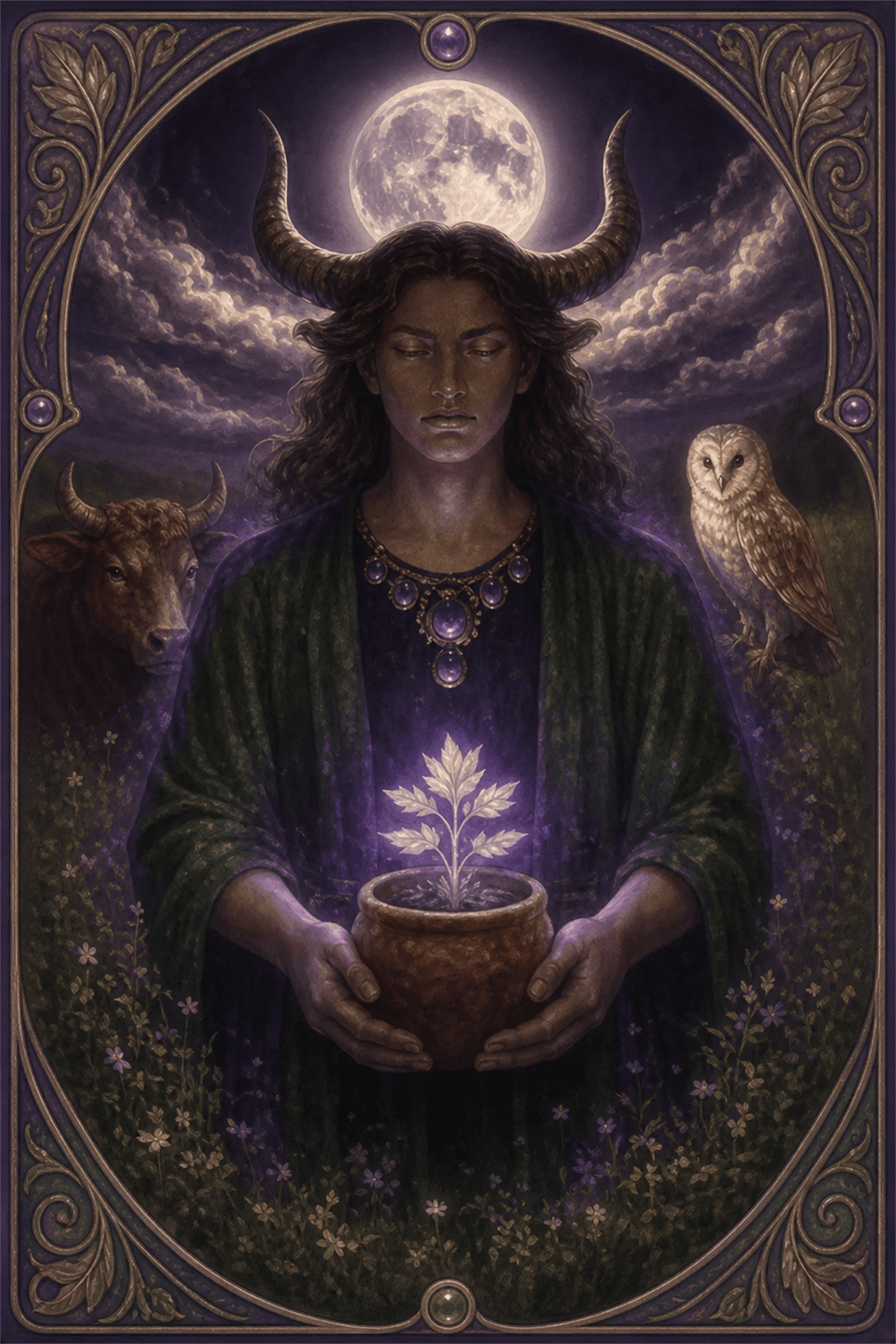
Taurus: Earth Anchors Darkness
In Taurus, Darkness becomes preservation.
Taurus carries Darkness through Earth—the force of stability, embodiment, material reality, continuity, and enduring value. What Taurus considers precious is not left exposed to every changing influence. It is secured, maintained, guarded, and given a stable form.
Taurus anchors Darkness like soil covering roots or stone protecting a chamber.
Its boundaries are tangible.
Time, property, money, home, body, comfort, routine, and personal values become territories through which security is created. Taurus understands that what is not maintained can be lost, and what is not protected may eventually be consumed by those who value access more than responsibility.
Through Taurus, Darkness becomes the vault.
Not merely a place where things are hidden, but a place where value survives.
This combination can preserve traditions, resources, commitments, environments, relationships, and forms of beauty that would otherwise be discarded in the pursuit of novelty.
At its best, Taurus creates dependable safety. Its presence tells others that what matters will not be abandoned merely because difficulty, fashion, or pressure has changed.
At its worst, preservation becomes possession. Boundaries harden into control, security becomes stagnation, and what is protected is denied the freedom to evolve.
Mature Taurus does not keep something merely because it has always belonged there.
It protects what remains alive enough to deserve continuity.
Taurus is the vault that preserves. Taurus anchors Darkness around what has value.
Its question is:
What must be preserved so that it cannot be consumed or lost?
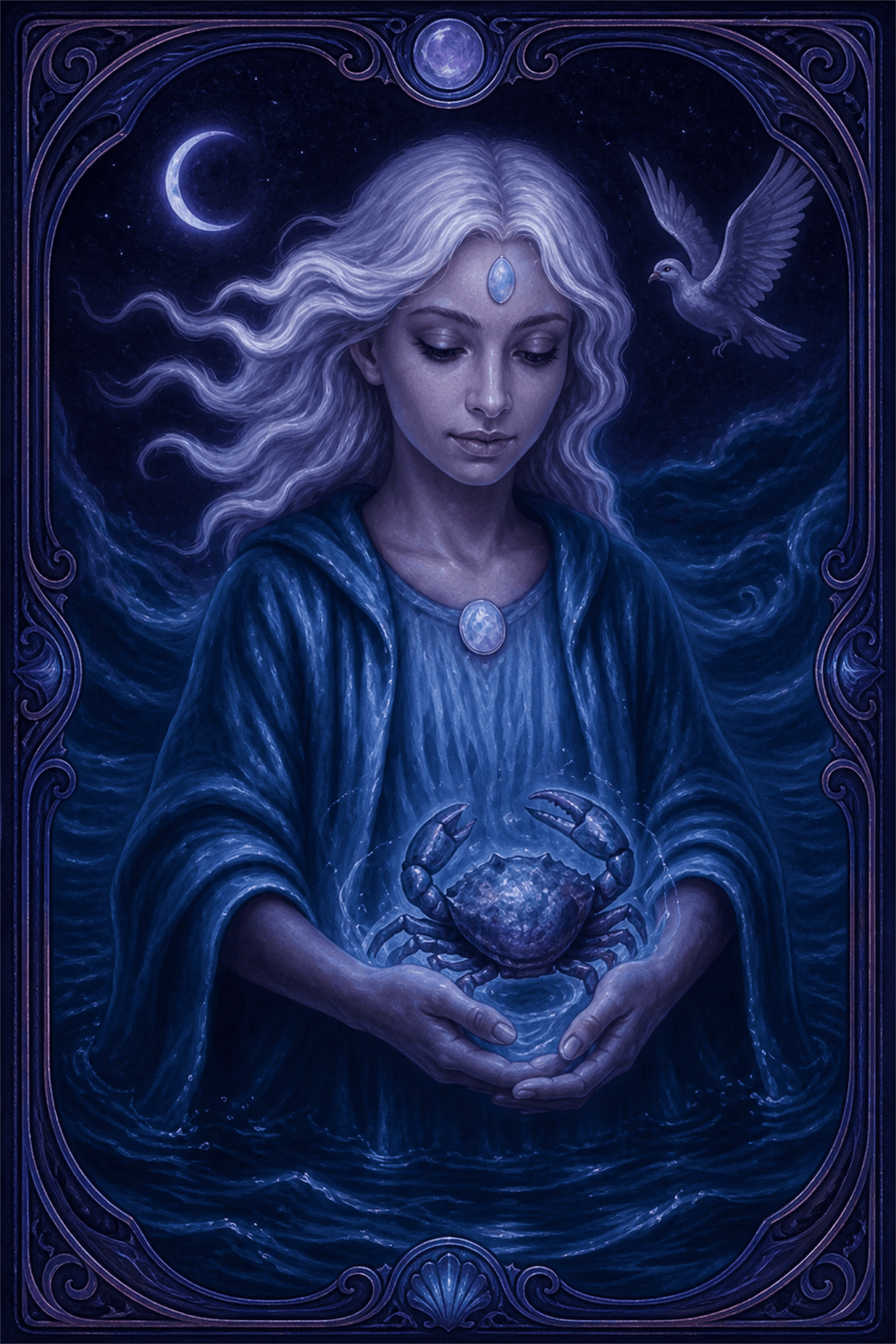
Cancer: Water Encloses Darkness
In Cancer, Darkness becomes sanctuary.
Cancer carries Darkness through Water—the force of emotion, memory, attachment, empathy, and instinctive connection. What Cancer feels is not immediately exposed. It is drawn inward, surrounded, remembered, and protected within an emotional interior that functions like a shell around living softness.
Cancer contains Darkness as the sea contains its hidden depths.
Its boundaries are emotional rather than merely physical. It senses who feels safe, which environments allow vulnerability, and when something fragile needs shelter rather than explanation.
This is why Cancer’s Darkness often feels intimate rather than distant.
It does not hide because it lacks feeling.
It hides because feeling is abundant enough to require protection.
Through Cancer, Darkness becomes home.
A room where someone can stop performing. A memory kept alive through care. A bond protected from public interference. A family, chosen or inherited, held together by loyalty that continues when visibility disappears.
At its best, Cancer creates sanctuary without imprisonment. Its protection allows people to recover, feel, grieve, and become strong enough to return to the world.
At its worst, protection becomes emotional enclosure. Care becomes control, memory becomes resentment, and the shelter becomes a place nobody is allowed to leave without being accused of betrayal.
Mature Cancer does not protect people from becoming independent.
It protects the place to which they can return without losing that independence.
Cancer is the shelter that encloses. Cancer carries Darkness around the emotional self.
Its question is:
What needs sanctuary before it can safely feel?
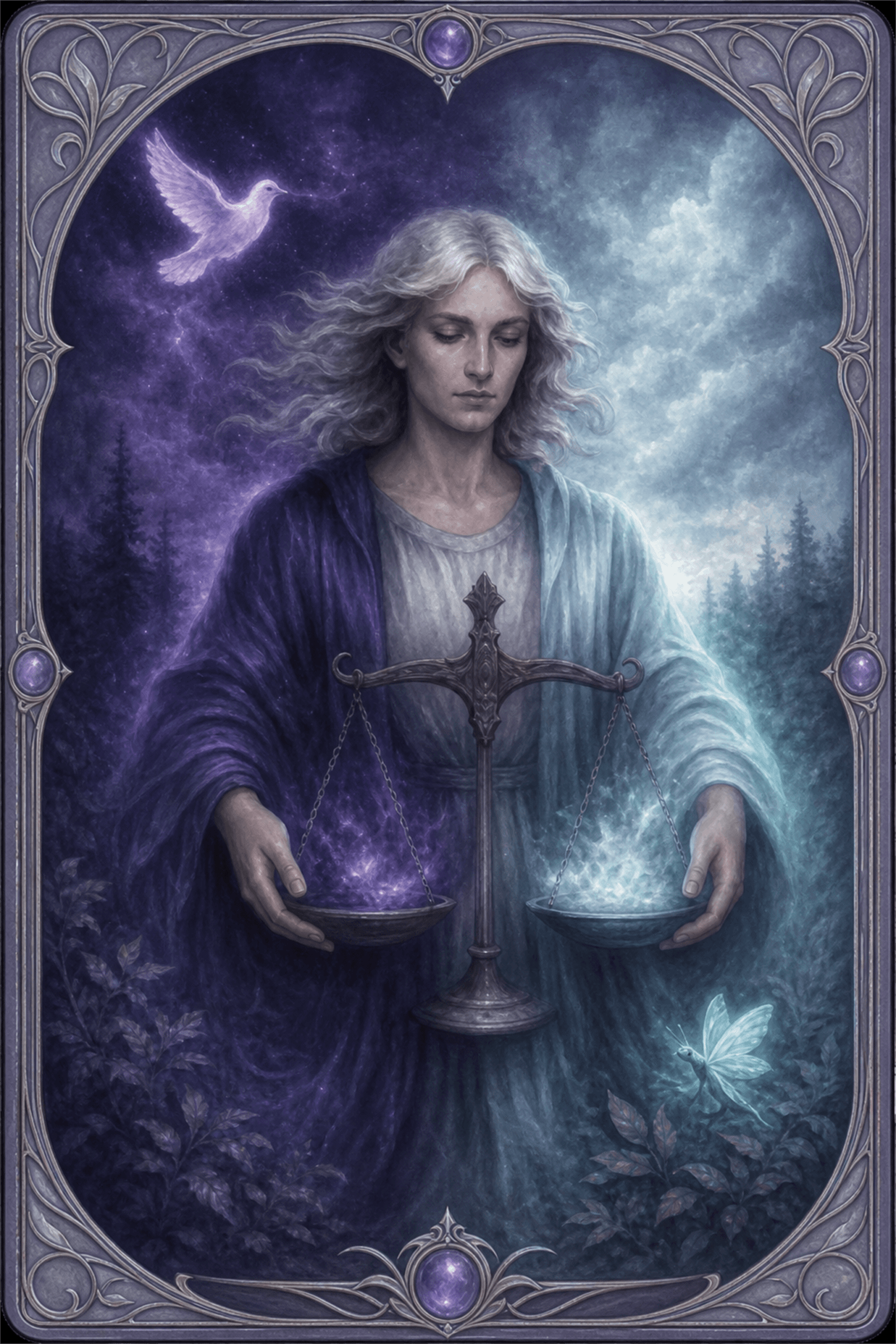
Libra: Air Filters Darkness
In Libra, Darkness becomes discretion.
Libra carries Darkness through Air—the force of thought, language, perspective, exchange, and social awareness. But unlike Gemini’s open circulation of information, Libra filters what enters the relational field.
It recognizes that not every truth belongs in every space, not every thought improves a conversation, and not every private reality should become public material.
Libra carries Darkness as a veil.
Not a wall that ends connection, but a controlled layer between inner truth and social exposure. It decides what can be communicated, how much can be revealed, and which form of expression preserves dignity without abandoning honesty.
Through Libra, Darkness becomes social boundary.
Tact. Confidentiality. Diplomacy. The ability to protect another person’s dignity even while disagreeing with them. The instinct to prevent private conflict from becoming public humiliation.
At its best, Libra creates relational safety through discretion. It allows difficult truths to be spoken without unnecessary cruelty and preserves the privacy necessary for trust between people.
At its worst, discretion becomes avoidance. The veil hides resentment, conflict remains unnamed, appearance replaces sincerity, and secrecy protects harmony only on the surface.
Mature Libra does not preserve peace by preventing truth from entering.
It gives truth a form the relationship can survive.
Libra is the veil that filters. Libra filters Darkness through relationship.
Its question is:
What should remain private so that dignity and trust can survive?
Symbols of Darkness
Darkness is symbolically connected with the moon, night, caves, closed doors, veils, shadows, obsidian, black stone, deep water, roots, wombs, shells, locked chests, sealed letters, private rooms, winter soil, eclipses, protective circles, and every threshold that controls passage between the exposed world and what lies within.
Its symbols are not merely hidden.
They preserve.
A cave does not erase what enters it. It shelters it from the surface.
A shell does not hate the ocean. It gives softness a form capable of surviving inside it.
The night does not destroy the landscape.
It removes the demand that everything remain visible at once.
Common Misunderstandings About Darkness
Darkness is not evil.
Harm can operate in darkness, but concealment can also protect what harm would exploit.
Darkness is not depression.
It can be quiet, restorative, intimate, fertile, and deeply alive.
Darkness is not dishonesty.
Privacy preserves ownership. Dishonesty manipulates another person’s understanding of reality.
Darkness is not emotional coldness.
Some of the deepest care is expressed through protection rather than display.
Darkness is not automatic wisdom.
Silence can hold insight, but it can also conceal fear, ignorance, or avoidance.
Darkness is not the destruction of Light.
Some protected things eventually need revelation.
Darkness is the capacity to preserve what must not be carelessly exposed.
Nothing more.
Nothing less.
The Legacy of Darkness
Darkness is not remembered merely for what it concealed.
Many people hide things that should have been confronted.
Its true legacy begins when concealment becomes preservation—when a vulnerable person remained safe, when an unfinished truth received enough time to mature, when a private confidence was carried without betrayal, or when a boundary prevented something sacred from becoming available to those who would have consumed it carelessly.
Darkness leaves behind the home where someone was allowed to recover.
The secret that remained protected because it belonged to no public audience.
The warning that prevented avoidable harm.
The memory that survived because somebody refused to let it be erased.
The relationship that became safe enough for honesty because not everything was demanded at once.
Immature Darkness wants to remain inaccessible.
Mature Darkness wants what is valuable to remain intact, even when preservation eventually requires letting it leave the shelter.
That is the final evolution of boundaries.
The need to control access gives way to the wisdom to regulate it. Suspicion becomes caution. Silence becomes reflection. Withdrawal becomes sanctuary. Protection stops imprisoning life and begins preparing life for meaningful exposure.
Darkness has completed its work when what entered fragile can leave with its integrity preserved.
It no longer needs the shelter because the shelter allowed it to become strong.
Learn More About Your Elemental Nature
Your Octa Element Chart reveals the elemental force operating at the centre of your identity, how it expresses when balanced, how it distorts under pressure, and what mastery of that pattern may require.