
Discover the Eight Elements Within You

Octa Element Framework

Eight Elements. Eight Aspects. One Unique You.

Who are you when nobody is watching?

You know the person you present to the world. You know your ambitions, your strengths, and the qualities you are proud to call your own. But how well do you know the parts of yourself you have learned to hide?

Your fears, contradictions, defensive instincts, suppressed desires, and the uncomfortable patterns that emerge when life pushes you beyond your limits are just as much a part of your personality as your greatest virtues.

The Octa Element Resonance Test explores eight fundamental psychological forces across eight aspects of your personality, revealing the symbolic architecture of both your conscious identity and the shadow beneath it.

Take eight slow, deliberate breaths, as though preparing for a small ritual of self-discovery. Then answer honestly, without overthinking or trying to impress an imaginary audience. Follow your instincts, even when the answers are uncomfortable.

Because the parts of yourself you refuse to acknowledge may hold the potential you have yet to discover.

88
Questions
~31
Minutes
8 elements

8

Fundamental Elements

8 archetypal elements aspects

8

Archetype Aspects

Balanced vs Inverted state

2

States of Balance

Discover the light you recognise and the shadow you keep hidden.


Your personality is not a single collection of positive traits. It is an evolving relationship between different psychological forces, each capable of expressing itself constructively or becoming distorted under pressure.

The Octa Element Framework explores these forces through eight archetypal dimensions, helping you examine how your conscious identity, learned behaviours, emotional needs, ambitions, and suppressed tendencies interact.

How It Works

Your journey into the architecture of the self.

1

Prepare Yourself

Find a quiet moment where you can reflect without distractions. Approach the assessment with curiosity rather than judgment, and remember that recognising an uncomfortable truth about yourself is more useful than giving an answer that makes you look admirable.

There are no morally superior elemental profiles. Honesty gives the reflection its value.

2

Complete the Octa Quiz

Answer 88 questions exploring your instincts, emotional reactions, relationships, ambitions, values, vulnerabilities, and behaviour under pressure.

Some questions may challenge the image you hold of yourself. Resist the temptation to answer as the person you believe you should be. Your shadow is rarely visible when you are busy polishing your reflection.

3

Discover Your Personality

Explore your eight-aspect elemental profile and examine how different forces may influence your conscious behaviour and less acknowledged tendencies.

Discover where your strengths support you, where they may become distorted, and which parts of yourself deserve greater awareness, understanding, and integration.

What You May Discover

Your Elemental Identity

Understand the forces behind who you believe yourself to be.

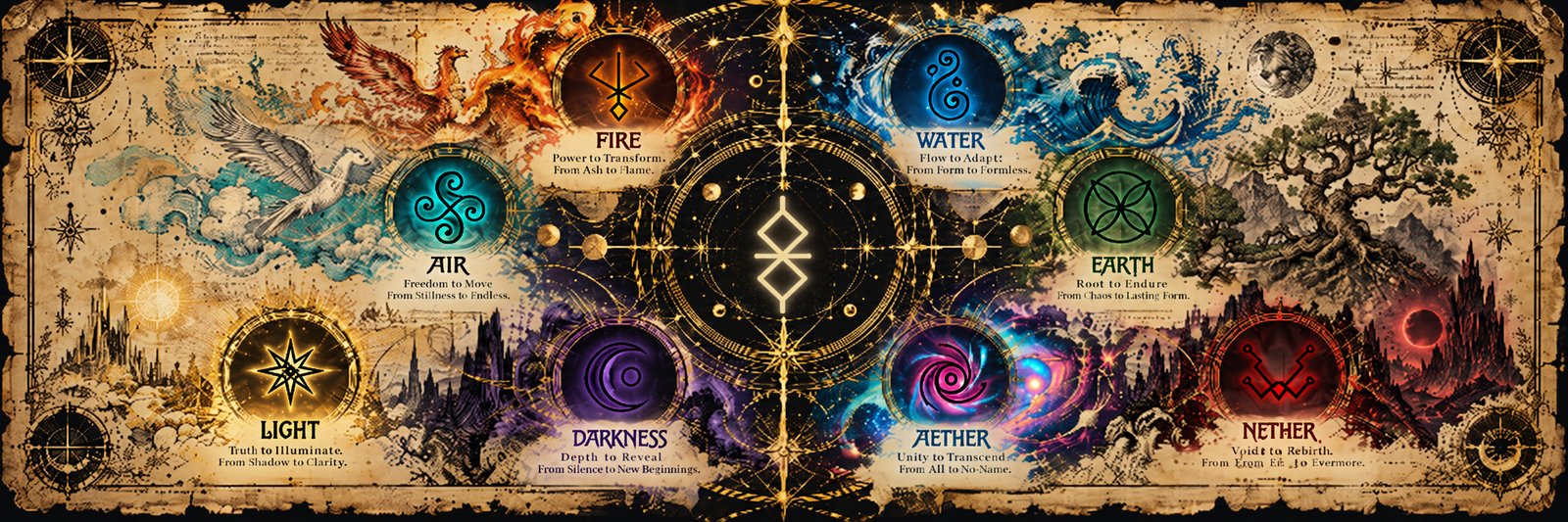
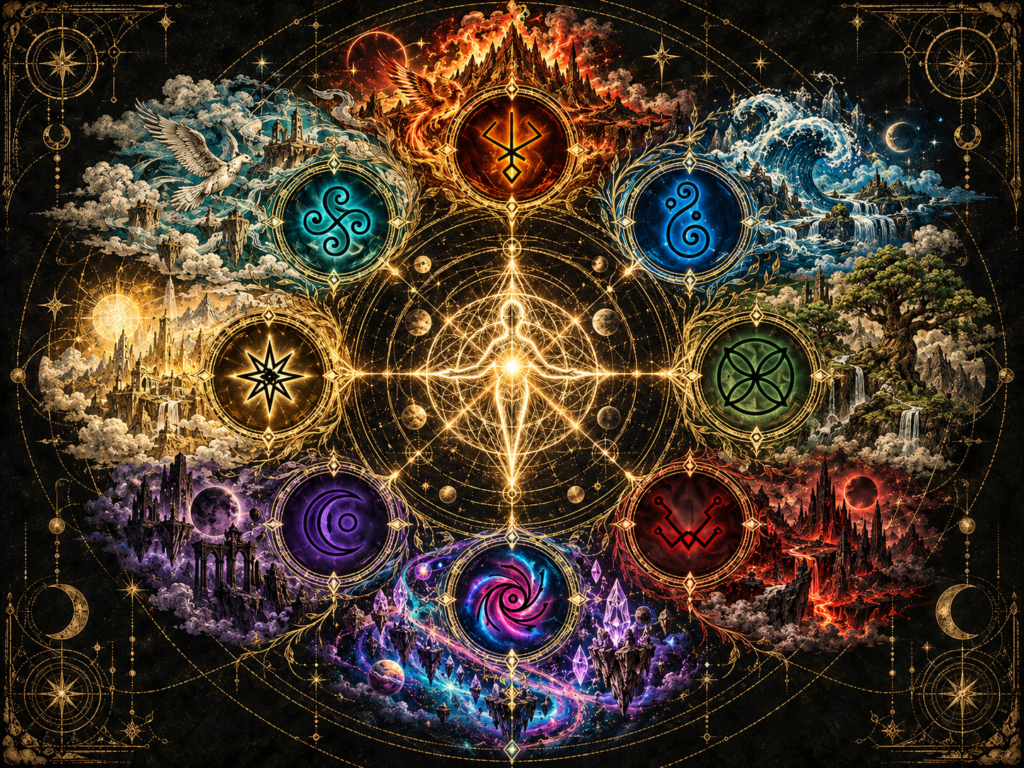
Explore how Fire, Water, Air, Earth, Light, Darkness, Nether, and Aether appear throughout your personality. Discover the symbolic forces associated with your natural drives, emotional tendencies, thought patterns, values, and responses to life’s challenges.

Your strongest element may describe something familiar. The others may help you recognise parts of yourself you have overlooked.

Your Eight Archetypal Aspects

You are more than the face you show the world.

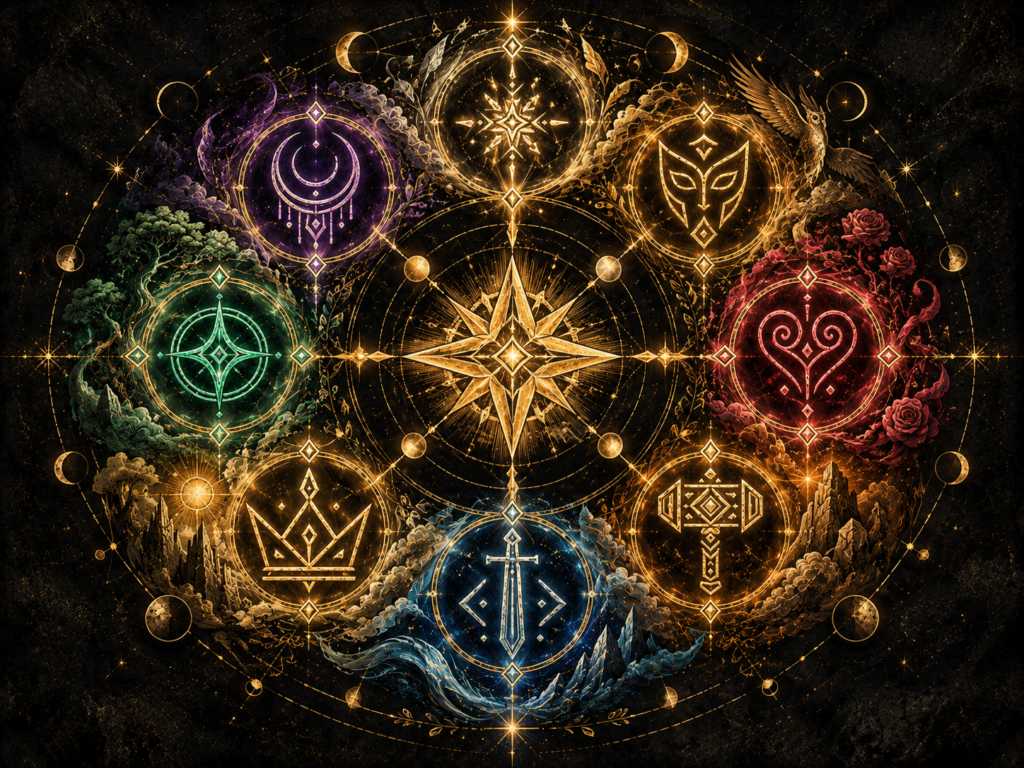
Explore eight psychological dimensions, from the Spark that ignites your identity and the Mask you have learned to wear, to the Heart that seeks connection and the Shadow that carries what you struggle to acknowledge.

These aspects provide different perspectives on your behaviour, revealing how the person you present to others may differ from the one experiencing life beneath the surface.

Your Strengths and Their Shadows

Every virtue carries the possibility of corruption.

Courage can become impulsiveness. Compassion can become self-sacrifice. Discipline can harden into rigidity, while the desire for clarity can become an inability to tolerate uncertainty.

Discover how the same elemental tendencies may support your development or create difficulties when exaggerated, suppressed, or expressed without awareness.

Your Hidden Relationship Patterns

What you refuse to face within yourself can follow you into your relationships.

Explore how attachment, vulnerability, boundaries, emotional protection, and defensive reactions may influence your connections with others.

Recognise patterns that could contribute to repeated misunderstandings, conflict, withdrawal, or unhealthy attachment, and reflect on the emotional needs that may exist beneath them.

Your Shadow Work and Personal Growth

Self-awareness begins where self-justification ends.

Explore the aspects of yourself that may be difficult to accept: the emotions you suppress, the habits you rationalise, the vulnerabilities you conceal, and the reactions that appear when your usual sense of control begins to fracture.

Your profile offers a starting point for conscious reflection, helping you question familiar patterns and consider how rejected qualities might be understood and expressed more constructively.

Have You Ever Wondered What Your True Element Is?

Perhaps you have always identified with Fire because you recognise your ambition, intensity, and refusal to surrender. Perhaps Water feels closer to your nature because your emotional world runs deeper than most people realise. You may recognise yourself in the intellect of Air, the endurance of Earth, or the more mysterious symbolism of Light, Darkness, Nether, and Aether.

But what happens when the element you identify with most describes only the personality you have learned to recognise?

Someone who prides themselves on independence may still carry a profound fear of abandonment. A person celebrated for their kindness may suppress resentment until compassion becomes exhaustion. Someone who values discipline may use productivity to avoid vulnerability, while a seemingly rational individual may intellectualise emotions they have never learned to process.

Human personality contains contradictions. We may defend values we struggle to practise, reject traits we secretly admire, and condemn behaviours in others that remind us of something unresolved within ourselves.

The Octa Element Framework offers a symbolic language for exploring these contradictions through eight elemental forces. Rather than assigning you one permanent identity, the quiz examines how different elements may appear across different psychological roles.

Your dominant element may reveal something important about your conscious nature. Your Mask may suggest how you have adapted to the outside world. Your Heart may reflect needs that your public identity rarely admits. And your Shadow may invite you to examine the parts of yourself that emerge most forcefully when your familiar defences are no longer enough.

The deeper question is no longer simply, “Which element am I?”

“Which parts of myself have I embraced, which have I rejected, and what would change if I learned to understand both?”

Your Magic Element?

The element you admire may not be the one you need to understand.

Many people searching for their magic element expect to discover whether they belong to Fire, Water, Air, or Earth. These four classical elements have provided symbolic descriptions of human temperament for centuries, representing qualities such as passion, emotion, intellect, and stability.

Octa expands this vocabulary to eight elements and explores their expression through eight archetypal aspects.

Your personality may be dominated by one elemental force, yet a different element may influence how you form relationships, confront conflict, handle responsibility, or seek emotional security.

This distinction becomes particularly interesting during shadow work. The personality we consciously identify with is not necessarily the complete personality we express. Some qualities become central to our self-image because they earn approval, provide protection, or help us survive difficult experiences. Others may be discouraged, neglected, or pushed away because they conflict with the person we believe we must become.

Octa explores these possibilities through eight interconnected aspects.

The Eight Octa Aspects
Octa Spark – The Core Self

Spark — The Identity Aspect

Your defining drive, vitality, and instinct to become. Spark explores the elemental force associated with your sense of identity and the qualities you naturally recognise as your own.

Octa Mask – The Social Self

Mask — The Social Aspect

How you communicate, adapt, think, and present yourself to the outside world. Mask explores the persona through which you navigate social expectations, express your identity, and sometimes conceal what you would rather keep private.
Octa Heart – The Relational Self

Heart — The Relational Aspect

How you value, desire, connect, and form relationships. Heart explores your patterns of affection, intimacy, attachment, and emotional investment, including needs that may conflict with your outward personality.
Octa Hammer – The Constructive Self

Hammer — The Stability Aspect

How you build, endure, organise, and carry responsibility. Hammer explores your relationship with discipline, effort, stability, and the structures you create to give your life direction and permanence.
Octa Blade – The Assertive Self

Blade — The Assertiveness Aspect

How you act, compete, defend yourself, and confront resistance. Blade explores the force behind your ambition, boundaries, survival instincts, and responses to conflict.
Octa Crown – The Responsible Self

Crown — The Responsibility Aspect

How you lead, protect, support, and carry responsibility beyond yourself. Crown explores your relationship with duty, family, stewardship, and the legacy you hope to leave behind, including the burdens you willingly accept for the people and principles that matter to you.

Octa Compass – The Guiding Self

Compass — The Guiding Aspect

How you seek meaning, develop understanding, and navigate life’s uncertainties. Compass explores your values, beliefs, wisdom, and the deeper principles that guide your choices, shape your worldview, and give your journey a sense of purpose.
Octa Shadow – The Rejected Self

Shadow — The Rejected Aspect

The qualities, feelings, needs, and reactions that may be suppressed, disowned, or insufficiently understood. Shadow invites you to examine what happens when these tendencies emerge through defensiveness, projection, fear, conflict, or loss of control.

Each aspect may resonate with a different element, creating an individual configuration of psychological tendencies.

The result is a symbolic map of your identity, social adaptations, emotional needs, personal ambitions, and potentially unintegrated qualities.

You are not merely discovering which element defines you. You are exploring where each element may live within you, including the places you rarely dare to look.

The Eight Octa Elements

Eight forces. Eight forms of potential. Eight paths toward self-understanding.

The personality you recognise is only part of the picture.

The Octa Element Resonance Test explores your responses across all eight elements rather than reducing your identity to a single dominant trait.

Your results provide an interpretive profile of how elemental tendencies may appear across your eight archetypal aspects. Some elements may emerge repeatedly, suggesting a familiar orientation toward life, while others may become prominent in specific contexts despite being less visible in your everyday personality.

The Eight Octa Elements

Every element within the Octa framework contains both balanced and inverted expressions. The balanced state reflects constructive potential, while the inverted state explores how familiar tendencies may become distorted through excess, avoidance, suppression, or unhealthy patterns.

Neither state defines your moral worth. Both offer a language for examining how personality can develop.

Octa Fire Element
CORE

Fire — Inner Power

Fire represents courage, passion, intensity, determination, and the will to act. Its balanced expression empowers initiative, self-confidence, and purposeful action.

Its shadow appears when courage becomes impulsiveness, passion turns into obsession, and determination pushes beyond healthy limits. Fire must learn that genuine strength sometimes requires restraint rather than greater force.

Octa Water Element
CORE

Water — Emotional Intelligence

Water represents depth, empathy, patience, sensitivity, and the ability to form meaningful emotional connections.

Its shadow emerges when emotional sensitivity becomes martyrdom, patience becomes passivity, or the desire for connection encourages someone to abandon their own needs. Water must learn that compassion without boundaries can become a quiet form of self-neglect.

Octa Air Element
CORE

Air — Mental Agility

Air represents curiosity, intellect, adaptability, originality, communication, and playful exploration.

Its shadow appears through inconsistency, pretentiousness, ridicule, imitation, and intellectual avoidance. Air may use explanations to escape feelings or endless possibilities to avoid commitment. Its lesson is to ensure that understanding becomes something more substantial than perpetual analysis.

Octa Earth Element
CORE

Earth — Integral Vitality

Earth represents endurance, discipline, stability, resilience, perseverance, and practical action.

Its shadow emerges through rigidity, fixation, stagnation, and the fear of losing control over established structures. Earth may confuse endurance with refusing to release what no longer works. Its lesson is that stability should sustain growth rather than imprison it.

Octa Light Element
PRIME

Light — Radiant Clarity

Light represents fairness, discernment, conviction, ideals, and the conscious pursuit of truth and direction.

Its shadow appears when conviction becomes fanaticism, fairness becomes entitlement, or the desire for truth becomes harsh judgment. Light must recognise that being certain does not automatically mean being correct, and that illuminating a flaw is not the same as understanding it.

Octa Darkness Element
PRIME

Darkness — Gravitational Wisdom

Darkness represents containment, protection, reflection, caution, wisdom, and the boundaries that preserve what matters.

Its shadow emerges through secrecy, isolation, rumination, prejudice, and excessive control. Darkness may protect its inner world so fiercely that protection becomes imprisonment. Its lesson is to recognise when a boundary preserves wellbeing and when it merely protects fear from being challenged.

Octa Nether Element
PRIME

Nether — Transformative Resolve

Nether represents transformation, ambition, breakthrough, independence, renewal, and the force required to confront what can no longer remain unchanged.

Its shadow appears through destruction, domination, suppression, and the temptation to confuse control with genuine power. Nether must learn that transformation does not always require catastrophe, and that breaking something is only meaningful when the consequences justify the change.

Octa Aether Element
PRIME

Aether — Boundless Perception

Aether represents intuition, imagination, creativity, coherence, unity, and the ability to perceive possibilities beyond familiar structures.

Its shadow appears through escapism, projection, detachment, fragmentation, and losing contact with practical reality. Aether must learn that imagination becomes most valuable when it can remain connected to the world it seeks to understand or transform.

Your Elemental Contradictions

Consider someone whose Spark resonates with Fire. They may experience themselves as ambitious, independent, and decisive, yet possess a Water Compass that reflects a much more emotionally sensitive inner world. Their confidence may be genuine, but so may their fear of rejection. Neither quality cancels the other.

Someone with an Air Mask may appear rational, witty, and intellectually detached, while their Heart reflects a powerful need for emotional continuity and intimacy. They may explain their feelings brilliantly while struggling to communicate the vulnerability beneath those explanations.

These internal contrasts are particularly relevant to shadow work because people often become attached to a simplified version of themselves. The strong person believes they must never appear vulnerable. The reasonable person struggles to acknowledge anger. The generous person feels ashamed of resentment. The independent person refuses to admit their need for belonging.

Your elemental profile offers a way to examine these possible contradictions without treating them as defects.

Self-understanding becomes deeper when you can recognise contradictory needs without forcing one side of yourself into permanent exile.

Your Elemental Profile

The personality you recognise is only part of the picture.


The Octa Element Resonance Test explores your responses across all eight elements rather than reducing your identity to a single dominant trait.

Your results provide an interpretive profile of how elemental tendencies may appear across your eight archetypal aspects. Some elements may emerge repeatedly, suggesting a familiar orientation toward life, while others may become prominent in specific contexts despite being less visible in your everyday personality.

Your Elemental Contradictions


Consider someone whose Spark resonates with Fire. They may experience themselves as ambitious, independent, and decisive, yet possess a Water Compass that reflects a much more emotionally sensitive inner world. Their confidence may be genuine, but so may their fear of rejection. Neither quality cancels the other.

Someone with an Air Mask may appear rational, witty, and intellectually detached, while their Heart reflects a powerful need for emotional continuity and intimacy. They may explain their feelings brilliantly while struggling to communicate the vulnerability beneath those explanations.

These internal contrasts are particularly relevant to shadow work because people often become attached to a simplified version of themselves. The strong person believes they must never appear vulnerable. The reasonable person struggles to acknowledge anger. The generous person feels ashamed of resentment. The independent person refuses to admit their need for belonging.

Your elemental profile offers a way to examine these possible contradictions without treating them as defects.

Self-understanding becomes deeper when you can recognise contradictory needs without forcing one side of yourself into permanent exile.

Elemental Strength and Shadow

Your greatest strength can become your greatest weakness.

One of the central principles of the Octa Element Framework is that every element carries a spectrum of psychological potential.

Fire does not cease to be Fire when courage becomes impulsiveness. Earth does not become a different force when discipline hardens into rigidity. Darkness remains Darkness whether it expresses itself through healthy protection or excessive control.

The same underlying tendency can serve different purposes depending on how consciously, proportionately, and constructively it is expressed.

This creates an important question for shadow work: How often do we defend our unhealthy patterns simply because they resemble the qualities we admire most about ourselves?

A person may insist they are merely honest when they are using criticism to express hostility. Someone may describe themselves as loyal while refusing to acknowledge possessiveness. Another may call their emotional withdrawal independence because admitting fear would threaten the identity they have spent years constructing.

These patterns are not always deliberate acts of dishonesty. People develop psychological defences for many reasons, including fear, shame, learned expectations, and earlier experiences of vulnerability.

Yet a defence that once provided safety can become an obstacle when circumstances change.

The Octa framework encourages you to examine the distinction between a constructive elemental strength and the ways that strength may become distorted. Rather than condemning difficult tendencies, the goal is to recognise what they may be attempting to protect, achieve, or avoid.

Because understanding the origins of a behaviour does not excuse its consequences. It gives you a better opportunity to change it.

Meet Your Shadow

The part of yourself you reject does not necessarily disappear.

In Jungian psychology, the Shadow refers broadly to aspects of ourselves that remain outside our conscious self-image, especially qualities we find difficult to accept, acknowledge, or integrate.

Some are uncomfortable: envy, anger, insecurity, jealousy, resentment, dependency, or the desire for control. Others may be surprisingly constructive: assertiveness we were taught to suppress, ambition we associate with selfishness, vulnerability we mistake for weakness, or creativity we abandoned because someone convinced us it was impractical.

Our shadow is not simply a collection of everything unpleasant about us. It may also contain potential that conflicts with the identity we have learned to maintain.

A person raised to believe that anger is unacceptable may struggle to recognise when their boundaries are being violated. Someone praised exclusively for being useful may feel guilty whenever they need support. A person who survived by becoming fiercely independent may reject affection because dependence feels more dangerous than loneliness.

What remains unacknowledged can sometimes influence behaviour indirectly. We may project disowned traits onto others, become disproportionately reactive to particular situations, or repeat patterns that seem irrational until we examine the emotional meaning beneath them.

Beginning the Work

Shadow work begins with the willingness to question those reactions.

What am I defending so fiercely? Why does this particular criticism wound me? Which emotions do I permit other people to experience but refuse to acknowledge in myself? What do I repeatedly condemn in others, and could any part of that reaction reveal something about my own fears, needs, or values?

Not every strong reaction is projection, and not every difficult experience conceals a hidden psychological revelation. Sometimes anger simply tells us that something genuinely wrong has happened.

The purpose of shadow work is to investigate rather than automatically assume.

Your shadow does not need to become your enemy. It needs to become something you can examine without surrendering your judgment or responsibility.

From Shadow to Integration

The goal is not to eliminate your darkness. It is to understand what lives there.

Self-development is often presented as an endless campaign to become more positive, confident, disciplined, productive, or emotionally resilient. Those goals may be worthwhile, but they become incomplete when growth means rejecting every quality that does not fit the ideal.

You cannot develop healthy boundaries by pretending anger has no purpose. You cannot build genuine confidence by refusing to acknowledge insecurity. You cannot cultivate emotional maturity while treating grief, fear, jealousy, and disappointment as evidence of personal failure.

Integration means learning to recognise these experiences, understand their possible functions, and choose how to respond rather than allowing automatic reactions to make those choices for you.

Within the Octa framework, this process can be explored through the balanced and inverted expressions of each element.

Integration Across the Eight Elements

Fire may need to transform aggression into assertiveness.

Water may need to preserve compassion without surrendering self-respect.

Earth may need to exchange rigid control for dependable flexibility.

Air may need to stop using intellectual distance as a substitute for emotional honesty.

Light may need humility to protect discernment from arrogance.

Darkness may need trust to prevent boundaries from becoming isolation.

Nether may need restraint to turn destructive pressure into meaningful transformation.

Aether may need grounding to bring imagination into reality.

No single reflection, test, or symbolic framework can complete this process for you. Personal development requires observation, practice, accountability, and often the willingness to revisit uncomfortable experiences over time.

The Octa Quiz offers a starting point: a structured opportunity to identify patterns worth exploring and questions worth asking.

The purpose is not to become someone who possesses only balanced traits.

It is to become someone who can recognise their own potential for imbalance and take responsibility for what they do with it.

Discover Your Elements. Confront Your Shadow.

You may already know which qualities make you strong. You may have spent years developing them, relying on them, and building an identity around the person they allow you to become.

But what about the qualities you have spent just as long refusing to acknowledge?

The vulnerability beneath your independence.

The anger beneath your patience.

The exhaustion beneath your discipline.

The longing beneath your detachment.

The fear beneath your need for control.

These contradictions do not make your personality less authentic. They may reveal that your self-understanding has room to grow.

The Octa Element Resonance Test invites you to examine the eight elemental forces that shape your archetypal profile, explore the difference between their balanced and inverted expressions, and approach the less familiar parts of yourself with greater curiosity and responsibility.

You do not need to admire everything you discover. You do not need to excuse every reaction or accept every impulse as part of some sacred destiny.

You only need to be willing to look.

Your elements reveal the forces you recognise. Your shadow invites you to explore what you have not yet understood.

88 Questions. Eight Elements. One Deeper Encounter With Yourself.

Disclaimer

The Octa Element Resonance Test is a symbolic personality and self-reflection experience based on the Octa Element Framework. Its results are interpretive and intended for personal exploration, archetypal reflection, and entertainment.

References to shadow work draw on psychological concepts associated with Jungian analytical psychology and do not imply that the assessment is clinically validated or capable of identifying unconscious processes with diagnostic certainty.

The quiz is not a psychological diagnosis, clinical assessment, or substitute for professional mental health care. Its interpretations should be considered invitations to reflection rather than definitive judgments about personality, trauma, or psychological wellbeing.

Table of Contents