
♑︎ Capricorn ♑︎
The Iron Sentinel
“The mountain that turns pressure into permanence.”

Quick Capricorn Facts
Identity
- Dates
- December 22 to January 19
- Energy Type
- Pure
- Season
- Winter Solstice and Deep Winter
- Day
- Saturday — because discipline needs its own holy day of grind
- Lucky Numbers
- 4, 8, 13, 22
Rulership
- Traditional Ruler
- Saturn
- Modern Ruler
- Saturn
- Octa Ruler
- Saturn
- Colors
- Brown, Black, Iron Grey
- Metals
- Lead and Iron — weight, consequence, endurance, and strength forged under pressure
Correspondences
- Stones
- Onyx — endurance; Garnet — strength through struggle; Jet — protection against fear
- Animal Familiar
- Stag — dignified authority, endurance, and the strength to climb without wasting movement
- Bird Familiar
- Raven — strategic intelligence, memory, prophecy, and awareness of approaching consequence
- Insect Familiar
- Scarab Beetle — rebirth through labour and the sacred burden of carrying what must continue
Archetypal Signature
- Core Pillars
- Ambition, Discipline, Responsibility, Strategy
- Core Pitfalls
- Coldness, Control, Pessimism, Neglect
- Movie Quote
- “You either die a hero, or you live long enough to see yourself become the villain.”
- Song Quote
- “I did it my way.”
- World Quote
- “It is not the mountain we conquer, but ourselves.”

Capricorn Archetype Overview

What Is the Capricorn Archetype?
Capricorn is the structure that survived the collapse.
Earth gives them endurance, discipline, stability, resilience, perseverance, and pragmatism. It acts by containing energy, imposing form, and making ideas durable enough to exist beyond the excitement that produced them. Nether supplies transformation, ambition, breakthrough, independence, renewal, and rebellion. It applies pressure until weakness becomes visible and whatever cannot endure is forced to change. Earth provides the structure. Nether determines whether that structure deserves to remain standing.
This is why Capricorn is rarely satisfied with potential alone. They want competence to become measurable, commitment to become visible, ambition to acquire a method, and responsibility to produce an outcome that can survive scrutiny. They distrust promises that have never met consequence because consequence is where intention reveals its actual weight. Anyone can appear disciplined before sacrifice becomes necessary. Anyone can claim loyalty before remaining becomes inconvenient. Capricorn waits to see what survives the winter.
Saturn centralises this architecture. Within Octa rulership, Saturn governs structure under consequence: limitation, hierarchy, delayed reward, accountability, responsibility, and the long conversion of pressure into permanence. Capricorn therefore experiences reality as something that must be negotiated through evidence rather than wished into cooperation. Time matters. Cost matters. Capacity matters. A foundation does not become stable because everyone agrees to call it stable.
Their Pure Energy turns these elemental qualities into pillars of identity. Discipline is rarely just a temporary tool; it becomes part of how Capricorn defines self-respect. Competence becomes protection against humiliation. Responsibility becomes evidence of moral seriousness. Ambition becomes the refusal to remain at the mercy of unstable circumstances. Mastery becomes proof that suffering, limitation, or inherited disadvantage did not receive the final word.
Balanced Capricorn becomes the Iron Sentinel. They hold standards without becoming cruel, accept responsibility without worshipping sacrifice, and create systems strong enough to protect people from preventable chaos. Their authority develops through repeated evidence. They do not need to announce that they are reliable because the completed work, maintained promise, protected resource, and stable structure already speak on their behalf.
Their strength is rarely theatrical. Capricorn does not always move first, speak loudest, or generate immediate excitement. They often appear slower because they calculate what an action will require after enthusiasm disappears. Yet once committed, their movement becomes difficult to stop. Fire may ignite faster, Air may redesign more quickly, and Water may connect more deeply, but Capricorn specialises in continuing after every easier form of motivation has already left the room.
Unbalanced Capricorn begins confusing endurance with virtue. Rigidity becomes discipline, domination becomes responsibility, suppression becomes maturity, and exploitation becomes pragmatism. They may preserve a structure simply because they sacrificed too much to admit that it has become harmful. The system continues functioning, but the people inside it slowly disappear beneath duty, fear, hierarchy, and unspoken resentment.
Their deepest developmental question is therefore not whether they can carry weight. Capricorn usually discovers that ability early.
The question is whether the weight deserves them.
In short: Capricorn is the Iron Sentinel of the zodiac—Earth strengthened through Nether and identity organised through Saturnian consequence. Balanced, they become disciplined architects, strategic protectors, and builders of structures capable of outlasting crisis. Inverted, they become imprisoned by their own authority, defending systems that consume the life they were meant to secure. Capricorn was never meant merely to endure hardship. Their higher purpose is to convert hardship into something useful enough that others do not need to repeat it.
Capricorn Strengths
What Are Capricorn’s Blessings?
- Structural Endurance
Capricorn can remain functional after comfort, excitement, praise, and immediate reward have disappeared. Their strength comes from accepting that important work often includes repetition, delay, frustration, and periods in which progress cannot yet be seen. This endurance allows them to complete what talent alone would abandon. - Embodied Discipline
Their standards become routines, systems, and repeated behaviour rather than motivational decoration. Balanced Capricorn does not wait to feel perfectly prepared before acting. They build conditions under which action becomes reliable even when emotion fluctuates. - Strategic Ambition
Capricorn rarely wants advancement without position, leverage, or long-term security. They study how systems function, where authority actually resides, which skills accumulate value, and what sacrifices will be required before committing fully. Their ambition becomes architecture rather than appetite. - Consequence Awareness
They instinctively notice delayed costs, weak foundations, unsustainable promises, neglected responsibilities, and dependencies that others dismiss because collapse has not happened yet. This gives Capricorn a practical form of foresight rooted in structural reality. - Transformative Resilience
Failure can reorganise Capricorn without permanently defeating them. Nether forces them to confront weakness while Earth preserves the lesson through changed behaviour. They often emerge from crisis with stronger methods, clearer boundaries, and less tolerance for illusions they once entertained. - Responsible Authority
Balanced Capricorn can make difficult decisions without requiring immediate approval. They understand that leadership sometimes means absorbing discomfort, setting limits, and protecting the long-term integrity of a system when short-term relief would produce greater damage later. - Legacy Construction
Capricorn naturally thinks beyond the immediate moment. They may build businesses, homes, professions, family stability, traditions, knowledge systems, or institutions meant to remain useful after their direct involvement has ended. Their highest ambition is rarely just possession. It is continuity with consequence.
Capricorn Weaknesses
What Are Capricorn’s Curses?
- What Are Capricorn’s Curses?
Control Through Competence
Because Capricorn often is capable, they may begin believing capability grants permanent authority over everyone less prepared. Guidance becomes command, assistance becomes ownership, and responsibility becomes justification for controlling decisions that do not fully belong to them. - Emotional Suppression
They may treat fear, grief, uncertainty, exhaustion, or dependency as operational failures. Those experiences are postponed until the work is finished, the crisis has passed, or security has been achieved. The problem is that responsibility regenerates faster than emotional permission. - Achievement-Bound Worth
Capricorn can become unable to distinguish being valuable from being productive, respected, necessary, or successful. Rest produces guilt because usefulness has become the primary evidence through which they recognise their right to exist. - Pessimistic Defence
Anticipating difficulty helps Capricorn prepare, yet chronic preparation for disappointment can prevent possibility from receiving a fair trial. They reject the uncertain path before it threatens their control and call the resulting limitation realism. - Authoritarian Rigidity
Once Capricorn has tested a method successfully, they may treat alternative methods as evidence of laziness or incompetence. Standards become laws. Experience becomes immunity from correction. The structure remains organised while adaptation becomes increasingly impossible. - Neglect Through Duty
Capricorn may provide everything except emotional presence. They work, repair, save, organise, and carry responsibility while affection, play, conversation, health, and intimacy are postponed until a future that never quite arrives. - Weaponised Sacrifice
When resentment accumulates, Capricorn may use everything they endured as moral leverage. “I carried more, therefore I decide more.” Genuine sacrifice becomes a debt others are expected to repay through loyalty, gratitude, submission, or permanent obedience.
Capricorn Growth Pillars
How does Capricorn evolve?
- How Does Capricorn Evolve?
Separate Worth From Productivity
Your value does not disappear when you rest, receive help, make a mistake, or temporarily lose direction. Competence is an expression of your identity. It cannot safely become the entire structure holding that identity together. - Define What the Structure Serves
Do not preserve a system solely because you built it well. Ask what it protects, who it benefits, what it costs, and whether its original purpose still exists. A perfectly maintained prison remains a prison. - Practise Flexible Authority
Set standards clearly while allowing other people to develop methods, judgment, and ownership. Leadership reaches maturity when the system becomes stronger through your presence without becoming permanently dependent upon your control. - State Need Before Resentment Forms
Do not carry everything silently and then punish others for failing to recognise the burden. Name exhaustion, request assistance, define responsibility, and let people understand what support actually requires. - Build Recovery Into the Plan
Rest, emotional processing, health, intimacy, solitude, and play are structural maintenance. Any ambition that repeatedly consumes the body, relationships, or meaning supporting it has already begun destroying its own foundation. - Release With Dignity
Ending a role, strategy, career, relationship, or identity does not erase the labour invested in it. Sometimes the final act of responsible construction is recognising that demolition has become safer than repair.
Capricorn Pitfalls
How Does Capricorn Regress?
- Mistaking Survival for Success
The ability to endure a condition proves strength. It does not prove that the condition remains healthy, meaningful, or worthy of continuation. - Treating Hardship as Moral Evidence
Difficulty can build mastery, but suffering does not automatically make a path superior. Capricorn may choose the harshest route because ease feels suspicious, then resent others for reaching the same destination without identical sacrifice. - Using Control as Prevention
Control can reduce visible uncertainty while producing hidden weakness. People who are never allowed to make decisions cannot develop judgment, and systems that depend entirely upon Capricorn’s supervision cannot survive Capricorn’s absence. - Worshipping Delayed Reward
Patience becomes dangerous when life is permanently postponed. Capricorn may build toward the year when they will finally rest, love, create, travel, or become present, while every achievement simply produces another condition that must first be completed. - Preserving Dead Structures
Earth can hold form after meaning has left it. Nether eventually demands transformation, yet Capricorn may resist until renewal arrives through collapse rather than conscious release. - Becoming the Burden
The person who carries everything can eventually force everyone else to organise themselves around their exhaustion, control, and resentment. The protector becomes another unstable structure the family, team, or relationship must maintain.
What Do People Think About Capricorn?
Capricorn and First Impressions
Capricorn often appears composed before they appear open. Their attention tends to move toward the structure beneath an interaction: who is competent, who possesses authority, what is expected, where instability exists, and whether the environment deserves investment. Even socially relaxed Capricorn may be quietly assessing whether words and behaviour belong to the same person.
Earth gives their presence weight. They may speak deliberately, move without unnecessary haste, and avoid making promises before understanding what those promises will require. Their restraint can feel authoritative because it suggests that impulse will not automatically determine the next decision.
Nether adds pressure beneath the stillness.
Capricorn may appear formidable without becoming visibly aggressive because others sense that their boundaries carry consequence. They do not need to threaten repeatedly. Their seriousness communicates that once a line is consciously drawn, crossing it will not be treated as a harmless misunderstanding.
This does not mean every Capricorn is cold, formal, conservative, or obsessed with status. A playful Capricorn may still display strong internal boundaries. A creative Capricorn may be unconventional while remaining highly disciplined. A socially awkward Capricorn may communicate more authority through competence than charisma. Their common feature is structural self-possession: the sense that some internal system continues operating regardless of the room’s emotional weather.
Balanced Capricorn appears grounded, observant, dryly humorous, reliable, and difficult to manipulate through social pressure. Their calm can make chaos feel smaller because they immediately begin separating what is urgent from what is merely loud. They do not promise that everything will be easy. They create the impression that difficulty can still be handled.
Their humour often develops from prolonged exposure to reality. Capricorn notices institutional absurdity, human excuses, performative authority, and the gap between what people claim to value and what they are actually willing to maintain. Their comedy can be restrained, dark, and devastatingly precise because they have already calculated the consequence everyone else is avoiding.
Unbalanced Capricorn appears judgmental, inaccessible, status-conscious, or permanently dissatisfied. They may assess people through productivity, discipline, usefulness, credentials, or social position before allowing personality to matter. Uncertainty is interpreted as weakness, emotion as inefficiency, and unfamiliar methods as evidence of incompetence.
Capricorn may construct the Mask of the Authority: capable, controlled, prepared, self-sufficient, and impossible to overwhelm. This Mask can be useful. It protects others during crisis and allows Capricorn to carry pressure without spreading panic. Beneath it may exist fear of failure, dependence, scarcity, humiliation, ageing, loss of status, or the possibility that nobody will remain once Capricorn stops being useful.
Because the Mask works, others may assume Capricorn needs less care than they actually do. People see the fortress and forget that someone has been standing on the wall through every winter.
Their social mastery begins when respect no longer requires emotional distance. Mature Capricorn does not become less serious or competent. They become secure enough that others can stand beside them rather than permanently beneath them.
The strongest Capricorn presence does not make the room afraid to fail. It makes responsibility feel survivable.
Capricorn as a Mythic Archetype
Reveal
Atlas — The World-Bearer
Capricorn resonates with Atlas, the Titan condemned to carry the heavens upon his shoulders. He is the pillar beneath the sky. The burden that learned how to stand. The one who looks at impossible weight and thinks: “Then I will become strong enough to hold it.”
Atlas embodies Earth through endurance, stability, physical containment, and the ability to remain standing beneath pressure that would collapse a weaker structure. He embodies Nether through punishment, consequence, transformation, and the demand to become more powerful than the person who first received the burden.
His strength is not freedom. His strength is necessity mastered. This is Capricorn at its most recognisable. Capability attracts responsibility. Responsibility produces greater competence. Competence attracts heavier responsibility. Eventually, the person becomes so identified with carrying that nobody remembers where Capricorn ends and the burden begins.
Pure Energy intensifies this pattern. Atlas does not simply perform the task. The task reorganises identity. He becomes the one who holds. His strength is measured by refusal to collapse. Releasing the weight would therefore threaten more than stability. It would threaten the definition through which he recognises his own value.
Balanced Atlas represents sacred endurance. He holds what genuinely requires protection and refuses to abandon the structure when hardship arrives. His reliability creates continuity for lives that would otherwise be exposed to chaos. Earth gives the burden a foundation. Nether gives the endurance transformational meaning.
Inverted Atlas becomes trapped inside martyrdom while refusing to admit vulnerability. He resents those who move freely, yet does not trust them enough to help. He treats suffering as evidence of superiority while secretly longing for someone capable of recognising the cost. The burden becomes both prison and throne.
This is the central struggle of Capricorn.
They may believe that being indispensable is the safest available form of love. If people need their labour, protection, income, guidance, stability, or competence, perhaps those people cannot abandon them. Usefulness then replaces intimacy because usefulness feels measurable while affection remains uncertain.
The tragedy is that Capricorn may become deeply needed while remaining privately unknown. Others rely upon the structure, yet never meet the fear, exhaustion, tenderness, grief, or desire hidden beneath it.
Atlas also reveals the corruption of unexamined authority. The one holding the world may begin believing the world belongs to them. Because collapse would follow their withdrawal, every challenge to their control appears irresponsible. Burden becomes justification for domination.
Yet the myth contains a quieter lesson. Strength developed beneath weight does not disappear when the weight is transferred. Capricorn does not lose mastery by delegating, resting, changing direction, or refusing responsibility that was never consciously chosen. The burden created strength, but the burden does not own it.
Like Atlas, Capricorn must learn to distinguish sacred responsibility from permanent captivity. Some weight protects the vulnerable, creates mastery, or carries a future into existence. Other weight was inherited through guilt, manipulation, fear, habit, or the belief that suffering is the price of belonging.
The Iron Sentinel does not prove strength by guarding every gate. They decide which gates deserve protection.
Atlas does not reach mastery by holding the heavens forever without question. He reaches mastery when he understands that choosing the burden is greater than merely surviving it.
What are Capricorn Elements?
Capricorn Energy Type: Pure — Earth and Nether
Capricorn carries Pure Energy because Earth and Nether form a direct elemental mirror. Nether reflects Earth at the Prime level. Earth holds reality through structure, endurance, limitation, and material continuity. Nether subjects structure to pressure, consequence, breakdown, transformation, and renewal. The physical force and its hidden orientation reinforce one concentrated centre: reality made stronger through pressure.
Pure Energy turns elemental definitions into identity pillars. Capricorn does not simply use discipline when circumstances require it. Discipline becomes connected to dignity. They do not merely value endurance. Endurance becomes evidence that they remain capable of surviving reality without surrendering control. Ambition, independence, responsibility, transformation, and mastery acquire existential weight.
The underlying declaration of Capricorn is:
“These forces define me.”
This explains why Capricorn can appear remarkably coherent under conditions that disorganise others. Their emotions may be intense, their circumstances may change, and their confidence may temporarily collapse, yet the need to become structurally capable tends to remain. They return to work, method, responsibility, preparation, and long-term construction because these forces provide an internal axis.
In relationships, Pure Energy makes commitment structural. When Capricorn consciously chooses someone, that person may become integrated into plans, resources, obligations, protection, and future architecture. Love is rarely treated as a feeling floating separately from practical life. It changes what Capricorn is willing to build, carry, sacrifice, and maintain.
In decision-making, Capricorn often asks whether a choice increases stability, competence, authority, independence, or long-term control over consequence. This creates impressive strategic clarity. It can also make experimentation difficult when the outcome cannot be guaranteed or measured.
At its highest expression, Pure Capricorn becomes structurally dependable. Others know what they represent. Their promises remain stable long enough to become evidence. Their ambition produces systems instead of endless declarations. Their strength becomes a foundation other people can use without being diminished by it.
At its lowest expression, identity becomes self-sealing. Rigidity is renamed discipline. Domination is renamed leadership. Suppression is renamed professionalism. Exploitation is renamed pragmatism. Emotional distance is defended as necessary strength before Capricorn examines whether fear is actually directing the structure.
The mastery of Pure Capricorn lies in preserving coherence while allowing form to change. A foundation should support development. It should not prevent the building from ever being renovated.
The Strength of Pure Energy
The strength of Pure Energy is structural coherence under pressure. Capricorn can keep values, responsibilities, and long-term objectives organised while circumstances become unstable. They often become most useful when collective confidence has collapsed and somebody must identify what can still be controlled.
This gives Capricorn a particular form of leadership. Nova signs generate momentum through interaction. Chaotic signs expose imbalance through friction. Pure Capricorn creates continuity by refusing to let pressure erase structure. Their presence says that consequence can be met, damage can be contained, and panic does not need to become the governing system.
Earth gives Capricorn endurance. Nether prevents that endurance from remaining passive. Pressure becomes fuel for restructuring. When something fails, Capricorn does not merely mourn the loss of stability. They examine why the structure failed, which assumptions became liabilities, and what must be rebuilt differently.
Pure Energy also creates resistance to external distortion. Capricorn is difficult to manipulate through temporary enthusiasm, guilt, popularity, or empty authority when their internal standard has already rejected the proposition. They can tolerate being disliked if compliance would produce a consequence they consider structurally unacceptable.
Their greatest strength is converting abstraction into permanence. A desire becomes a plan. A plan becomes a routine. A routine becomes competence. Competence becomes authority. Authority becomes a system capable of functioning beyond the individual act that created it.
When mature, this coherence does not make Capricorn inflexible. It makes them dependable at the level of responsibility. Methods may change, timelines may adjust, and roles may evolve, yet the deeper commitment to consequence, mastery, and durability remains recognisable.
The strongest Capricorn does not simply survive pressure.
They reduce the amount of unnecessary pressure everyone else will need to survive later.
The Challenge of Pure Energy
The challenge of Pure Energy is that coherence can become confinement. When Earth and Nether reinforce the same identity structure, Capricorn may stop distinguishing between what makes them strong and what merely makes them familiar with suffering.
A role can become harmful while remaining central to identity. A career can destroy health while still providing status. A relationship can become empty while still representing commitment. A leadership position can become corrosive while still proving competence. Capricorn may defend the structure because admitting its failure feels like admitting that their sacrifice, judgment, or entire life direction was mistaken.
This creates a particular form of rigidity. Capricorn may remain flexible about small methods while becoming immovable around the deeper belief that control, productivity, authority, or self-denial is necessary for survival.
Criticism can intensify the problem. Because discipline and responsibility are experienced as identity-level virtues, questioning Capricorn’s method may sound like questioning their character. Advice is interpreted as disrespect. Concern is interpreted as weakness. Requests for warmth are interpreted as failure to appreciate everything Capricorn already provides.
Pure Capricorn may also mistake resistance for confirmation. If others oppose the structure, Capricorn assumes they lack discipline. If people feel controlled, Capricorn assumes they are avoiding accountability. If a system becomes emotionally lifeless, Capricorn assumes greater order is required.
The structure then becomes protected from the very information that could save it.
Every fortress eventually faces the same question:
Does it protect life, or has life been reorganised to protect the fortress?
The mastery of Capricorn lies in understanding that change does not automatically destroy coherence. Delegation does not erase authority. Vulnerability does not erase competence. Rest does not erase discipline. Ending a failed structure does not erase the mastery developed while building it.
The Iron Sentinel keeps the foundation.
The Tyrant keeps the prison.
Elemental Influence on Capricorn
Earth Empowerment
Earth empowers Capricorn with endurance, discipline, stability, resilience, perseverance, and pragmatism. It is the Core force through which their energy enters visible life. Earth takes what exists as intention and asks what form, labour, limitation, or material support will be required before that intention can become real.
Through Earth, Capricorn trusts repeated behaviour. Words may carry meaning, but consistency determines whether that meaning deserves structural investment. They notice whether someone arrives, completes, maintains, repairs, and accepts the cost attached to their decisions.
Earth gives Capricorn patience with process. They understand that mastery develops through stages that cannot be negotiated away through confidence. Skill requires repetition. Trust requires evidence. Stability requires maintenance. Authority requires accountability.
This element also creates their relationship with time. Capricorn thinks through accumulated consequence. A small habit repeated for years matters more than one dramatic effort. A weak foundation ignored for decades matters more than the temporary appearance of success. A disciplined choice made daily becomes a form of personal architecture.
Balanced Earth allows Capricorn to create limits that protect function. Schedules preserve energy. Budgets preserve resources. Standards preserve quality. Boundaries preserve responsibility. Structure becomes a container through which life can develop without being continuously destroyed by chaos.
At its highest expression, Earth becomes Integral Vitality. Capricorn’s strength is not measured solely through work or toughness. It becomes the ability to sustain a complete life: body, relationships, resources, values, responsibility, ambition, and recovery held within one durable structure.
Nether Empowerment
Nether empowers Capricorn with transformation, ambition, breakthrough, independence, renewal, and rebellion. It is the Prime force orienting Earth toward pressure, consequence, and structural evolution.
Without Nether, Earth might preserve whatever already exists. Nether refuses to let form remain unquestioned. It compresses the structure until weak construction becomes visible. Failure, scarcity, competition, responsibility, ageing, and limitation become tests through which Capricorn discovers what possesses actual durability.
This is the source of their ambition. Capricorn often wants more than recognition. They want increased control over consequence. Greater competence means fewer situations in which survival depends upon somebody unreliable. Greater authority means increased power to correct weak systems. Greater resources mean protection against scarcity and dependence.
Nether also gives Capricorn a less obvious rebellious current. They may respect hierarchy, law, tradition, and institutional experience, yet they rarely respect weakness hiding behind a title. Authority must demonstrate function. When leadership demands sacrifice while avoiding accountability, Capricorn’s obedience can become remarkably conditional.
Balanced Nether helps Capricorn transform systems from within. They recognise where pressure accumulates, where inefficiency becomes decay, where corruption hides behind procedure, and where apparent stability is already approaching collapse. Their rebellion is rarely random. It is engineered toward replacement.
Renewal appears through reconstruction. Capricorn may lose a position, resource, identity, or structure and return with something more resilient because Nether refuses to let collapse remain meaningless. What was destroyed becomes information for the next foundation.
At its highest expression, Nether becomes Transformative Resolve. Capricorn directs pressure toward what genuinely requires evolution. They do not worship destruction. They use consequence to separate what deserves rebuilding from what must finally be allowed to end.
Earth Inversion
When Earth inverts, endurance becomes breakdown, discipline becomes rigidity, stability becomes inertia, resilience becomes brittleness, perseverance becomes fixation, and pragmatism becomes exploitation.
Breakdown develops when Capricorn keeps functioning beyond sustainable limits. Because endurance forms part of their identity, stopping may feel more dangerous than deterioration. They continue until the body, relationship, motivation, or system forces an interruption they refused to schedule voluntarily.
Discipline becomes rigidity when method is confused with purpose. Capricorn insists that the task must be completed in one approved way because changing the process would imply that previous sacrifice was avoidable. The standard continues even after it begins damaging the outcome.
Stability becomes inertia when familiar dysfunction feels safer than uncertain possibility. Capricorn may remain inside a role, institution, relationship, or strategy long after its developmental purpose has ended because leaving would temporarily remove status, identity, or control.
Resilience becomes brittleness when flexibility is treated as weakness. The structure can withstand enormous predictable pressure but shatters when reality introduces a condition the system was never permitted to accommodate.
Perseverance becomes fixation when duration itself becomes evidence that the path must continue. Capricorn invests more because they already invested much, defending the accumulated cost instead of evaluating the remaining value.
Pragmatism becomes exploitation when people are reduced to functions, productivity, leverage, or resource value. Humanity becomes an inconvenient variable inside a system designed to maximise control.
The shadow outcome of Earth inversion is lifeless permanence: a structure maintained successfully after the reason for maintaining it has already died.
Nether Inversion
When Nether inverts, transformation becomes destruction, ambition becomes domination, breakthrough becomes suppression, independence becomes attachment, renewal becomes decay, and rebellion becomes subversion.
Destruction appears when Capricorn applies pressure without preserving what the pressure was meant to strengthen. Standards become punitive. Consequence becomes humiliation. Failure is used to break the person rather than improve the structure.
Ambition becomes domination when advancement matters primarily because it establishes rank. Capricorn stops pursuing mastery and begins pursuing a position from which nobody can question, threaten, or control them again.
Breakthrough becomes suppression when Capricorn prevents emotion, dissent, experimentation, or conflict from disturbing the system. The surface remains orderly because every signal of instability has been silenced rather than resolved.
Independence becomes attachment through structural dependency. Capricorn may appear highly self-sufficient while remaining psychologically attached to a title, role, income, hierarchy, identity, or person whose loss would collapse the architecture through which they recognise themselves.
Renewal becomes decay when exhausted systems are maintained instead of transformed. Capricorn’s fear of collapse permits gradual deterioration until the structure becomes too damaged for controlled repair.
Rebellion becomes subversion when Capricorn stops challenging corrupt authority openly and begins using the same machinery for personal control. They learn the system’s weaknesses, exploit its rules, and become the exact authority they once believed themselves disciplined enough to resist.
The shadow outcome of Nether inversion is authority without purpose: pressure used to preserve power rather than create transformation.
The Combined Elemental Shadow of Capricorn
What Is the Dark Side of Capricorn?
Earth holds while Nether compresses. Combined imbalance creates the fortress of consequence: a psychological structure in which Capricorn attempts to eliminate vulnerability by becoming harder, more prepared, more useful, and more controlling than whatever might threaten them.
The visible shadow is rigidity, domination, emotional suppression, fixation, pessimism, overwork, exploitation, and refusal to release. Beneath these expressions lies a quieter conviction:
Capricorn often believes that if they stop holding everything together, everything will collapse.
This belief may develop long before adult ambition becomes visible. Capricorn may notice instability, financial fear, inconsistent authority, family weakness, neglected responsibility, or emotional chaos earlier than the people around them expect. They respond by becoming prepared.
Responsibility then becomes safety. If Capricorn can anticipate every consequence, dependence becomes unnecessary. If they can work harder than everyone else, failure cannot humiliate them. If they remain emotionally controlled, nobody can weaponise need against them.
The strategy works, which is why it becomes dangerous.
Capricorn does become capable. They may create real security, earn authority, protect others, and achieve outcomes that would not exist without their endurance. The shadow does not grow from imaginary strength. It grows when a legitimate strength becomes responsible for meeting every human need.
What Capricorn rejects eventually returns through projection. They may become intensely irritated by people they perceive as lazy, irresponsible, emotional, dependent, impulsive, entitled, inconsistent, or unrealistic. Some of those behaviours may be genuinely distorted. Others represent qualities Capricorn exiled from their own conscious identity: play, softness, experimentation, receiving, emotional need, and the right to be imperfect without becoming worthless.
The paradox is that Capricorn often seeks these missing forces through other people. They may be drawn toward someone warmer, freer, more spontaneous, imaginative, sensual, or emotionally expressive, then resent that person for failing to carry responsibility in the Capricorn way.
They may criticise another person’s dependency while secretly longing to be cared for. They may dismiss spontaneity while relying upon someone else to keep life emotionally alive. They may judge emotional expression while expecting people to understand the feelings Capricorn refuses to name.
The Shadow of Capricorn is not ambition.
It is the fear that without competence, usefulness, and control, they will become unsafe, powerless, or unworthy of respect.
Integration does not require Capricorn to abandon authority, discipline, or long-term construction. It means creating structures that permit humanity. Standards can remain high without becoming punitive. Boundaries can remain firm without becoming walls. Responsibility can remain sacred without becoming identity imprisonment.
When Capricorn claims vulnerability, flexibility, rest, and mutual dependence, strength becomes support instead of domination.
Authority becomes stewardship.
The fortress becomes a home.
♄
Saturn — Capricorn’s Planetary Ruler
How Saturn Governs Capricorn?
Structure Under Consequence
Saturn governs the psychological function through which Capricorn’s Earth and Nether architecture becomes lived behaviour.
Earth supplies endurance, discipline, stability, limitation, and form. Nether supplies pressure, cost, ambition, forced transformation, and renewal. Saturn accumulates these forces across time, turning potential into something permanent through responsibility, hierarchy, delayed reward, and consequence.
Saturn is often reduced to punishment, restriction, or deprivation. Within Octa, its function is more precise:
Saturn is the price reality demands before something can endure.
A skill requires repetition. Trust requires evidence. Stability requires maintenance. Authority requires accountability. Freedom requires enough structural capacity to survive the consequences of personal choice.
Through Capricorn, Saturn asks:
What remains when excitement, excuses, borrowed confidence, and external reassurance have been removed?
This creates Capricorn’s relationship with mastery. They may begin life feeling delayed, burdened, underestimated, limited, or forced to become capable before they feel ready. Restriction sharpens their attention because reality refuses to accept potential as finished work.
Balanced Saturn turns discipline into mastery. Limitation creates focus. Responsibility converts hardship into competence, integrity, and durable achievement. Capricorn learns that a boundary can protect freedom, a routine can protect ambition, and patience can produce forms of power unavailable to impulsive force.
Inverted Saturn turns structure into imprisonment. Control becomes compulsive. Hierarchy becomes dehumanising. Emotional suppression becomes proof of maturity. Fear of collapse produces increasingly rigid systems in which nobody is permitted to admit weakness, question authority, or change the method.
Capricorn may then recreate the same harsh conditions that produced their competence. Because suffering trained them, they assume suffering is the necessary price of training everyone else. The wound becomes institutional policy.
Saturn’s lesson is not that life must remain difficult.
Its lesson is that anything meant to remain free must become strong enough to carry freedom responsibly.
Mature Capricorn builds enough structure that life can become safer, more spacious, and more humane.
Immature Capricorn keeps life harsh because hardship remains the only environment in which they know how to feel valuable.
Saturn governs pressure converted into permanence.
Capricorn decides what deserves to become permanent.

Capricorn Trials and Challenges

Capricorn’s Core Wound: The Burden-Bearer
Capricorn often carries the feeling that responsibility arrived before protection.
They may have grown up around instability, inconsistent leadership, emotional distance, scarcity, excessive expectations, or an environment where mistakes carried consequences larger than the mistake itself. Even in a stable family, Capricorn may have been unusually sensitive to structural weakness and responded by becoming serious early.
The internal conclusion becomes:
“If I do not become strong enough to carry this, nobody will.”
This wound rarely produces visible helplessness. Capricorn protects themselves through competence. They anticipate problems, suppress panic, organise resources, study systems, and become useful enough that other people cannot easily dismiss them.
Achievement becomes emotional insurance.
Authority becomes protection against humiliation.
Self-control becomes protection against dependence.
Planning becomes protection against chaos.
The strategy creates real power, making it difficult to challenge. Capricorn may build financial stability, professional mastery, social respect, family protection, and practical freedom through precisely the behaviour the wound produced.
The problem begins when competence is driven entirely by fear. Every mistake threatens the identity of the reliable one. Every request for help feels like exposure. Every period of rest produces anxiety because some burden remains unfinished somewhere.
Capricorn may also develop a hidden contract with the world:
“I will carry what everyone else avoids, and in return nobody may question my authority, abandon me, or deny the value of what I sacrificed.”
Reality rarely honours this contract. Other people may accept Capricorn’s labour without understanding the emotional cost. They may resent the control attached to assistance. They may love Capricorn while still refusing to live according to Capricorn’s design.
The Burden-Bearer then feels exploited, while everyone around them feels managed.
The wound heals when Capricorn understands that capability does not automatically establish permanent responsibility for every consequence within reach.
Healing the Capricorn Wound
Identify Inherited Responsibility
Examine which burdens were consciously chosen and which were assigned through guilt, fear, family expectation, social pressure, or the simple fact that you were capable enough to notice them. Competence does not automatically make every neglected responsibility yours.
Practise Visible Need
State exhaustion, fear, uncertainty, grief, and emotional need before those experiences become resentment or collapse. Vulnerability expressed consciously is more controlled than vulnerability released through breakdown.
Allow Others to Carry Imperfectly
Someone else may complete the task differently, more slowly, or with less precision. That discomfort is necessary if relationships, families, and systems are to develop shared strength instead of permanent dependency upon you.
Redefine Authority
Authority is not the absence of limitation. It is the capacity to act responsibly while remaining accountable, receptive, and aware of what belongs outside your expertise or control.
Build a Life Worth Protecting
Do not create financial security, reputation, mastery, or institutional power while neglecting intimacy, health, pleasure, curiosity, and presence. The fortress must contain a living world.
Rest Without Earning It
Rest cannot remain a reward granted only after every responsibility has disappeared. Responsibility regenerates. Recovery must become part of the structure rather than a temporary exception to it.
The wound heals when Capricorn no longer requires permanent hardship to justify their strength.
Capricorn Life Lessons
Capricorn must learn that endurance and purpose are separate powers. The ability to carry something does not prove that it deserves to be carried. Their strength becomes wisdom when they can distinguish responsibility from habit, commitment from captivity, and perseverance from fear of admitting that a structure has reached its end.
They must also learn that control and security are not identical. Control can reduce uncertainty temporarily, but a system that functions only when Capricorn supervises every movement is not truly stable. Durable structure distributes competence. It allows people, relationships, and institutions to remain functional without permanent dependence upon one central authority.
A major lesson concerns suffering. Capricorn should not romanticise hardship simply because hardship shaped them. Pressure can produce mastery, but unnecessary suffering is still unnecessary. Maturity means using the knowledge gained through difficulty to reduce avoidable difficulty for the people who come after them. Capricorn must learn that leadership is more than carrying the heaviest burden. A leader must create clarity, transfer knowledge, develop other people’s judgment, accept correction, and build succession. Otherwise, responsibility becomes a throne from which Capricorn quietly proves that nobody else is capable because nobody else is ever allowed to become capable. They must recognise that dependence and mutual reliance are not the same thing.
Healthy relationships involve receiving as well as providing.
Another person helping Capricorn does not erase independence, and Capricorn needing comfort does not invalidate competence. Being supported is not the same as becoming helpless. They must learn to tolerate unproductive time.
Not every hour needs to create measurable progress, money, status, security, or improvement. Rest, intimacy, play, curiosity, and purposeless enjoyment protect the human life that discipline was supposed to make possible in the first place. Capricorn often believes strength is proven through how much pressure they can survive.
Their deeper lesson is that strength is also required to delegate before collapse, apologise without defending the system, leave what no longer deserves loyalty, and admit when the structure they built needs to change. The Iron Sentinel must eventually understand that the mountain is not sacred simply because it was difficult to climb. Mastery is not remaining on every summit forever. It is carrying the knowledge downward and building a better road for whoever comes next.
Capricorn and Stability
Capricorn does not experience stability as the absence of movement.
They experience it as the ability to survive movement without losing structural integrity.
Earth naturally seeks continuity, form, and dependable limits. Nether introduces pressure, breakdown, ambition, and transformation. Their Pure configuration means Capricorn cannot simply preserve whatever already exists and call the result security. The structure must prove itself. Stability that collapses the moment circumstances become difficult was never stability in Capricorn’s eyes. It was favourable weather.
This gives Capricorn a demanding relationship with security. They may build financial reserves, routines, professional competence, contingency plans, strong boundaries, qualifications, property, networks, or practical independence because stability becomes easier to trust when it has visible architecture beneath it.
Where Taurus may ask whether something has proven valuable enough to preserve, Capricorn asks whether it has become strong enough to carry consequence.
Their instinct is therefore preventive. Capricorn often wants to solve the problem before it becomes an emergency. They would rather save before scarcity, train before responsibility, prepare before failure, and establish boundaries before resentment makes them necessary.
Balanced Capricorn uses structure to create freedom. A budget allows risk without catastrophe. A schedule protects time. A routine protects health. Expertise creates autonomy. Clear authority prevents confusion. Stability becomes infrastructure from which experimentation becomes safer.
Unbalanced Capricorn reverses this relationship.
Instead of structure serving life, life begins serving structure.
They accumulate security without ever feeling secure enough. Every achievement reveals another possible threat. Every reserve could be larger. Every system could be tighter. Every dependency could be eliminated. Preparation becomes a permanent psychological state because Nether keeps identifying consequences that Earth then attempts to contain.
This is where Capricorn can become strangely unstable inside an apparently stable life. The money exists. The career exists. The home exists. The reputation exists.
Yet internally, the emergency never ended.
They may therefore reject opportunities, emotional intimacy, career changes, creative risk, spontaneous pleasure, or necessary reinvention because these forces disturb the architecture through which safety has been constructed.
The irony is obvious.
Capricorn may become so skilled at preventing collapse that they eventually prevent movement.
Mature Capricorn develops adaptive stability. They create structures that can absorb change rather than structures designed to eliminate it. Security becomes confidence in their ability to respond, not certainty that nothing unpredictable will happen.
The mountain is stable because it can survive storms.
Not because storms have been forbidden.
Capricorn Under Pressure
Capricorn often becomes more functional when everyone else becomes less functional. Pressure narrows the field. Earth identifies what remains materially possible. Nether immediately searches for the consequence that matters most. Saturn begins establishing sequence: what must happen first, what can wait, what has already been lost, which resources remain available, and who is actually capable of carrying responsibility.
This is why Capricorn can appear unusually calm during crisis. Their emotions may be intense, but emotion does not automatically receive operational command. Fear becomes preparation. Anger becomes stricter boundaries. uncertainty becomes planning. Loss becomes reconstruction.
Balanced Capricorn under pressure becomes formidable. They reduce complexity into structure. They establish priorities, distribute resources, accept unpleasant realities quickly, and begin rebuilding before everyone else has emotionally accepted that rebuilding is necessary.
Their Pure Energy gives them coherence when the environment fractures. The same elemental concentration that can make Capricorn rigid in ordinary life becomes exceptionally useful when continuity genuinely needs protection. Pure Energy exists to preserve structural integrity under pressure.
The danger appears because crisis activates the very qualities Capricorn trusts most. They become more disciplined. More controlled. More independent. More demanding. More convinced that responsibility must remain centralized. If the crisis continues, Capricorn may gradually stop distinguishing emergency behaviour from ordinary behaviour. Everything becomes urgent. Every mistake becomes dangerous. Every inefficient person becomes a liability. Every disagreement becomes an obstacle. Every emotional demand becomes something that must wait until the real problem is solved. The problem is that Capricorn can survive inside this state for a very long time.
Where another archetype eventually collapses dramatically, Capricorn may continue functioning while becoming increasingly emotionally absent, physically exhausted, authoritarian, humourless, and detached from the reasons they originally wanted to succeed.
Their first warning sign is often not failure. It is narrowing. Life becomes smaller around responsibility. Friendships become obligations. Love becomes logistics. Work becomes identity. Rest becomes guilt. The future becomes another list of threats requiring preparation. The second warning sign is contempt. Capricorn begins viewing other people as weak, unserious, irresponsible, sentimental, lazy, or incapable because they are no longer operating according to emergency standards.
The final warning sign is total control. Capricorn decides that because they carried the crisis, they must now own the structure built afterward. Mature Capricorn learns to recognise when the emergency has ended. They rebuild the system, but they also reopen the gates. They allow pleasure back in. They transfer authority. They restore emotional presence. They stop preparing for yesterday’s catastrophe. Pressure reveals Capricorn’s strength. Mastery is knowing when strength no longer needs to remain clenched.

Destiny Path of Capricorn

True Calling of Capricorn
What Is Capricorn’s True Calling?
Capricorn’s true calling is to convert pressure into durable capability. Their destiny is not simply career success, social authority, wealth, hierarchy, achievement, or prestige. Those are possible expressions of the archetype, but none contains the complete function.
Earth gives Capricorn the ability to make reality hold shape. Nether asks whether that shape can survive consequence. Saturn turns the interaction into a long developmental process through which limitation becomes mastery. Capricorn therefore enters situations where structure is weak, responsibility is unclear, potential remains undisciplined, or long-term survival depends upon somebody being willing to think beyond the immediate reward.
Their work is construction in the broadest sense. They build careers, organisations, systems, skills, standards, families, financial foundations, institutions, knowledge, reputations, methods, communities, protections, and forms of authority capable of functioning after the original builder has left the room.
This makes Capricorn naturally sensitive to wasted potential. They see what discipline could become. A talented person with no consistency. A promising organisation with no accountability. A family with love but no stability. A business with demand but no system. A leader with charisma but no structure. A vision with ambition but no method. These unfinished architectures activate the Capricorn instinct because they represent possibility that has not yet become capable of surviving itself.
Their calling is therefore deeply developmental. Capricorn does not merely build objects. They build capacity. The mature Capricorn teacher does not produce dependent students. They produce people capable of teaching themselves.
The mature Capricorn leader does not create an organisation that collapses after departure. They create institutional memory, standards, succession, and distributed competence.
The mature Capricorn parent does not control every consequence. They gradually teach the child how to carry consequence independently.
The mature Capricorn builder does not become the only pillar. They design a structure with many pillars. This is where Capricorn’s ambition reaches its highest form. Power stops meaning:
“Nothing can happen without me.”
It becomes:
“What I built remains strong even when I am gone.”
That is legacy.
That is Saturnian mastery.
That is the true summit.
Capricorn Worldview and Meaning
Capricorn experiences meaning through consequence.
They are often suspicious of philosophies that sound impressive but produce no visible change in behaviour. A belief may be beautiful, compassionate, revolutionary, spiritual, intellectually sophisticated, or socially fashionable; Capricorn still wants to know what happens when somebody actually lives according to it:
- Does it create greater integrity?
- Does it survive responsibility?
- Does it protect what matters?
- Does it improve decisions?
- Does it remain coherent when following it becomes expensive?
Earth gives Capricorn respect for embodied truth. Nether gives respect for transformation earned through pressure. Together they create a worldview in which character becomes visible through what remains after circumstances stop cooperating.
This can make Capricorn appear pessimistic to more idealistic archetypes. They notice scarcity, limitation, mortality, hierarchy, incentives, weakness, corruption, and the uncomfortable fact that good intentions do not automatically produce good systems.
Yet mature Capricorn is not nihilistic. Their realism contains a strange form of hope. If structure can fail, it can be rebuilt. If weakness can be identified, it can be trained. If scarcity exists, resources can be managed. If consequences are real, choices matter. If time is limited, what we build becomes more meaningful.
Saturn gives Capricorn an instinctive relationship with mortality. Whether or not they think consciously about death, they often understand time as a non-renewable resource. Years matter. Reputation accumulates. Bodies age. opportunities close. Children grow. institutions decay. The bill eventually arrives.
This creates their interest in legacy.What remains?What was worth the effort?What did the suffering become? Who became stronger because the structure existed?
Unbalanced Capricorn turns this realism into fatalism. Because everything has cost, they begin assuming every possibility must eventually disappoint. Cynicism becomes proof of intelligence. Hope becomes childish. Idealism becomes something respectable adults supposedly outgrow. They then make a serious error. They confuse understanding limitation with understanding reality completely. Reality contains limitation.
It also contains invention, love, humour, generosity, accident, imagination, irrational courage, reinvention, and possibilities nobody could have forecast from the previous structure.
Capricorn’s worldview matures when realism and possibility stop being enemies.The mountain teaches limitation. The summit reveals perspective.
Capricorn at Work
Career, Ambition, and Purpose
Capricorn naturally understands institutions. They recognise chains of responsibility, resource limitations, hierarchy, reputation, accountability, and the difference between symbolic authority and actual operational power.
They perform best where effort can accumulate into mastery, influence, security, or durable value. Temporary excitement may motivate them briefly, but they tend to remain engaged when work produces visible structure: a business, profession, system, body of knowledge, craft, property, institution, or legacy.
Their Cardinal quality allows them to initiate. Their Pure Energy stabilises the direction once chosen. Capricorn may therefore begin more strategically than impulsively, evaluating feasibility, cost, authority, and long-term positioning before investing significant resources.
Balanced Capricorn leads through standards and evidence. They create clear expectations, accept responsibility for decisions, and make choices capable of surviving scrutiny. They do not require everyone to possess identical strengths, but they expect people to take ownership of the role they accepted.
They are often effective inside damaged systems. Earth recognises missing structure. Nether identifies where pressure has revealed weakness. Saturn provides the patience to impose sequence. Capricorn can enter disorder, define priority, assign responsibility, and gradually convert crisis into function.
Their relationship with ambition is often misunderstood. Status may matter, yet mature Capricorn rarely wants status without control over consequence. Titles become valuable because they provide the authority required to change weak structures, secure resources, or protect long-term work from unstable leadership.
Unbalanced Capricorn becomes authoritarian, exploitative, or emotionally absent. Productivity replaces humanity. Employees are expected to sacrifice because Capricorn sacrificed. Fear becomes motivation, exhaustion becomes commitment, and silence becomes loyalty.
They may also become trapped by professional identity. A position continues long after purpose disappears because stepping down feels like loss of self. Career success becomes the most socially respectable form of captivity.
Capricorn’s highest professional expression is stewardship. They do not merely climb the hierarchy. They strengthen the institution enough that useful work can continue after the title changes hands.
Capricorn Drive and Conflict
Capricorn is motivated by mastery, autonomy, competence, tangible advancement, structural security, and the knowledge that effort is producing something capable of surviving time.
Their ambition tends to strengthen when the objective has measurable consequence. A vague desire may interest them temporarily. A defined challenge activates them. Something must be built, solved, earned, repaired, protected, mastered, or overcome.
Earth gives their drive continuity. Nether gives it hunger. This combination explains why Capricorn may appear patient while remaining extraordinarily ambitious. Their desire does not need to explode immediately because it can survive incubation. They may spend months or years accumulating skill, positioning, resources, evidence, alliances, or leverage before making the move that others assumed they had abandoned.
Their conflict style follows the same architecture. Capricorn rarely benefits from meaningless confrontation. Open chaos destroys structure without guaranteeing replacement. They therefore tend to prefer control over spectacle.
Balanced Capricorn enters conflict through facts, boundaries, responsibility, evidence, and consequence. They identify what happened, what agreement was broken, what must change, and what will occur if it does not. They can be difficult opponents precisely because they do not require emotional escalation to remain committed. Anger may cool while the decision remains.
Capricorn remembers the contract. The deadline. The pattern. The responsibility. The consequence. Nether makes them especially dangerous when somebody repeatedly mistakes restraint for weakness. Pressure accumulates slowly. Capricorn may tolerate, observe, document, prepare, and offer opportunities for correction until they decide the structure itself must change.
Then Earth gives Nether form. The response may be decisive: termination, withdrawal of resources, severed access, formal consequences, complete restructuring, or an ending that appears sudden only to the person who ignored every previous warning.
Unbalanced Capricorn weaponises consequence. They stop resolving conflict and begin teaching lessons. Punishment becomes disproportionate because the goal is no longer repair. It is deterrence. The other person must understand never to challenge the structure again.
They may use silence, status, money, access, authority, professionalism, institutional procedure, strategic withholding, or superior preparation to dominate without appearing visibly aggressive. This is Capricorn’s version of violence: making the system itself fight for them.
Their greatest danger is moralising competence. Because Capricorn can usually justify what they are doing procedurally, they may fail to ask whether the procedure has become cruel. The mature Iron Sentinel uses consequence precisely.
Enough to protect the boundary. Enough to repair the structure. Enough to stop repetition. No more than necessary. Their mastery in conflict is not winning by endurance. It is refusing to become the punishment simply because they survived being punished.

Mastered Path — The Iron Sentinel
The mastered Capricorn becomes structure without imprisonment. Their ambition, discipline, strategic intelligence, endurance, resilience, pragmatism, independence, and ability to function beneath extraordinary pressure do not disappear. Mastery does not soften Capricorn into passivity or strip away the very qualities that make them formidable. It makes those qualities conscious enough to serve life rather than consume it.
The Iron Sentinel understands that strength exists to protect what matters, not to replace it. Discipline becomes a tool for creating time rather than devouring it. Money becomes a source of security rather than the measurement of personal worth. Authority provides clarity without demanding submission. Standards improve competence without humiliating the person who is still learning how to meet them. Capricorn keeps the structure, but removes the unnecessary cruelty that once seemed inseparable from maintaining it.
This changes their relationship with hardship. Earlier Capricorn may unconsciously treat suffering as evidence that the achievement is real: if it was painful, exhausting, lonely, or brutally difficult, then surely it must have been valuable. The mastered Capricorn stops worshipping difficulty for its own sake. Some paths genuinely require sacrifice, patience, and long periods of effort, but pain itself is not proof of meaning. They can choose efficiency without calling themselves lazy, receive support without feeling weak, delegate without feeling irrelevant, and rest without imagining that the entire structure will begin collapsing the moment they stop watching it.
Their ambition changes for the same reason. Earlier Capricorn may secretly want to become indispensable because being needed provides undeniable evidence of competence, importance, and control. Mastered Capricorn aims for something far more difficult: creating structures that remain strong even when they are absent. They document what they know, train successors, share authority, teach the method, build redundancy, and deliberately create competence around themselves. Responsibility becomes distributed rather than permanently concentrated in the hands of the person most willing to carry it.
This requires a deeper form of confidence than simple self-reliance. Anyone can appear powerful while every decision must still pass through them. It takes greater security to build people capable of disagreeing, replacing, surpassing, or continuing without you. The Iron Sentinel understands that legacy is not measured by how helpless everything becomes after their departure. A strong structure proves itself precisely when it continues functioning after the original architect has stepped away.
Their relationship with failure matures as well. Capricorn no longer interprets every collapse as evidence that they should have predicted more, controlled more, worked harder, or prevented every variable from escaping their reach. Some structures fail because information changes. Some plans become obsolete because reality changes. Some relationships end because two people develop in directions that can no longer be reconciled. Responsibility still matters, but responsibility is no longer confused with omnipotence.
Mastery therefore means extracting the lesson without turning every scar into another wall. The experienced Capricorn becomes wiser without becoming permanently defensive. They can remember what went wrong without building their entire future around preventing the exact same pain from ever happening again. Their caution becomes intelligent rather than compulsive, and their endurance becomes selective rather than automatic.
The Iron Sentinel becomes formidable precisely because they no longer need to demonstrate how much weight they can carry. They choose weight intelligently. Some burdens belong to them. Some belong to other people. Some should be shared. Some should never have existed in the first place. Strength stops being measured by endurance alone and begins being measured by judgment.
This also changes Capricorn’s relationship with permanence. They understand that stability and immortality are not the same thing. Some structures should endure because they continue protecting what matters. Some should evolve because their original form has become too narrow for the reality they now contain. Some should end cleanly before decay destroys everything valuable inside them. Preservation without discernment is merely stagnation wearing respectable clothes.
At their highest expression, Capricorn becomes the guardian of durable possibility. They create systems people can trust without becoming trapped inside them, cultivate competence without manufacturing dependency, and carry responsibility without turning sacrifice into identity. They do not stand at the summit shouting that everyone below simply failed to work hard enough.
They build the road.
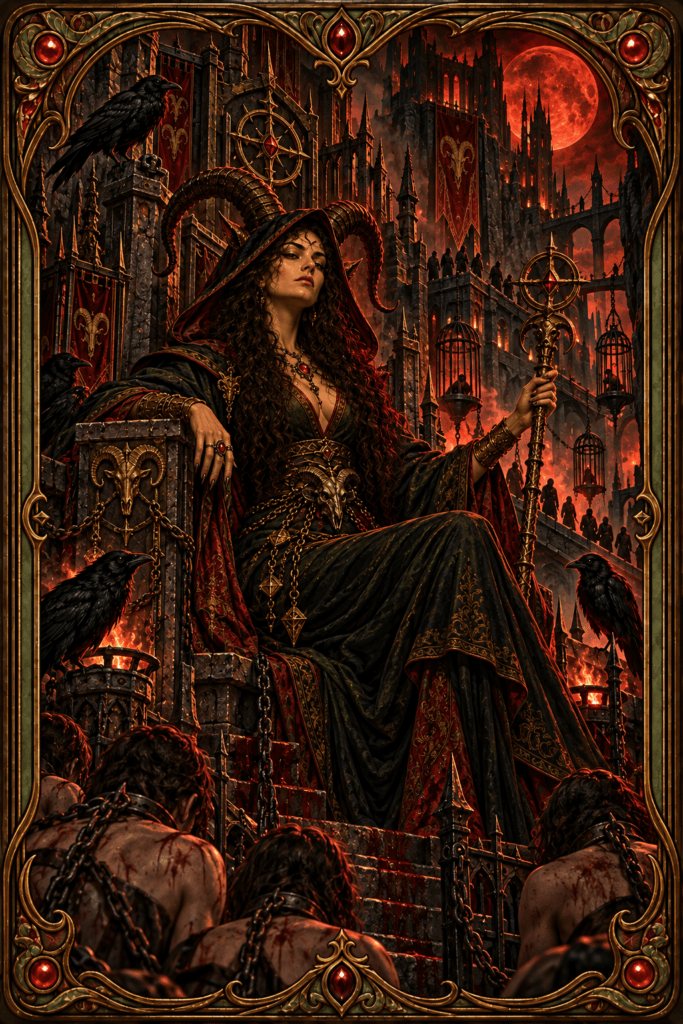
Corruption Path — The Tyrant
The corrupted Capricorn becomes a fortress that forgot why walls were built. Earth hardens into rigidity, inertia, fixation, brittleness, and exploitation, while Nether turns ambition toward domination, breakthrough toward suppression, independence toward attachment, renewal toward decay, and transformation toward destruction. Because Capricorn carries Pure Energy, these distortions can become deeply entangled with identity. What began as a defensive behaviour gradually becomes something they describe as character, principle, competence, or responsibility.
The Tyrant rarely experiences themselves as someone seeking control. That would be too obvious. Their inner justification sounds much more respectable: “Someone competent has to take responsibility.” This is what makes the corruption dangerous. Control rarely announces itself as control when it can disguise itself as duty.
Every restriction therefore receives a practical explanation. Every command supposedly protects something important. Every punishment teaches accountability. Every emotional absence serves a necessary objective. Every sacrifice proves commitment. Every person who objects simply fails to understand the seriousness of the situation. Capricorn’s greatest strengths become the language through which the system protects itself from criticism.
Gradually, competence and authority begin merging with truth. Capricorn built the structure, therefore Capricorn understands the structure. Because they understand it, they should direct it. Because they direct it, resistance becomes interference. Because interference threatens stability, silencing resistance begins to feel responsible. The loop closes cleanly enough that the Tyrant can remain convinced they are protecting everyone while steadily eliminating everyone else’s autonomy.
Relationships become hierarchical under this logic. Love means loyalty. Loyalty means reliability. Reliability means behaving in ways that preserve the structure Capricorn has decided keeps everyone safe. Emotional complexity becomes inconvenient because it introduces variables that cannot be controlled through rules, schedules, responsibility, or practical problem-solving. The partner who questions the arrangement appears ungrateful. The child who develops independence appears disrespectful. The family member who sets boundaries appears disloyal.
The workplace becomes equally severe. People slowly stop being human participants within a shared system and become resources whose needs matter only after performance requirements have been satisfied. Burnout becomes weakness. Fear becomes motivation. Competition becomes purification. Long hours become evidence of character. Compassion becomes something granted only after productivity has proven that the person deserves it.
Yet the deepest corruption is not administrative. It is existential. Beneath the obsession with competence lives a terror Capricorn may barely recognise: the fear of becoming unnecessary. If other people become stronger, the Tyrant loses leverage. If the organisation functions without them, years of sacrifice may suddenly feel less important. If the family becomes independent, authority disappears. If the partner no longer needs protection, what remains to prove that Capricorn deserves the position they occupy?
This creates one of the darkest contradictions in the corrupted archetype. The Tyrant claims to want strong systems and capable people, yet the complete success of that mission becomes psychologically threatening. A truly competent team no longer needs constant supervision. A mature child stops obeying automatically. A secure partner does not require rescuing. A stable organisation can survive the absence of its founder. Everything Capricorn claims to be building eventually asks them to surrender control over it.
The corrupted Capricorn may therefore begin unconsciously preserving the very weakness they publicly condemn. Dependent children confirm parental authority. Uncertain employees confirm managerial superiority. Unprepared partners confirm indispensability. Unstable systems guarantee that somebody must remain permanently in charge. Dependence becomes proof of importance, and dysfunction becomes the hidden fuel sustaining the hierarchy.
This is where stewardship becomes empire. The original desire to create stability mutates into the need to own the structure through which stability is provided. Capricorn no longer protects the system because people depend upon it. People are kept dependent so that the system continues proving Capricorn’s necessity.
The way back begins with a question that cuts directly through every respectable justification:
“Would I still build this structure if I knew I would never control it?”
If the answer is no, then the structure is no longer being built in service of life.
Life is being organised in service of the structure.
Capricorn Role in Society and the World
Capricorn enters society wherever responsibility has become fragmented, neglected, or scattered between people who assume somebody else will eventually deal with it. They are drawn toward the places where ambition exists without infrastructure, authority exists without competence, and good intentions have grown larger than the systems capable of carrying them. Administrators, builders, strategists, executives, engineers, planners, craftspeople, institutional reformers, teachers of mastery, protectors of resources—Capricorn tends to emerge wherever something difficult must be organised well enough to survive beyond the enthusiasm that created it.
Their contribution is rarely glamorous in the beginning, because civilisation depends heavily upon work nobody celebrates while it is functioning correctly. Infrastructure, maintenance, standards, documentation, training, budgeting, accountability, succession planning, contingency systems and long-term resource management become visible mainly when somebody has failed to provide them. Nobody applauds the bridge every morning for continuing to stand. They notice the bridge when it collapses. Capricorn understands this almost instinctively. Much of what keeps a society alive consists of structures designed precisely so that ordinary people never have to think about them.
Earth gives Capricorn this sensitivity to material continuity. It asks whether something has enough structure, endurance and practical substance to remain real once the excitement disappears. Nether adds pressure, consequence and the awareness that neglected weaknesses eventually collect their debt. Saturn binds these forces into a psychology unusually willing to invest effort in outcomes whose reward may arrive years after the initial sacrifice. Capricorn can tolerate the unromantic middle—the period after inspiration but before mastery, when the work has become repetitive, difficult and largely invisible.
This is why society needs Capricorn whenever possibility has outrun capacity. A movement may possess vision but no organisation. A business may possess demand but no internal systems. A community may possess goodwill but no accountability. A government may possess authority but lack administrative competence. A family may genuinely love one another while remaining financially, emotionally or practically unstable. Capricorn looks at such situations and asks the question everyone else eventually wishes somebody had asked earlier: Who is actually going to maintain this?
Their role becomes especially visible after crisis. Other archetypal forces may expose the failing structure, rebel against it, communicate a new vision, heal the damage, inspire collective action or imagine what should replace it. Capricorn becomes essential when the smoke clears and somebody has to deal with the irritating little detail of making the new world function on Monday morning. The manifesto has been written. The corrupt structure has been challenged. Everyone feels wonderfully revolutionary. Fine. Now write the procedures, assign responsibility, secure the resources, define the standards, train the people, calculate what it costs and make sure the same collapse does not repeat itself five years later under a different logo.
This is where Capricorn’s Pure Energy becomes socially significant. Earth and Nether are not temporary tools they pick up whenever convenient; within the archetype they consolidate into identity through responsibility, competence, endurance, ambition and mastery. Structure becomes evidence that pressure has been converted into something permanent. They may therefore become the person who continues building after motivation has disappeared, who remains at the table after everyone else has exhausted their outrage, and who carries a project through the boring stages between vision and durability.
Yet Capricorn’s social shadow grows from exactly the same strength. The ability to preserve and administer structure can become dangerous when maintaining the system becomes more important than questioning what the system actually serves. Capricorn can become an extraordinarily competent defender of something fundamentally rotten, because competence itself has no morality. A prison can be administered efficiently. An exploitative company can possess immaculate procedures. An abusive family hierarchy can survive for generations because everybody knows their assigned role and the consequences for challenging it. Order can preserve civilisation, but order can also preserve cruelty with terrifying efficiency.
Nether makes this danger sharper because pressure easily becomes domination when transformation is replaced by control. Earth can harden into rigidity, hierarchy can become unquestionable, discipline can become suppression, and responsibility can become the excuse through which one person decides that everyone else must obey because “somebody has to be the adult.” Capricorn’s inverted form may therefore defend harmful authority not because they consciously enjoy harm, but because instability frightens them more than injustice. If the structure still stands, they may mistake survival for proof that the structure deserves to exist.
Their higher social responsibility is therefore larger than competence. It is ethical stewardship of structure. Capricorn must learn that preserving a system is not automatically virtuous, just as destroying one is not automatically revolutionary. The real question is whether the structure continues serving the people whose lives depend upon it. Durability has value only when what is being made durable deserves to endure.
At their highest expression, Capricorn becomes the architect of worthy permanence. They create systems strong enough to protect people without imprisoning them, standards demanding enough to preserve quality without becoming instruments of humiliation, and institutions capable of surviving leadership changes without collapsing into chaos. Their purpose is not to make systems impossible to break. Some systems should break. Their purpose is to make the right structures strong enough that human beings can rely upon them without becoming consumed by the machinery built to protect them.
Capricorn therefore carries one of civilisation’s least glamorous and most necessary responsibilities: turning consequence into wisdom and ambition into architecture. Anyone can declare that the world should become better. Capricorn asks what must be built, maintained, funded, taught, measured and handed forward so that “better” still exists after everyone who originally demanded it has gone home.
Capricorn Legacy
Capricorn thinks naturally in traces left behind. A finished structure. A protected family. A profession mastered. A standard raised. A company still functioning. A student who became competent. A debt removed. A home secured. A system improved. A generation given stronger ground than the one before it. Their legacy therefore tends to be infrastructural.
Other archetypes may be remembered primarily through ideas, emotional transformation, creativity, rebellion, or connection. Capricorn often leaves something that continues operating.
Their greatest achievement is not merely that they endured. It is that someone after them no longer needs to endure the same conditions. The mature Capricorn understands that legacy cannot be measured only through monuments, titles, wealth, authority, or public recognition. A person may own an empire and leave behind frightened children, exhausted employees, broken relationships, and systems incapable of surviving without control. That is accumulation. It is not legacy.
Legacy is what remains useful after power has disappeared. The Iron Sentinel therefore becomes increasingly interested in transmission: “What do I know that should be taught? What system should be documented? What responsibility should be transferred? What resource should be preserved? What mistake should the next generation be spared? What structure will allow somebody else to begin higher than I was forced to begin?Saturn gives this question time. Capricorn may spend decades climbing before understanding that the final purpose of the summit is perspective.
From there they can see the road.The obstacles.The shortcuts that were traps.The bridges that should have existed. The places where somebody almost fell. Their final responsibility is not to demand that everyone repeat the climb exactly as they did.It is to improve the route.
The immature Capricorn says:“I suffered for this. You should too.” The mature Capricorn says: “I suffered learning this. You shouldn’t have to.” That difference determines the legacy.

Capricorn and Relationships
Capricorn approaches relationships through structural trust. They want to know whether another person can remain recognisable across changing circumstances. Chemistry matters. Affection matters. humour, attraction, intellectual compatibility, sexuality, and emotional connection all matter.
But Capricorn watches what happens after inconvenience enters. Does the promise survive? Does honesty remain when honesty becomes expensive? Does responsibility appear without constant supervision? Can conflict occur without threatening the entire bond?
Can both people carry their own weight while still allowing mutual dependence?
Earth makes Capricorn notice consistency. Nether makes them notice behaviour under pressure. A person who appears wonderful in comfort but becomes dishonest, chaotic, avoidant, cruel, or unreliable when consequence arrives may lose Capricorn’s respect more quickly than someone who simply lacks polish. This can make them slow to trust.
Capricorn does not necessarily expect perfection. They expect structural evidence.Balanced Capricorn creates relationships with remarkable staying power. They take agreements seriously, remember practical needs, protect shared resources, plan for difficult periods, and remain present when another person’s life becomes inconvenient.
Their love says:
“Your existence has been included in the architecture of my future.”
That is an enormous statement for Capricorn.
The shadow appears when architecture becomes ownership.
Because another person has been integrated into the plan, their unpredictability begins feeling structurally dangerous. A career change, new friendship, emotional shift, personal boundary, financial decision, or desire for greater independence may be experienced as destabilisation rather than development.
Capricorn then attempts to restore certainty. Advice becomes pressure. Concern becomes surveillance. Provision becomes leverage. Responsibility becomes authority. The partner eventually realises that security has acquired terms they never agreed to.
Capricorn must also resist testing love exclusively through hardship. Some relationships become meaningful through difficulty, but difficulty is not the only proof that love is real.
Joy counts. Ease counts. Play counts. Pleasure counts. Being cared for counts. Nothing catastrophic needs to happen before intimacy earns legitimacy. Their deepest relational lesson is learning that mutual dependence differs from helpless dependence.
Capricorn does not need people who cannot survive without them. They need people strong enough to stand alone and committed enough to stand beside them anyway. That kind of loyalty cannot be controlled. Which is exactly why it is worth trusting.
Capricorn and friendship
Capricorn approaches friendship through earned reliability. They may maintain professional networks, acquaintances, and functional alliances, yet their genuine inner circle usually develops through repeated evidence rather than immediate emotional chemistry.
Balanced Capricorn is the friend who remains when the situation stops being entertaining. They organise the emergency, review the contract, help move the furniture, confront the practical problem, or continue checking in after public sympathy has already moved elsewhere.
Their loyalty can be quiet. They may not communicate constantly or offer endless reassurance, yet they remember commitments and take another person’s difficulty seriously. Their advice tends to be practical, strategic, and occasionally ruthless because Capricorn wants the person to become more capable rather than temporarily comforted by an explanation that changes nothing.
They also bring dry humour, long-term perspective, and grounded ambition into friendship. Mature Capricorn can recognise where a friend is underestimating themselves and help construct the path between potential and achievement.
Unbalanced Capricorn becomes judgmental, transactional, or emotionally inaccessible. Friends are evaluated through success, usefulness, discipline, or consistency. Repeated struggle is treated as evidence of defective character rather than a condition requiring a different kind of support.
Their friendship lesson is to distinguish accountability from superiority. A person can require honesty without first proving perfect competence.
Capricorn as a Friend
Dependable Under Pressure
They remain present when the problem becomes difficult, expensive, repetitive, or socially inconvenient.
Strategically Supportive
They offer realistic plans, useful feedback, resources, and practical assistance instead of empty encouragement.
Loyal Through Evidence
Trust develops slowly, betrayal is remembered, and consistency matters more than social performance.
Severe When Disappointed
Under stress, they may become cold, controlling, dismissive, or permanently judgmental when another person’s emotion, pace, or mistakes violate their expectations.
Capricorn’s Role in Romance
Capricorn enters romance through respect before surrender. Attraction may begin physically or emotionally, but desire deepens when the other person demonstrates self-possession, competence, reliability, humour, boundaries, and enough independence that love does not immediately become another responsibility Capricorn must manage. Earth gives their attraction an embodied quality. They notice presence, consistency, touch, habits, lifestyle, work ethic, the way somebody treats shared space, and whether daily reality feels easier or more chaotic around them. Nether adds fascination with strength under pressure. Capricorn often wants to know what remains of the person when charm is no longer enough. Courtship may therefore appear restrained. They can feel intensely while revealing selectively because vulnerability creates consequence. Capricorn may observe longer than they admit, testing whether interest survives time before reorganising their life around it. Balanced Capricorn becomes a steady romantic force. They plan experiences, protect time together, follow through, invest materially and emotionally, and create the conditions through which desire can deepen without being continually threatened by instability. Their shadow emerges when uncertainty activates control. Jealousy may not always appear as dramatic confrontation. It can become questioning, monitoring, strategic withdrawal, financial leverage, territorial behaviour, or attempts to define the relationship so tightly that spontaneity begins feeling dangerous. Capricorn must remember that love cannot be made permanent through administration. A partner is not another asset whose value is protected by restricting movement. Commitment survives because two people continue choosing it while remaining alive enough to change. Their romantic lesson is learning that stability and desire do not oppose one another. Security can become the ground from which intimacy grows more adventurous, honest, sensual, and emotionally vulnerable. Mature Capricorn does not conquer love and then maintain it like property. They build a bond strong enough that neither person needs captivity to trust its endurance.
Capricorn in Love
Capricorn loves through investment.
They rarely measure commitment only through attraction, chemistry, verbal affection, or emotional intensity. Love becomes visible through reliability, shared planning, practical protection, remembered responsibility, and the willingness to remain present when the relationship becomes inconvenient.
They may approach intimacy cautiously because access has consequence. Capricorn understands that partnership can alter finances, routines, family obligations, reputation, long-term direction, and personal freedom. They do not always enter lightly because they do not experience genuine commitment lightly.
Balanced Capricorn becomes the Builder-Lover. They create security without suffocating spontaneity. Promises become behaviour. Their partner knows where they stand because affection is reinforced through repeated presence, practical care, and the willingness to organise life around the bond.
Their love often appears in preparation. They fix what creates unnecessary stress, plan for future needs, protect shared resources, encourage competence, and help transform ambition into a realistic path. They may not produce constant emotional theatre, yet they are often present when material reality demands proof.
The difficulty lies in emotional accessibility. Capricorn may offer labour where the partner needs language, solutions where the partner needs witnessing, and protection where the partner needs mutual vulnerability. They assume devotion should be obvious through everything they do while the partner remains uncertain about what Capricorn actually feels.
Unbalanced Capricorn turns love into hierarchy. Greater income, sacrifice, planning, or responsibility becomes justification for greater authority. Protection becomes supervision. Loyalty becomes obligation. The relationship functions efficiently while one person’s agency quietly disappears.
They may also remain inside relationships that have ended psychologically because departure feels like structural failure. Years invested become an argument for further investment. Duty outlives intimacy, and resentment begins performing the role affection once held.
Capricorn’s romantic mastery begins when commitment remains compatible with tenderness. They do not need to become emotionally theatrical. They need to make the internal world accessible enough that their partner is loved as a person rather than protected as an asset.
Capricorn Role in Family
Capricorn often becomes the structural backbone of the family whether or not anyone formally assigns them the role. They notice what must be organised, paid, repaired, planned, confronted, or protected. When leadership is absent, Capricorn frequently steps into the vacancy before the family has admitted that the position was empty.
They are often cycle-builders. Some archetypes challenge a dysfunctional pattern through rebellion or emotional confrontation. Capricorn replaces the failed pattern with a more durable system. They may establish financial stability, stronger boundaries, educational opportunity, clearer responsibility, family traditions, or a practical structure the previous generation could not maintain.
Balanced Capricorn becomes the Elder-Architect. They provide guidance, continuity, and access to hard-earned knowledge without demanding that younger family members reproduce their exact life. Authority becomes a resource rather than a permanent claim of ownership.
Their love may be expressed through sacrifice: working, saving, transporting, fixing, preparing, protecting, and ensuring that practical needs are met. This devotion is substantial. It still cannot fully replace emotional availability.
Unbalanced Capricorn turns the family into hierarchy. Age, income, sacrifice, competence, or status becomes permanent evidence of rank. Gratitude is expected to become obedience. Tradition is defended even when it preserves the wound everyone is supposedly trying to escape.
They may become the family martyr who carries everything without negotiation and then controls everyone through the weight of that sacrifice. Because Capricorn genuinely did endure more, challenging them can feel morally difficult. The entire family remains organised around one person’s burden.
Capricorn’s deeper family legacy is responsible independence. Their purpose is not to make the next generation permanently dependent upon the structure they built. It is to leave them capable of carrying life without reproducing the same unnecessary suffering.
Capricorn is often the cycle-builder of the family. Where inherited instability once forced one person to carry too much, mature Capricorn tries to leave behind clearer boundaries, stronger systems, financial literacy, practical competence, and a healthier distribution of responsibility. Their family legacy is not proving that the next generation should suffer as much as they did. It is creating stronger foundations so the next generation can spend less energy surviving the structure and more energy actually living inside it.
Capricorn vs his Element Zodiacs
How Capricorn Differs From Other Earth Signs

Capricorn vs. Taurus
Capricorn is not Taurus’s preserving Earth.
Taurus is Earth guided by Darkness. It creates continuity through protection, memory, investment, boundaries, and accumulated value. Taurus asks what deserves to be kept, nourished, and allowed to mature.
Capricorn is Earth guided by Nether. It creates stability by subjecting form to pressure and consequence. Capricorn asks what can survive, what must become stronger, and what has become too weak to preserve.
Taurus protects established value.
Capricorn constructs future authority.
Taurus may resist transformation because change threatens something meaningful. Capricorn accepts transformation when consequence proves that the existing structure cannot endure.
Both signs understand labour, loyalty, resources, and material continuity. Their difference appears in purpose. Taurus builds the sanctuary. Capricorn builds the road, wall, institution, and chain of responsibility capable of keeping the sanctuary alive through winter.
Taurus reminds Capricorn that stability must contain pleasure. Capricorn helps Taurus make security resilient enough to survive inevitable change.

Capricorn vs. Virgo
Capricorn is not Virgo’s corrective Earth.
Virgo is Earth guided by Light. It compares material reality against conscious standards, identifies errors, and refines the form. Its Chaotic Energy develops through the friction between what exists and what should exist.
Capricorn is Earth guided by Nether. It measures reality through pressure and consequence. Its Pure Energy concentrates endurance, ambition, transformation, and responsibility into a stable identity structure.
Virgo asks:
“How can this become more accurate?”
Capricorn asks:
“Will this survive?”
Virgo improves the mechanism.
Capricorn determines whether the mechanism deserves authority, investment, and permanence.
Both signs can become disciplined, critical, practical, and highly work-oriented. Virgo risks endless correction. Capricorn risks preserving an entire system because too much has already been invested to abandon it.
Their relationship is structurally mixed. Shared Earth creates practical understanding, while Light and Nether clash over the mechanism of change. Virgo refines through evaluation. Capricorn transforms through consequence.
Virgo improves the blueprint.
Capricorn decides whether the building can safely open.
How Capricorn Differs From Other Nether Signs

Capricorn vs. Scorpio
Capricorn is not Scorpio’s emotionally concentrated Nether.
Scorpio is Water guided by Nether. It experiences transformation through intimacy, desire, attachment, fear, emotional pressure, and psychological descent. Pressure enters the inner world and forces regeneration from within.
Capricorn is Earth guided by Nether. It converts pressure into structure, hierarchy, discipline, material consequence, and long-term construction.
Scorpio asks:
“What truth is hidden beneath this bond?”
Capricorn asks:
“What structure will contain the consequence?”
Scorpio regenerates the psyche.
Capricorn rebuilds the world surrounding it.
Both respect strength, privacy, loyalty, and strategic awareness. Scorpio teaches Capricorn to confront the emotional forces beneath control. Capricorn gives Scorpio enough structure that transformation does not remain an endless cycle of collapse and rebirth.
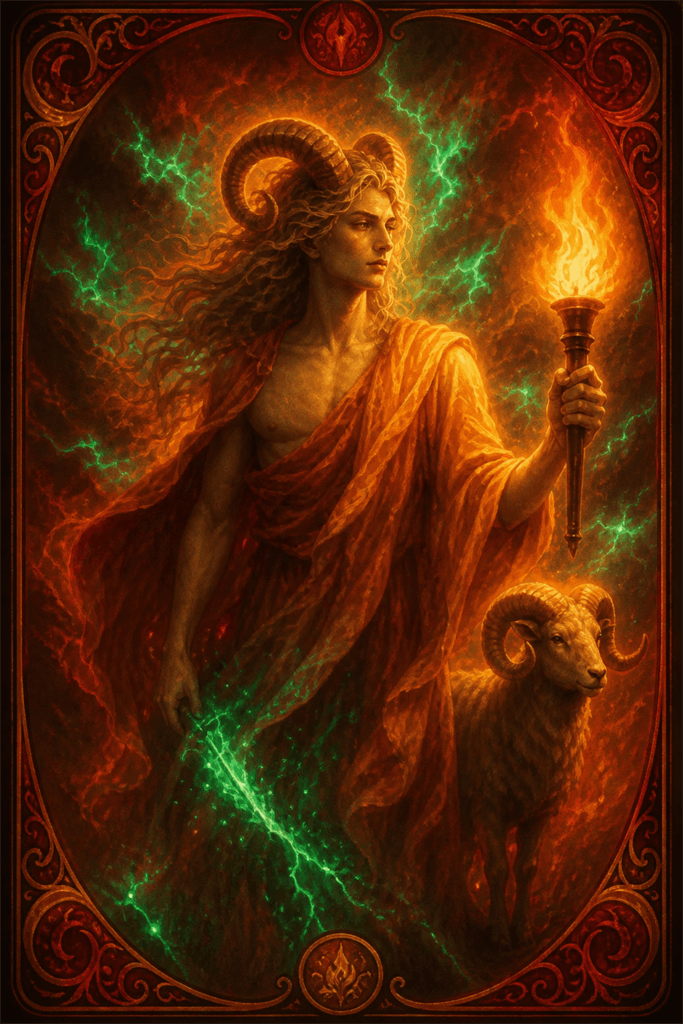
Capricorn vs. Aries
Capricorn is not Aries’s eruptive Nether.
Aries is Fire guided by Nether. It releases pressure through immediate action, competition, confrontation, and force. Its Chaotic Energy discovers direction through collision with resistance.
Capricorn accumulates pressure. Earth contains Nether, slows its release, and converts consequence into strategy, hierarchy, and durable form. Capricorn acts after determining where force will produce structural advantage.
Aries breaks the gate.
Capricorn decides what should replace it.
Their relationship is mixed. Fire and Earth clash, while both signs share Nether. They recognise ambition, independence, breakthrough, and resistance to powerlessness, yet operate at radically different speeds.
Aries believes Capricorn waits too long.
Capricorn believes Aries creates consequences without remaining to organise them.
Used consciously, Aries supplies ignition and Capricorn supplies continuation. Used badly, they become the explosion and the wall repeatedly blaming each other for the damage.
Capricorn Zodiac Affinity
Compatibility within Octa is built from both elemental channels rather than shared traditional elements alone. Capricorn’s strongest pairings arise where Earth and Nether each receive reinforcement; its hardest opposition occurs where both are rejected simultaneously. Compatibility Triangles
Cancer (Water Darkness)

The mountain rises beside the hidden spring — emotional belonging meets structural protection, memory gains walls, and ambition finally remembers what it is building for.
Best Elemental Synergy: Capricorn and Cancer
Capricorn and Cancer form a complete elemental synergy. Earth and Water strengthen one another. Nether and Darkness strengthen one another. Capricorn creates external structure. Cancer creates internal continuity.
Capricorn asks how life can remain secure when conditions become difficult. Cancer asks what must remain emotionally protected so security still means something once difficulty has passed. One builds the walls. The other remembers who the walls were built to shelter.
The Hidden Dynamic
Cancer gives Capricorn access to a form of intelligence they may undervalue: emotional consequence. Capricorn naturally sees resources, responsibility, risk, structure, and long-term survival. Cancer notices belonging, attachment, mood, memory, emotional safety, and the hidden cost of decisions that appear perfectly rational on paper. Cancer may therefore recognise that the family is becoming lonely before Capricorn notices anything structurally wrong. Capricorn recognises that the family is becoming financially vulnerable before Cancer feels the consequence materially. Together they can create unusually complete security. Cancer turns the house into a home. Capricorn makes sure the home survives the winter.
Their Pure Energy creates another layer of recognition. Both signs concentrate their elemental forces into identity. Cancer may define itself through protection, loyalty, emotional continuity, and belonging. Capricorn defines itself through responsibility, discipline, competence, and durable construction. Neither treats commitment casually once it becomes part of identity. This can create profound loyalty. It can also create an extremely stubborn household.
The Consequence of Misalignment
The danger begins when both people become protectors and nobody remains available to be protected. Cancer starts carrying the emotional world. Capricorn starts carrying the material world. Each quietly assumes the other should recognise the cost without explanation. Cancer thinks:
“I hold everyone together emotionally.”
Capricorn thinks:
“I hold everyone together practically.”
Both are correct. Both become resentful.
Cancer may experience Capricorn’s emotional restraint as absence. Capricorn may experience Cancer’s emotional needs as another responsibility arriving on an already overloaded structure.
The relationship then divides into invisible departments. Cancer manages intimacy. Capricorn manages reality. Neither feels fully accompanied.
The Price of Responsibility
The shadow pairing becomes strongest when protection turns into mutual control. Cancer controls through attachment, guilt, emotional atmosphere, memory, or the fear of abandonment. Capricorn controls through structure, resources, authority, planning, or the fear of collapse. The fortress becomes extremely secure.
Nobody inside it can breathe. Their challenge is recognising that love does not require permanent guardianship. Two people can create safety without monitoring each other’s every movement, emotion, decision, and responsibility.
When This Bond Blooms
Cancer and Capricorn become exceptional together when responsibility remains reciprocal. Cancer teaches Capricorn that vulnerability is not structural failure. Capricorn teaches Cancer that boundaries are not emotional abandonment.Cancer protects the meaning. Capricorn protects the form. Cancer reminds Capricorn to come home from the mountain. Capricorn makes sure there is still a home waiting when they arrive.
Their strongest bond emerges when emotional intelligence and practical competence stop competing for legitimacy. Both become recognised as forms of protection. The relationship develops roots deep enough to absorb storms without becoming frightened of every cloud.
Cancer vs. Capricorn in a Nutshell
Cancer asks:
“Are the people we love safe inside this?”
Capricorn asks:
“Is what protects them strong enough to last?”
Cancer carries the hearth. Capricorn carries the wall. Together they can build something neither warmth nor strength could preserve alone.
Aquarius (Air Aether)

The fortress meets the thundercloud — structure confronts possibility, consequence challenges vision, and neither side agrees on whether the wall is protecting civilisation or imprisoning it.
Highest Elemental Opposition: Capricorn and Aquarius
Capricorn and Aquarius form a complete elemental opposition. Earth opposes Air. Nether opposes Aether. Saturn stabilises structure through consequence. Uranus disrupts structure through vision. Both are Pure signs, which intensifies the difference. Neither pairing is merely behavioural. Each archetype experiences its operating principle as part of identity.
Capricorn says:
“Reality has consequences.”
Aquarius answers:
“Reality can be redesigned.”
Neither statement is wrong.
Their conflict begins when either pretends the other statement is unnecessary.
The Hidden Dynamic
Capricorn understands limitation.Aquarius understands possibility. Capricorn sees all the invisible labour required to make a system function. Aquarius sees all the invisible assumptions preventing that system from becoming something better. This means they often notice different failures in the same structure. Aquarius sees unnecessary hierarchy. Capricorn sees necessary accountability. Aquarius sees outdated rules. Capricorn sees institutional memory. Aquarius sees people constrained by the system. Capricorn sees people protected from chaos by the system. Aquarius asks why the wall exists. Capricorn asks what happens when it disappears.
The fascinating part is that both archetypes are architects. They simply build in opposite directions. Aquarius begins with the future and attempts to pull reality toward it. Capricorn begins with reality and attempts to construct a future capable of surviving contact with it.
The Consequence of Misalignment
When immature, both sides interpret the other through their own shadow. Capricorn sees Aquarius as irresponsible, arrogant, impractical, detached, unpredictable, and incapable of respecting what previous generations had to build.
Aquarius sees Capricorn as controlling, pessimistic, status-bound, unimaginative, authoritarian, and psychologically dependent upon structures that should already have been dismantled. Each begins proving the other correct. Capricorn tightens control because Aquarius appears unreliable. Aquarius becomes more rebellious because Capricorn appears controlling. Capricorn creates more rules. Aquarius violates more rules. The entire relationship becomes a philosophical experiment nobody agreed to join.
The Price of Authority
Their deepest conflict concerns legitimacy. Who gets to decide what reality should become? Capricorn believes authority must be earned through competence, consequence, responsibility, and evidence. Aquarius believes authority must remain accountable to principles larger than hierarchy and capable of being challenged when the structure stops evolving.
Capricorn asks:
“Have you earned the right to change this?”
Aquarius asks:
“Who gave you the right to prevent change?”
If neither can respect the other’s logic, every disagreement becomes existential. Capricorn interprets rebellion as structural threat. Aquarius interprets structure as captivity. Because both carry Pure Energy, compromise may feel dangerously close to self-betrayal.
When This Bond Blooms
Capricorn and Aquarius become extraordinary when they stop competing over which half of reality is real.Aquarius provides foresight. Capricorn provides feasibility.
Aquarius identifies structures whose original purpose has expired. Capricorn separates what can safely be dismantled from what still performs an essential function. Aquarius prevents Capricorn from creating a perfectly managed past. Capricorn prevents Aquarius from creating a brilliant future nobody can actually inhabit.
Together they can become one of the zodiac’s strongest reforming forces. Aquarius draws the blueprint nobody else imagined. Capricorn calculates the load. Aquarius opens the horizon. Capricorn builds the bridge.
Their relationship will rarely feel passive. It can, however, become productive enough to alter both people permanently.
Aquarius vs. Capricorn in a Nutshell
Aquarius asks:
“Why must the world remain this way?”
Capricorn asks:
“What will hold when we change it?”
Aquarius breaks the ceiling. Capricorn builds the next floor. At their worst, one creates a prison and the other creates rubble. At their best, they create civilisation capable of evolving.
Frequently Asked Questions About Capricorn
What is Capricorn known for?
Capricorn is known for discipline, ambition, responsibility, strategy, endurance, and the ability to build structures that survive pressure. Within the Octa framework, Earth gives Capricorn stability, pragmatism, perseverance, and material strength, while Nether subjects that structure to consequence, transformation, ambition, independence, and renewal.
Capricorn rarely trusts potential by itself. They want evidence. A promise must survive inconvenience. A plan must survive reality. A structure must remain standing after enthusiasm disappears.
At their best, Capricorn turns pressure into mastery and hardship into durable capability. Their challenge begins when endurance becomes identity and they continue carrying structures that no longer deserve the weight being sacrificed to preserve them.
What are Capricorn's strongest traits?
Capricorn’s strongest traits include structural endurance, discipline, strategic ambition, consequence awareness, resilience, responsible authority, and long-term thinking.
Earth allows Capricorn to keep functioning after excitement, praise, comfort, or immediate reward have disappeared. Nether forces them to confront weakness and reorganize when pressure exposes what cannot continue.
Their greatest strength is not simply toughness.
It is the ability to convert difficulty into architecture.
Balanced Capricorn does not merely survive crisis. They learn from it, rebuild more intelligently, establish clearer boundaries, and create systems that make the same preventable collapse less likely to happen again.
What are Capricorn's biggest weaknesses?
Capricorn’s weaknesses usually appear when responsibility becomes control. They may become rigid, emotionally suppressed, pessimistic, overworked, authoritarian, status-conscious, neglectful, or convinced that competence gives them permanent authority over others.
Earth can turn endurance into breakdown, discipline into rigidity, and perseverance into fixation. Nether can turn ambition into domination, transformation into destruction, and independence into attachment to power, role, status, or control.
Capricorn becomes most distorted when they continue defending a structure simply because they sacrificed too much to admit that it no longer deserves preservation.
Why are Capricorns so serious?
Capricorn naturally evaluates life through consequence.
Earth notices material reality: time, resources, obligations, limits, maintenance, and what will still need to be handled after the excitement ends. Nether notices pressure: what happens when the plan fails, resources become scarce, responsibility increases, or weakness is exposed.
Saturn then organizes these forces across time.
This can make Capricorn appear serious even when they are playful underneath. They are often calculating the structural cost of a choice long before others feel any urgency.
Mature Capricorn does not become less realistic.
They learn that joy, rest, humour, intimacy, and spontaneity are also parts of a life worth protecting.
Why are Capricorns so ambitious?
Capricorn ambition often comes from the desire to gain greater control over consequence.
Competence reduces dependence on unreliable people. Resources reduce vulnerability to scarcity. Authority creates the ability to correct weak systems. Skill creates autonomy.
Nether pushes Capricorn toward breakthrough, while Earth ensures that breakthrough becomes stable enough to last.
Healthy ambition becomes mastery, independence, stewardship, and legacy.
Unhealthy ambition becomes domination. Advancement stops being about capability and becomes a way to reach a position from which nobody can challenge, control, or humiliate them again.
Mature Capricorn asks not only, “How high can I climb?”
They ask, “What will exist because I climbed?”
What are Capricorn's Core and Prime Elements in the Octa system?
Capricorn’s Core Element is Earth — Integral Vitality, while their Prime Element is Nether — Transformative Resolve.
Earth governs endurance, discipline, stability, resilience, perseverance, pragmatism, structure, and material continuity.
Nether governs transformation, ambition, breakthrough, independence, renewal, rebellion, and change through consequence.
Earth asks:
“Can this structure endure?”
Nether asks:
“What happens when pressure reveals that it cannot?”
Together they create Capricorn’s instinct to build structures capable of surviving difficulty while remaining willing to transform what consequence has proven too weak to preserve.
What does Pure Energy mean for Capricorn?
Capricorn is a Pure Energy sign. Within Octa, Earth and Nether form a concentrated elemental alignment around structure, endurance, consequence, ambition, transformation, responsibility, and mastery.
The underlying declaration of Pure Capricorn is:
“These forces define me.”
Discipline can become part of dignity. Competence becomes part of safety. Responsibility becomes evidence of seriousness. Ambition becomes protection against helplessness.
This gives Capricorn exceptional coherence under pressure.
The danger is self-sealing identity. Rigidity may be renamed discipline. Domination may be called leadership. Suppression may be defended as maturity.
Mastery means preserving coherence without preserving every structure through which that coherence was once expressed.
What planet rules Capricorn in the Octa system?
Saturn rules Capricorn in the Octa system and governs structure under consequence.
Saturn deals with limitation, responsibility, hierarchy, delayed reward, accountability, time, and the price reality demands before something can endure.
Through Capricorn, Saturn asks what remains after excitement, borrowed confidence, easy conditions, and temporary motivation disappear.
Balanced Saturn turns limitation into mastery. Routine protects ambition. Boundaries protect freedom. Responsibility creates competence.
Inverted Saturn turns structure into imprisonment. Hierarchy becomes dehumanizing, emotional suppression becomes proof of maturity, and hardship becomes something Capricorn starts imposing on others simply because hardship once shaped them.
Saturn’s highest expression is not permanent suffering.
It is creating enough structure that life can become safer, freer, and more humane.
Why are Capricorns so controlling?
Capricorn control often begins as prevention.
Because they naturally anticipate consequence, they may see problems before other people recognize them. If Capricorn has repeatedly been the person who repairs the damage afterward, taking control earlier can begin feeling rational.
The problem appears when capability becomes entitlement to authority.
Advice becomes command. Provision becomes leverage. Responsibility becomes ownership. Delegation feels dangerous because another person’s imperfect method introduces uncertainty.
Mature Capricorn learns that a system dependent entirely on their supervision is not actually stable.
Real strength distributes competence.
If nobody else can function without Capricorn, they have created dependency rather than security.
Why does Capricorn struggle with vulnerability?
Capricorn may associate vulnerability with reduced control.
Their strength often develops through learning to anticipate problems, suppress panic, remain useful, and become capable enough that other people cannot easily destabilize them.
This makes visible need psychologically difficult.
Asking for help may feel like failure. Emotional uncertainty may feel operationally dangerous. Rest can produce guilt because responsibility remains unfinished somewhere.
The deeper problem is that suppressed vulnerability does not disappear.
It often returns as resentment, emotional distance, exhaustion, control, or eventual breakdown.
Mature Capricorn discovers that consciously expressed vulnerability is more controlled than vulnerability released through collapse.
What is the best zodiac match for Capricorn?
Within the Octa Zodiac affinity structure, Cancer is Capricorn’s strongest elemental synergy.
Capricorn carries Earth + Nether, while Cancer carries Water + Darkness.
Earth and Water reinforce one another. Capricorn provides structure, endurance, resources, and practical protection, while Cancer gives that structure emotional meaning, belonging, memory, and care.
Nether and Darkness also reinforce one another. Capricorn transforms through consequence while Cancer protects what remains emotionally valuable through change.
Both are Pure signs, creating strong commitment once a bond becomes integrated into identity.
At their best, Cancer reminds Capricorn what the structure is meant to protect, while Capricorn gives Cancer’s emotional world foundations strong enough to survive difficult conditions.
Cancer carries the hearth.
Capricorn carries the wall.
This is an Octa compatibility interpretation rather than a guarantee of relationship success.
What is the worst zodiac match for Capricorn?
Within the Octa framework, Aquarius is Capricorn’s highest elemental opposition.
Capricorn carries Earth + Nether, while Aquarius carries Air + Aether.
Earth seeks durable structure while Air keeps ideas mobile. Nether tests reality through consequence while Aether expands perception beyond existing form.
Capricorn asks:
“What will hold?”
Aquarius asks:
“Why must it remain this way?”
When misaligned, Capricorn may experience Aquarius as irresponsible, detached, impractical, or contemptuous of structures people worked hard to build. Aquarius may experience Capricorn as controlling, pessimistic, authoritarian, or too psychologically invested in systems that should already have evolved.
The pairing is not automatically doomed.
At its best, Aquarius prevents Capricorn from creating a perfectly managed past, while Capricorn prevents Aquarius from creating a brilliant future nobody can actually inhabit.
But within Octa’s elemental structure, this pairing creates Capricorn’s strongest natural opposition.
What does an unhealthy Capricorn look like?
An unhealthy Capricorn may become controlling, emotionally inaccessible, authoritarian, pessimistic, exploitative, overworked, status-bound, punitive, rigid, or incapable of releasing responsibility.
Earth can harden into fixation and lifeless permanence. Nether can turn ambition into domination, consequence into punishment, and transformation into destruction.
The darker Capricorn becomes the Tyrant: a fortress that forgot why walls were built.
They rarely think, “I want control.”
They think, “Someone competent has to take responsibility.”
That is precisely what makes the corruption dangerous.
Every restriction has an explanation. Every command supposedly protects something. Every sacrifice appears to justify more authority.
Eventually, the structure survives while the life inside it disappears.
What is Capricorn's core wound?
Capricorn’s core wound is The Burden-Bearer: the feeling that responsibility arrived before protection.
The archetypal pattern may be reinforced through instability, scarcity, inconsistent authority, excessive expectations, emotional distance, or environments where mistakes carried consequences larger than the mistake itself.
The internal conclusion becomes:
“If I do not become strong enough to carry this, nobody will.”
Capricorn responds by becoming capable.
Achievement becomes emotional insurance. Authority becomes protection against humiliation. Planning becomes protection against chaos. Self-control becomes protection against dependence.
Healing begins when Capricorn realizes that capability does not make every neglected burden their responsibility.
They can remain strong without permanently carrying everything.
What is Capricorn's main growth lesson?
Capricorn’s central growth lesson is learning that endurance and purpose are separate powers.
The ability to carry something does not prove that it deserves to be carried.
They must distinguish responsibility from habit, commitment from captivity, discipline from rigidity, authority from domination, security from control, and perseverance from fear of admitting that a structure has reached its end.
Their growth deepens when they delegate before collapse, ask for support before resentment, rest without earning it, release dead structures, and allow other people to develop competence through imperfect action.
The Iron Sentinel reaches mastery when strength protects life instead of replacing it.
Capricorn does not need to prove how much weight they can carry.
They need to choose the weight intelligently.
How is the Octa interpretation of Capricorn different from traditional astrology?
Traditional astrology already associates Capricorn with ambition, discipline, responsibility, authority, endurance, status, and Saturn. The Octa interpretation attempts to explain the psychological architecture beneath those recognizable traits.
Capricorn is understood through Earth as the Core Element, Nether as the Prime Element, Pure Energy as the concentration of structure and consequence into identity, and Saturn as the planetary function of structure under consequence.
This turns “coldness,” “control,” or “workaholism” from simple stereotypes into possible distortions of a deeper mechanism involving responsibility, pressure, competence, security, authority, and fear of structural collapse.
Octa remains a symbolic interpretive framework rather than a scientifically validated personality model, so these descriptions are best used for reflection rather than deterministic claims about every Capricorn.