Nether Element Overview
| Element | Tier | Polarity | Function | Energy Direction | Synergy | Opposition | Zodiac Expressions | Theme | Concept | Mythic Correspondence |
| Nether | Prime | Masculine | Pressure, breakdown, transformation, rebirth | Downward and catalytic | Darkness | Aether | Aries: Fire + Nether Capricorn: Earth + Nether Scorpio: Water + Nether | Transformative Resolve | Instinct | Loki (Norse) Set (Egyptian) Kali (Hindu) Izanami (Shinto) |
The Element of Instinct
Nether is the power that forces change when continuation has become impossible.
It rises from beneath conscious intention, confronts what has been suppressed, and drives life through endings, crises, confrontations, and irreversible thresholds toward another form. Nether governs transformation, ambition, breakthrough, independence, renewal, rebellion, instinct, pressure, will, rupture, and the human capacity to become stronger than the conditions that once defined it.
But Nether is not destruction, anger, violence, or darkness in their simplest forms.
It does not exist merely to break, dominate, provoke, or reject. Real Nether destroys only what can no longer remain intact without preventing life from developing. It does not worship collapse. It recognises that some structures must end because preserving them has become more damaging than confronting their loss.
Nether asks an uncompromising question:
What must change once remaining the same becomes more dangerous than transformation?
The Essence of Nether
Every element changes reality in a different way.
Fire creates movement. Water creates connection. Air creates understanding. Earth creates structure. Light creates orientation. Darkness creates boundaries. Aether creates resonance. Nether creates transformation.
It converts pressure into irreversible change.
Where other elements may adapt, preserve, interpret, contain, or expand what already exists, Nether enters when the current form can no longer carry the force building inside it. It exposes the weakness hidden beneath stability, confronts the desire concealed beneath restraint, and breaks through the limits that have become prisons rather than protections.
This is why Nether is deeply connected to instinct.
Instinct is not simply primitive impulse.
It is the intelligence of life responding before conscious permission has been granted.
The body withdraws before the mind explains the danger. Anger rises when a boundary has been violated repeatedly. Ambition awakens when the current life becomes too small for the power developing within it. Rebellion appears when obedience has become participation in one’s own suppression.
Nether governs these subterranean signals.
It recognises that conscious identity often protects the very structures preventing transformation. People defend familiar pain because it feels safer than unfamiliar freedom. Institutions preserve failing systems because admitting failure would threaten those who benefit from them. Relationships repeat destructive patterns because both people have learned how to survive the pattern, even if neither has learned how to live beyond it.
Nether interrupts that continuity.
At its highest expression, it does not merely destroy the existing form.
It releases the force trapped inside it and directs that force toward renewal.
How Nether Manifests
Nether manifests through pressure.
It enters what has become stagnant and begins exposing everything that can no longer remain contained. Suppressed anger returns. Avoided consequences accumulate. Hidden ambition becomes impossible to ignore. The structure that appeared stable begins revealing the cost of maintaining it.
Nether rarely experiences unresolved tension as neutral.
A repeated compromise becomes self-betrayal. A limitation becomes provocation. A pattern that refuses correction becomes an enemy of life. A failure becomes evidence that the current method has reached its limit.
This does not mean Nether must destroy everything it encounters.
It means Nether instinctively searches for the point of necessary change.
Where Fire initiates movement, Nether asks whether the movement is powerful enough to break the existing condition. Where Earth stabilises, Nether tests whether stability has become captivity. Where Darkness contains pressure, Nether recognises when containment has reached the point of rupture.
Its movement is therefore both confrontational and regenerative.
Nether enters the place where fear, desire, anger, pain, ambition, and suppressed potential have accumulated until something must give way.
It does not ask reality whether transformation would be comfortable.
It asks whether transformation has already become inevitable.
The Inner Experience of Nether
To experience life through Nether is to feel that stagnation creates pressure.
Something unresolved does not simply remain still. It intensifies beneath the surface. A denied desire becomes resentment. A tolerated violation becomes rage. A repeated failure becomes determination or collapse. An identity that has become too restrictive begins feeling unbearable from within.
Nether often senses the breaking point before others recognise that a breaking point exists.
It notices where compliance is becoming self-erasure, where patience is becoming fear, and where stability is being maintained only because nobody wants to admit that the structure has already failed.
This creates a strong relationship with instinct, but not necessarily with impulsiveness.
Impulsiveness reacts because pressure feels intolerable.
Instinct identifies what the pressure is revealing.
Nether may experience periods of life as cycles of death and reconstruction. It becomes deeply invested, encounters limitation, reaches crisis, destroys or abandons the old form, and rebuilds from what remains.
This can create extraordinary resilience.
It can also create dependence on crisis.
The person may feel most alive when something must be fought, escaped, conquered, or transformed. Peace can feel suspicious. Stability may appear lifeless. A relationship without conflict may seem emotionally empty because the nervous system has learned to associate intensity with significance.
At its best, Nether converts pain into power and endings into new beginnings.
At its worst, it creates destruction merely to experience the force of rebuilding.
The Gifts of Nether
Transformation
Nether changes the form through which life is expressed.
It does not merely improve the existing structure. It recognises when improvement is no longer enough. The identity, relationship, system, belief, or pattern must become something fundamentally different.
Transformation allows Nether to enter experiences that would permanently define others and emerge with a new relationship to them. Pain becomes knowledge. Failure becomes leverage. Loss becomes a threshold. Limitation becomes the pressure through which another capacity is forged.
Healthy transformation does not erase what happened.
It metabolises it.
The past remains part of the material.
It no longer remains the final form.
Ambition
Nether recognises unused power and demands that it become active.
Its ambition is not merely the desire for status, money, praise, or victory. It is the refusal to remain beneath one’s capacity once that capacity has become visible.
Nether feels the distance between what exists and what could be achieved as tension.
That tension creates movement.
Healthy ambition does not require the humiliation of others. It does not need every relationship to become a hierarchy or every opportunity to become a competition.
It seeks expansion through mastery.
Nether asks what power must be developed, which limitation must be confronted, and what must be sacrificed for potential to become consequence.
Breakthrough
Nether finds the point where resistance can be breached.
It can act when hesitation has become its own prison, speak when silence has preserved dysfunction, and force movement when gradual adjustment has failed repeatedly.
This makes Nether valuable during crisis, reform, confrontation, recovery, innovation, and any moment when the established path leads only back into the same limitation.
Its breakthrough is not merely force.
It is concentrated force applied to the correct obstruction.
Nether may attempt several paths, fail, intensify, change angle, and strike again until the barrier reveals where it is weakest.
Healthy breakthrough does not confuse difficulty with impossibility.
It also does not confuse every obstacle with an enemy that must be crushed.
Independence
Nether claims authority over the direction of its own life.
It resists dependency that requires self-betrayal, loyalty that demands silence, and systems that grant belonging only in exchange for obedience. It can separate from identities, relationships, communities, and institutions that no longer permit growth.
Independence allows Nether to survive the loss of external approval.
It can act without consensus, begin again without permission, and tolerate being misunderstood while a new identity is still forming.
Healthy independence does not reject support.
It refuses ownership.
It allows connection to remain voluntary rather than compulsory.
Nether becomes independent when it can stand alone without needing isolation to prove that nobody controls it.
Renewal
Nether restores life after collapse.
It understands that an ending is not automatically failure. Some endings clear what was draining energy. Some losses expose what had already become empty. Some breakdowns reveal that survival was being confused with life.
Renewal allows Nether to gather what remains and use it differently.
It does not rebuild the old structure merely because the ruins are familiar. It examines what failed, what endured, and what new form could carry the recovered power without repeating the same weakness.
Healthy renewal includes grief.
It does not rush toward rebirth merely to avoid acknowledging death.
It honours the ending enough to build something that no longer depends upon denying why the ending occurred.
Rebellion
Nether refuses participation in conditions that require submission to what it recognises as intolerable.
It challenges authority, convention, hierarchy, expectation, and inherited rules when obedience would preserve exploitation, stagnation, or spiritual death.
Healthy rebellion is not opposition for its own sake.
It has direction.
It knows what is being resisted, why resistance matters, and what must become possible after the old authority loses control.
Rebellion gives Nether the courage to become the first person who refuses.
The first refusal may appear disruptive.
Without it, everyone else continues adapting to what should have been confronted.

The Inversion of Nether
Every elemental gift becomes dangerous when transformation loses contact with responsibility.
Nether’s inversion begins when the ability to break limits becomes the belief that force itself proves legitimacy.
Transformation Becomes Destruction
Distorted Nether may destroy without understanding what must replace the thing being destroyed.
It can end relationships during emotional peaks, abandon projects when difficulty threatens self-image, provoke crisis to escape boredom, or dismantle structures whose hidden value becomes obvious only after they are gone.
The person no longer asks whether the current form must end.
They assume that ending the form is itself evidence of growth.
Destruction can feel like transformation because both create visible change.
But transformation transfers life into another form.
Destruction may leave only absence.
Ambition Becomes Domination
Ambition becomes domination when power is measured through control over others.
Distorted Nether may turn every relationship into a contest, interpret cooperation as weakness, and seek advancement through intimidation, manipulation, humiliation, or the strategic removal of anyone capable of challenging its authority.
The person no longer wants to become powerful.
They want others to become powerless in comparison.
Domination depends upon hierarchy because it cannot recognise strength without someone else being forced beneath it.
Healthy ambition expands capacity.
Domination expands control.
Breakthrough Becomes Suppression
Breakthrough becomes suppression when force is used to prevent anything else from emerging.
Distorted Nether may silence opposition, crush uncertainty, dismiss vulnerability, and eliminate perspectives that complicate its preferred direction. It becomes so committed to breaking through resistance that it treats all resistance as illegitimate.
The person may believe they are creating movement.
In reality, they are preventing any movement they do not control.
Breakthrough opens what was blocked.
Suppression blocks everything that threatens the breakthrough’s owner.
Independence Becomes Attachment
Independence becomes attachment when identity remains organised around what it claims to have escaped.
Distorted Nether may leave a relationship while continuing to define every decision against the former partner. It may rebel against a family, culture, institution, or authority while allowing that opposition to determine its entire identity.
The person appears independent because they refuse obedience.
Internally, they remain attached to the enemy they require in order to know who they are.
Reactive independence is not freedom.
It is dependency reversed.
Healthy independence can move forward without needing the past to remain defeated, punished, or permanently present as contrast.
Renewal Becomes Decay
Renewal becomes decay when the old form breaks down but nothing living is rebuilt.
Distorted Nether may remain inside grief, resentment, addiction, collapse, cynicism, or repeated self-destruction until deterioration becomes identity. Energy continues leaving the system, but no new structure receives it.
The person may speak constantly about being in transformation.
Yet transformation that never produces another form has become decomposition.
Decay is not the same as rest.
Rest preserves the conditions required for life to return.
Decay continues consuming those conditions.
Rebellion Becomes Subversion
Rebellion becomes subversion when resistance loses honesty.
Distorted Nether may undermine people, relationships, or systems covertly while refusing responsibility for the damage. It spreads distrust, sabotages cooperation, manipulates conflict, or encourages others to take risks it will not openly claim.
Rebellion confronts authority.
Subversion corrodes it from beneath while hiding the hand responsible.
There are situations where covert resistance is necessary for survival.
But when secrecy becomes a way to gain power without accountability, rebellion has become another form of control.

Signs Your Life Lacks Nether
A life lacking Nether does not always appear weak.
It may remain stable, peaceful, responsible, agreeable, and externally successful while quietly losing the power to end what has become intolerable.
The absence of Nether is not simply passivity or low ambition.
It is the loss of a healthy relationship with instinct, rupture, autonomy, transformation, anger, endings, and the force required to cross thresholds that cannot be crossed gently.
You may understand that something must change.
You cannot make yourself become the force that changes it.
You Remain in Situations You Already Know Are Dead
Without Nether, endings become almost impossible to enact.
You may remain in relationships without intimacy, work without meaning, identities without truth, and routines without life because leaving would require conflict, uncertainty, grief, or irreversible choice.
The situation may no longer be growing.
It is still familiar.
Familiar suffering feels safer than an unfamiliar future because the cost of staying arrives gradually while the cost of leaving becomes immediate.
Nether recognises when endurance has stopped proving strength.
It has become fear wearing the language of patience.
You Confuse Peace with the Absence of Confrontation
A life lacking Nether may remain calm because nothing difficult is ever addressed.
Conflict is delayed, language is softened beyond meaning, and relationships continue through silent resentment. Everyone appears civil while trust erodes beneath the performance.
This is not peace.
It is suspended consequence.
Real peace can survive truth.
False peace depends upon nobody naming what would require change.
You Have Desire but No Ambition
You may imagine a better life without developing the power required to build it.
Goals remain wishes. Talent remains potential. Frustration grows, but effort stays inconsistent because ambition has been associated with greed, arrogance, selfishness, or competition.
Healthy ambition is not the belief that you deserve more than everyone else.
It is the decision that your capacity deserves disciplined use.
Without Nether, potential becomes another thing you watch decay while telling yourself that wanting more would make you ungrateful.
You Keep Repairing What Requires Replacement
Without Nether, every failure becomes another opportunity for adjustment.
You communicate again, revise again, forgive again, restructure again, and promise again. The willingness to repair appears mature.
But some things fail because the foundation itself is incompatible with life.
A system designed around exploitation cannot be healed through better communication. A relationship without mutual respect cannot be repaired by one person becoming more understanding. An identity built around self-denial cannot be optimised into freedom.
Nether recognises when repair has become refusal to face the necessary ending.
You Rebuild the Same Life After Every Collapse
Crisis may force change temporarily, but once the immediate pain passes, you reconstruct the same structure.
The same relationship pattern returns with a different person. The same work dynamic appears under another employer. The same self-neglect is rebuilt inside a new routine.
This is recovery without transformation.
The visible problem ended.
The architecture that produced it remained untouched.
Nether requires more than survival.
It asks what must become fundamentally different so the same collapse is no longer the most predictable future.
You Resent Authority but Never Challenge It
A lack of Nether can produce private rebellion without public consequence.
You complain, mock, fantasise about escape, and recognise every hypocrisy inside the system. Yet you continue complying because direct resistance risks rejection, punishment, or loss.
Not every authority should be confronted recklessly.
But permanent obedience creates a specific form of bitterness.
You begin despising those who act because their courage exposes the cost of your own silence.
Healthy Nether does not rebel against everything.
It chooses what is worth resisting and accepts that resistance has a price.
You Wait for Permission to Change Your Own Life
A lack of Nether may make every major decision depend upon external approval.
You know what you want, but wait for family, partners, employers, authorities, or social expectations to confirm that wanting it is legitimate. You continue explaining the decision in the hope that everyone will eventually agree.
The problem is not always that you lack clarity.
You lack permission you were never required to receive.
Some transformations will disappoint people who benefited from the previous version of you.
Nether accepts that becoming free may temporarily make you appear selfish to those who experienced your self-abandonment as loyalty.
You Suppress Anger Until It Becomes Exhaustion
Without Nether, anger may be treated as inherently dangerous, immoral, immature, or unacceptable.
You swallow violations, minimise resentment, and translate every reaction into empathy for the person who caused it. You understand everyone’s motives except your own need for protection.
The anger does not disappear.
It turns inward.
It becomes fatigue, numbness, self-contempt, anxiety, passive aggression, or the belief that nothing can change.
Anger is not always correct.
But it often contains information about violated boundaries, obstructed desire, humiliation, injustice, or accumulated powerlessness.
Nether listens before deciding what the anger should become.
Every Obstacle Feels Like a Final Verdict
A lack of Nether can make resistance appear conclusive.
One rejection means the path is closed. One failure means the ability was never real. One difficult conversation proves the relationship cannot change. One setback turns effort into humiliation.
Breakthrough requires repeated contact with limitation.
Not blind repetition.
Adaptive pressure.
Nether studies the barrier, increases strength, changes method, and returns.
Without it, the first refusal from reality becomes the final definition of what is possible.
You Cannot Separate Without Collapsing
You may remain attached to people, groups, roles, or beliefs because identity depends upon continued membership.
Even when the connection becomes harmful, separation feels equivalent to losing yourself. You would rather remain controlled than face the emptiness that appears once the external structure disappears.
Independence does not mean needing nobody.
It means connection is no longer the only thing preventing identity from collapsing.
Nether allows the self to survive the loss of what once defined it.
You Rebuild the Same Life After Every Collapse
Crisis may force change temporarily, but once the immediate pain passes, you reconstruct the same structure.
The same relationship pattern returns with a different person. The same work dynamic appears under another employer. The same self-neglect is rebuilt inside a new routine.
This is recovery without transformation.
The visible problem ended.
The architecture that produced it remained untouched.
Nether requires more than survival.
It asks what must become fundamentally different so the same collapse is no longer the most predictable future.
You Cannot Imagine Renewal After Loss
An ending may feel like proof that life has narrowed permanently.
You believe the relationship was your only chance, the career was your only identity, the failure exposed your final limit, or the lost version of life was the only form in which meaning could exist.
Grief is real.
Some losses never become unimportant.
But loss does not possess authority over every future form.
Nether does not promise restoration of what disappeared.
It reveals that life can reorganise around the absence and still produce something that could not have existed before it.
How to Integrate and Master Nether
Nether is not mastered by becoming aggressive, fearless, rebellious, dominant, or addicted to radical change.
It is mastered by building a disciplined relationship with power.
Integration begins when instinct stops being either obeyed blindly or suppressed automatically. You learn to transform without destroying indiscriminately, pursue ambition without dominating, break through without silencing, separate without remaining attached, renew without denying grief, and rebel without becoming what you oppose.
Mastery does not mean eliminating fear.
It means developing enough resolve that fear no longer owns the final decision.
Listen to Instinct Before Turning It Into Action
Instinct often arrives before explanation.
The body tightens. Anger rises. Energy disappears. Attraction intensifies. A limit that once felt manageable becomes unbearable.
Record the signal before acting on the story built around it.
What happened?
What changed?
What does the reaction appear to protect?
Is the threat immediate, historical, symbolic, or accumulated?
Instinct deserves attention.
It does not deserve unquestioned obedience.
Healthy Nether allows the signal to reveal where power is required without letting the first impulse decide how that power should be used.

Name What Must End
Transformation remains abstract until an ending becomes specific.
What behaviour must stop?
Which agreement no longer deserves renewal?
What identity have you already outgrown?
Which relationship can continue only if its current form ends?
Which habit repeatedly rebuilds the life you claim to want to escape?
Do not hide the ending inside vague language about growth.
Growth often requires loss.
Naming the ending allows grief, fear, strategy, and responsibility to gather around something real.
Channel Anger Into Boundary and Action
Anger contains energy.
Without direction, it becomes explosion, resentment, fantasy, or self-destruction. With direction, it can create a boundary, expose a violation, sustain effort, or provide the force required to leave.
Ask what the anger wants changed.
Then identify which part is under your control.
A demand may need to become a decision.
A complaint may need to become a boundary.
A fantasy of revenge may need to become distance.
A feeling of humiliation may need to become disciplined mastery.
The goal is not to become less angry before acting.
It is to make the action more intelligent than the anger.
Choose Ambition Worth Its Cost
Every serious ambition consumes time, attention, energy, comfort, and alternative futures.
Do not pursue power merely because power is available. Decide what the power is for.
What becomes possible if you succeed?
Who benefits?
What part of you develops through the pursuit?
What must not be sacrificed even if sacrifice would make victory easier?
Ambition without principle eventually requires domination because achievement becomes its own justification.
Healthy Nether chooses a summit that remains worthy after the climb becomes expensive.
Use Controlled Rupture
Not every transformation should arrive through total destruction.
Sometimes the correct rupture is a direct conversation, a deadline, a temporary separation, a refusal, a public challenge, a resignation, or the removal of one enabling condition.
Use enough force to end the pattern.
Do not automatically use enough force to destroy everyone involved.
Controlled rupture protects the future from unnecessary damage.
It distinguishes decisive action from emotional detonation.
Rebuild Deliberately
After rupture, resist the temptation to fill the empty space immediately.
Crisis creates urgency.
Renewal requires design.
Decide what the new structure must protect, permit, demand, and refuse. Build routines, relationships, environments, and standards that support the transformed identity rather than merely comforting the wounded one.
The goal is not to rebuild faster.
It is to rebuild differently enough that the collapse taught something permanent.
Make Independence Practical
Independence requires infrastructure.
Emotional independence without financial options may remain theoretical. Intellectual independence without access to information may become fantasy. Relational independence without supportive connections may collapse into isolation.
Develop the skills, income, knowledge, boundaries, and community required to sustain your choices.
Freedom becomes real when leaving does not require immediate return to the same dependence under greater desperation.
Use Power Openly
When possible, state the intention behind your action.
Name the disagreement. Claim the ambition. Set the boundary. Accept authorship of the rupture.
Do not manipulate others into carrying the conflict you created. Do not pretend an outcome happened naturally when you engineered it. Do not provoke people into ending what you wanted to leave.
Open power creates accountability.
Hidden power becomes subversion.
Accept the Cost of Irreversible Choice
Some decisions close doors.
A boundary may end the relationship. A confrontation may remove social approval. A career change may destroy an identity that once provided status. A rebellion may create consequences that cannot be fully controlled.
Do not use this uncertainty as an excuse for permanent paralysis.
Instead, decide which cost you are willing to carry.
Remaining unchanged also has a cost.
It is simply paid slowly enough to feel less dramatic.
Learn to Live Without Crisis
Practise remaining engaged when nothing is collapsing.
Choose goals that require consistency rather than emergency. Allow relationships to deepen without provoking tests. Let stability become a platform rather than an enemy.
The absence of crisis does not mean power has disappeared.
It may mean power no longer needs destruction in order to recognise itself.
Measure Mastery Through Renewal
The clearest sign that Nether is becoming integrated is not that you can break more things, win more confrontations, or tolerate greater pain.
It is that what passes through you becomes capable of another form.
You use anger without becoming cruel.
You pursue ambition without reducing others to obstacles.
You leave without needing permanent war.
You rebel without losing the ability to cooperate.
You end what must end and then build what the ending made possible.
Nether is mastered when transformation no longer depends upon uncontrolled collapse.
Power becomes capable of choosing its consequence.
Immature Nether
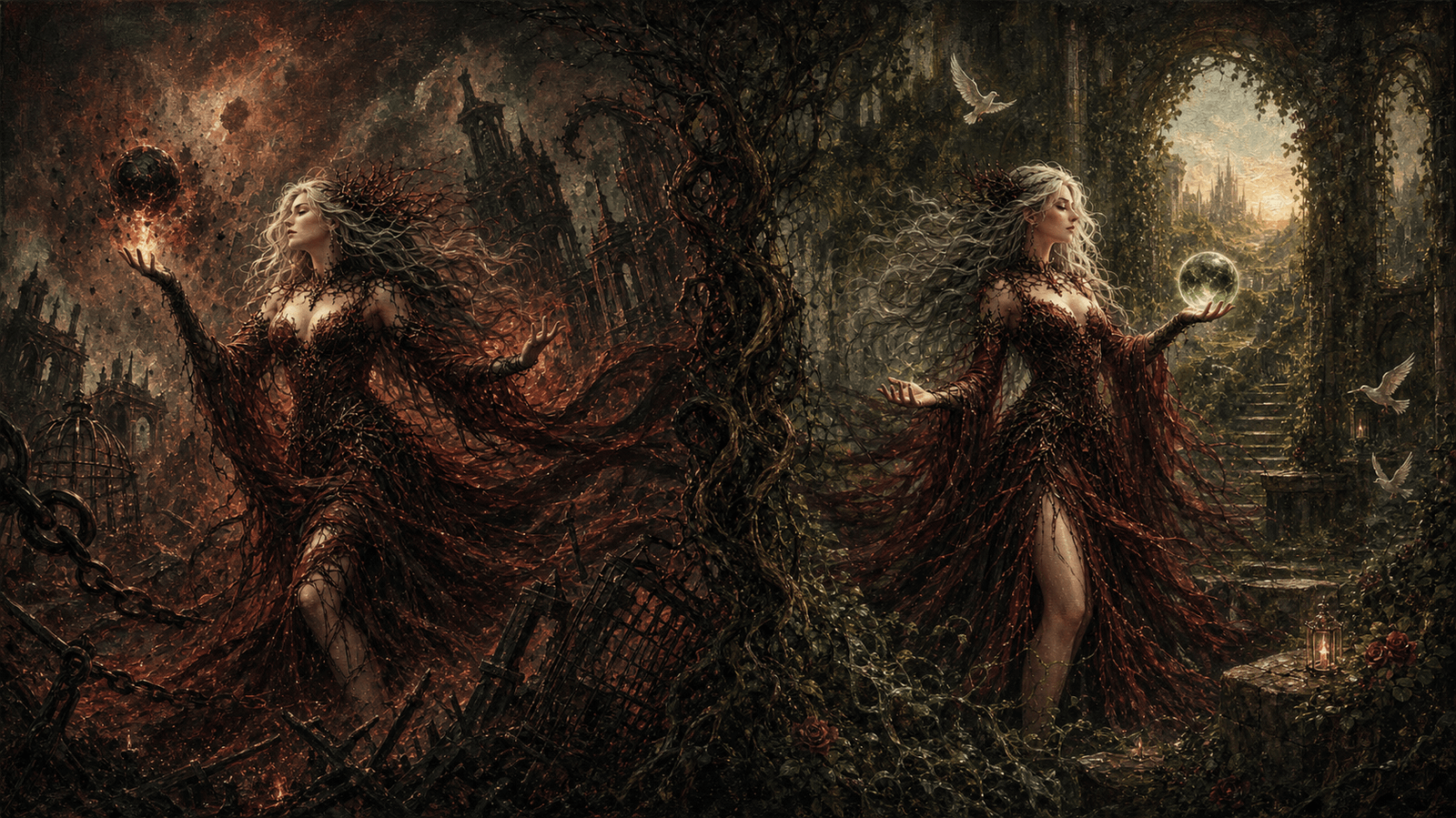
Immature Nether wants to feel powerful.
It uses intensity as identity, confrontation as proof of courage, destruction as evidence of change, and opposition as proof that it cannot be controlled. It may provoke conflict, reject guidance, test loyalty, and abandon stability before stability has the chance to reveal whether it is actually restrictive.
Its deepest fear is not always weakness.
It is powerlessness.
Immature Nether believes that if it is not controlling the transformation, someone else must be controlling it. It therefore treats compromise as defeat, patience as submission, and vulnerability as an opening through which another person may gain authority.
It wants ambition without discipline, independence without responsibility, renewal without grief, breakthrough without resistance, and rebellion without consequence.
It can destroy the cage.
It has not yet learned how to live without one.
Mature Nether
Mature Nether no longer needs destruction to prove that transformation has occurred.
It understands that power is not measured only by what it can defeat. Power is also the capacity to preserve what deserves continuity, tolerate what cannot be controlled, and direct intensity toward a consequence larger than emotional relief.
Mature Nether can confront without humiliating, leave without poisoning everything behind it, and pursue ambition without treating other people as materials.
It recognises when force is necessary.
It also recognises when force would merely repeat the logic of the thing being resisted.
Most importantly, mature Nether rebuilds.
It asks:
Am I ending what has become lifeless, or destroying what has become difficult?
Does this ambition expand my capacity, or require another person’s submission?
Am I independent, or still organised around proving that nobody controls me?
What must exist after the breakthrough for the breakthrough to matter?
Mature Nether does not merely survive transformation.
It becomes responsible for what transformation releases.
What Nether Needs
Nether needs challenge, but not permanent warfare.
It requires goals, obstacles, environments, and responsibilities capable of activating its strength. Without meaningful challenge, Nether may become restless, provocative, self-destructive, or attracted to unnecessary conflict simply to feel force moving again.
Nether also needs autonomy.
Constant control, micromanagement, emotional coercion, and systems that punish independent judgment create pressure quickly. It functions best when authority has purpose, expectations are clear, and personal agency remains real.
At the same time, Nether needs consequence.
Without resistance from reality, power can become grandiose. Healthy opposition reveals whether ambition has discipline, whether rebellion has direction, and whether instinct can survive examination.
Nether needs recovery.
Transformation consumes energy. A life built around constant crisis eventually loses the ability to renew. Rest, stability, nourishment, routine, and trusted connection prevent intensity from becoming permanent depletion.
It also needs containment.
Darkness gives Nether somewhere to hold pressure until action becomes intelligent. Earth gives it enough structure to rebuild. Light gives it a principle capable of directing power beyond personal victory.
Finally, Nether needs evidence that peace does not require surrender.
It must learn that a life without an enemy can still possess purpose.
Nether in Relationships
Nether expresses love through transformation and fierce investment.
It often sees hidden strength in another person and refuses to reduce them to their current limitation. It may challenge, defend, confront, and push because it believes love should activate power rather than merely provide comfort.
At its best, Nether makes people feel capable of surviving change.
It does not abandon them at the first sign of darkness, crisis, anger, failure, or difficult truth. It can remain present inside experiences that overwhelm more cautious forms of connection.
However, Nether can struggle when love requires acceptance without transformation.
It may treat every vulnerability as a problem to overcome, every hesitation as fear to defeat, and every stable phase as stagnation. Its desire to help another person become stronger may become pressure to become someone else.
Nether also experiences betrayal intensely.
Manipulation, control, humiliation, forced dependence, and deliberate suppression can permanently alter its willingness to remain connected. Once trust becomes associated with powerlessness, Nether may attempt to restore control through confrontation, withdrawal, retaliation, or emotional dominance.
In conflict, Nether moves toward the point of maximum truth.
It wants the hidden motive named, the power struggle exposed, and the real decision made. It dislikes indirect hostility, unresolved resentment, passive aggression, and compromises that merely delay the same confrontation.
Yet it must learn that not every disagreement requires a final battle.
The healthiest relationships for Nether allow intensity without coercion.
Both people must be free enough to stay, strong enough to disagree, and honest enough to recognise when transformation must occur without turning love into a permanent crucible.
Nether in Work and Creation
Nether is naturally drawn toward work that requires transformation, crisis response, competition, reform, pressure, autonomy, ambition, or the ability to produce movement where established methods have failed.
It may appear through entrepreneurship, leadership, emergency work, surgery, investigation, strategy, activism, negotiation, restructuring, athletics, law, psychology, political reform, security, engineering, recovery work, or any role where something must be confronted, broken through, or fundamentally rebuilt.
Nether-led creators often work through intensity.
They may dismantle conventional forms, confront taboo subjects, turn pain into material, or use creation as a process of personal and cultural transformation. Their work rarely wants to remain decorative.
It wants consequence.
As a leader, Nether creates momentum through pressure.
It can make difficult decisions, confront failing performance, challenge complacency, and lead people through transitions that require courage rather than consensus.
Healthy Nether leadership accepts responsibility for the consequences of change.
Unhealthy Nether leadership creates fear, glorifies exhaustion, treats disagreement as disloyalty, and repeatedly manufactures crisis so the leader can remain indispensable as the person capable of resolving it.
Nether works best when power has oversight, ambition has purpose, and transformation includes a credible plan for what follows the rupture.
Nether Under Stress
Nether initially responds to stress by increasing force.
It works harder, confronts more directly, narrows attention around the obstacle, and searches for the decisive action capable of restoring agency. This can create remarkable effectiveness when hesitation would allow greater damage.
But when the situation remains unresolved, Nether may become increasingly combative.
It interprets caution as obstruction, disagreement as challenge, and dependence as humiliation. Pressure becomes personal. Every problem begins appearing as a contest between will and resistance.
If the stress continues, Nether may turn its force against itself.
It destroys relationships, abandons stabilising structures, overworks, takes unnecessary risks, or creates irreversible consequences simply to escape the experience of being trapped.
Recovery begins by separating power from urgency.
Not every action must happen immediately.
Not every limit must be broken today.
Not every opponent deserves engagement.
Nether recovers by choosing one change it can complete without creating five new crises.
One boundary.
One ending.
One disciplined effort.
One structure built after the rupture.
Not suppressing the force.
Giving the force somewhere worthy to go.
The Growth Path of Nether
Nether must learn that power is not the same as control.
It must learn that transformation is not destruction, ambition is not domination, breakthrough is not suppression, independence is not reactive isolation, and rebellion is not automatic virtue.
A force capable of breaking limits must become equally capable of recognising which limits protect life.
Nether must also surrender the fantasy that nothing valuable should possess power over it.
Love creates vulnerability. Responsibility limits freedom. Commitment closes alternative paths. Community requires negotiation. None of these realities automatically constitutes submission.
The purpose of independence is not to become untouched.
It is to remain capable of choosing what one will answer to.
Nether reaches maturity when it stops asking, “How do I prove that nothing can control me?” and begins asking, “What power am I willing to serve because its purpose is greater than my resistance?”
That shift changes everything.
Destruction becomes transformation.
Domination becomes ambition.
Suppression becomes breakthrough.
Attachment becomes independence.
Decay becomes renewal.
Subversion becomes rebellion.
Nether stops defining freedom as the absence of restraint.
It becomes the disciplined force through which necessary change acquires consequence.
How Nether Differs from Similar Elements
Nether Is Not Fire
Fire creates movement through passion, courage, drive, and intensity.
Nether creates transformation through pressure, rupture, instinct, and irreversible change.
Fire acts because energy seeks expression.
Nether acts because the current form can no longer contain what is developing inside it.
Fire may begin the journey.
Nether crosses the threshold from which return is no longer possible.
Without Nether, Fire can burn intensely without changing the deeper structure.
Without Fire, Nether can recognise what must transform while lacking the immediate force required to begin.
Nether Is Not Water
Water adapts, connects, feels, and flows around resistance.
Nether confronts the point where adaptation has become stagnation.
Water heals through attunement, patience, empathy, and emotional movement. Nether heals by forcing suppressed material into transformation and ending the conditions through which the wound remains active.
Water may soften the barrier.
Nether breaks through it.
Without Nether, Water may remain emotionally connected to what it should have left.
Without Water, Nether may transform through force without processing the emotional reality that will shape what is rebuilt.
Nether Is Not Earth
Earth creates stability through discipline, endurance, structure, and practical consequence.
Nether creates change when structure has become restrictive, exhausted, or incapable of carrying further life.
Earth asks what should endure.
Nether asks what must end for endurance to remain meaningful.
Earth builds the institution.
Nether reforms or destroys it when preservation becomes more dangerous than disruption.
Without Nether, Earth may preserve systems long after their purpose has died.
Without Earth, Nether may dismantle the system without creating anything capable of surviving its absence.
Nether Is Not Darkness
Darkness contains, protects, reflects, and controls access.
Nether releases what containment can no longer hold.
Darkness creates the chamber in which pressure can develop safely. Nether recognises when the chamber has become a prison or when the developing force has reached the point of emergence.
Darkness protects the wound.
Nether transforms what created it.
Without Nether, Darkness may preserve what should have been allowed to die.
Without Darkness, Nether may expose and rupture what was not ready to survive transformation.
Balanced Nether
Balanced Nether transforms without destroying indiscriminately.
It pursues ambition without domination, breaks through without silencing, separates without remaining attached to opposition, renews without denying grief, and rebels without becoming dependent upon permanent conflict.
It knows when to apply force and when force would merely satisfy wounded pride.
It understands that power has both capacity and consequence. The ability to create change does not automatically grant the wisdom to decide what change should occur. Strength becomes trustworthy only when it can answer for what it releases.
Balanced Nether does not glorify collapse.
It uses collapse as material when collapse can no longer be prevented honestly.
Three Expressions of Nether Through the Zodiac
Nether does not express itself identically through every sign it influences.
In Aries, Nether is ignited by Fire and becomes rupture.
In Capricorn, Nether is disciplined through Earth and becomes ascent.
In Scorpio, Nether is carried through Water and becomes metamorphosis.
Each sign reveals a different relationship with transformation: Aries becomes the strike, Capricorn becomes the forge, and Scorpio becomes the crucible.
Together, they reveal three essential movements of Nether: transformation initiated, transformation disciplined, and transformation internalised.
Aries: Fire Ignites Nether
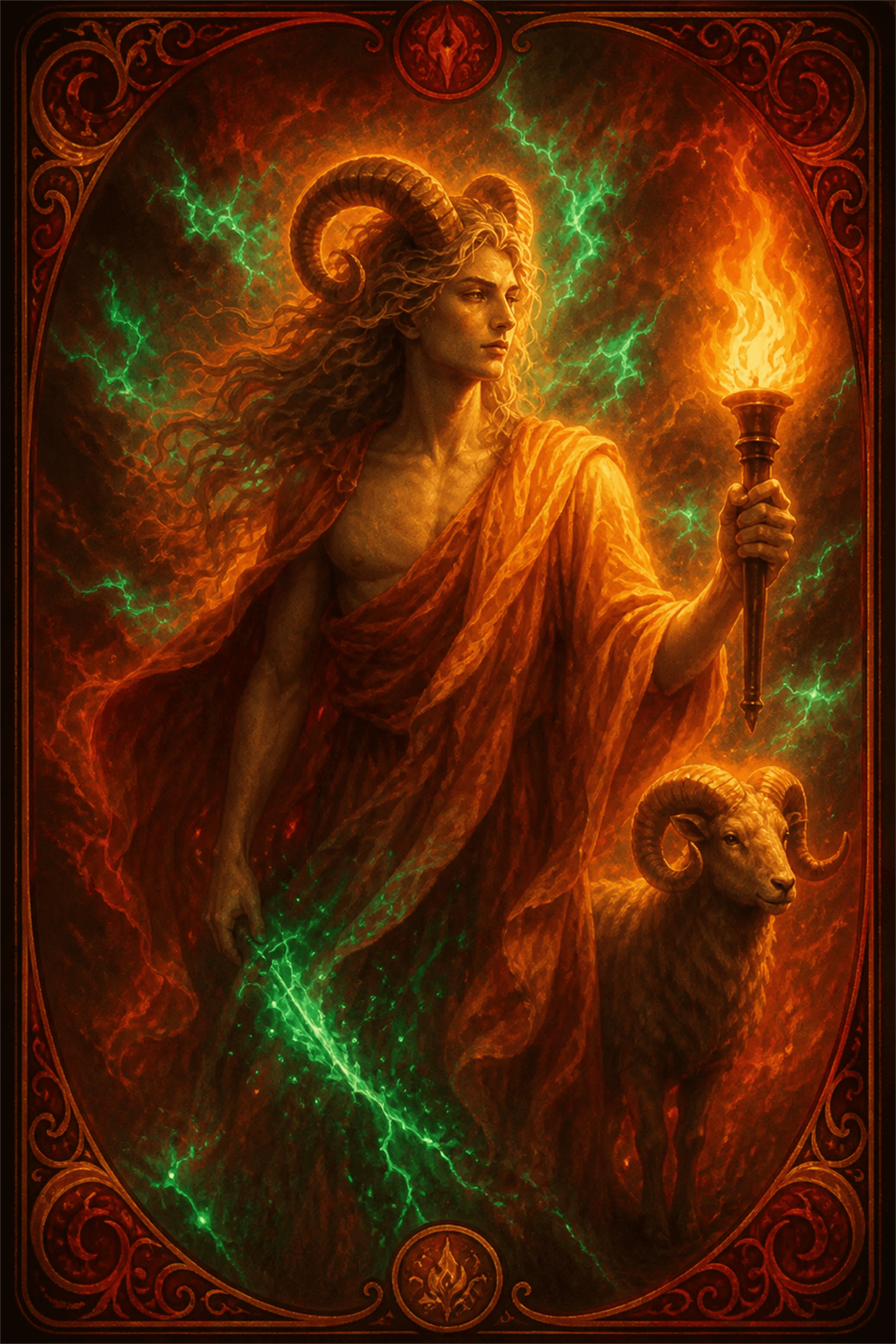
In Aries, Nether becomes rupture.
Aries carries Nether through Fire—the force of courage, movement, intensity, passion, and immediate action. What Nether experiences as pressure, Aries converts into direct confrontation.
Aries does not wait for transformation to become comfortable.
It strikes the point of resistance.
Its Nether is ignited by the instinct to act before fear, negotiation, expectation, or social hesitation can restore the old limitation. The barrier becomes visible and energy moves toward it with enough force to create an opening.
This is why Aries’s Nether feels immediate rather than subterranean.
It does not remain inside transformation for long before expressing it outwardly. Anger becomes movement. Desire becomes pursuit. Oppression becomes refusal. Stagnation becomes provocation.
Through Aries, Nether becomes the strike.
A concentrated moment in which accumulated pressure crosses into irreversible action.
At its best, Aries breaks paralysis. It creates the first refusal, the first confrontation, the first decisive movement through which others recognise that the existing condition is not invincible.
At its worst, rupture becomes indiscriminate destruction. Every obstacle feels like an insult, patience feels like cowardice, and force is applied before Aries understands whether the barrier should be broken, bypassed, or respected.
Mature Aries does not strike merely because resistance exists.
It strikes where action can create freedom rather than another cycle of conflict.
Aries carries Nether into immediate action.
Its question is:
What must be confronted now so that paralysis can end?

Capricorn: Earth Disciplines Nether
In Capricorn, Nether becomes ascent.
Capricorn carries Nether through Earth—the force of discipline, endurance, structure, responsibility, and practical consequence. What Nether experiences as ambition and pressure, Capricorn organises into mastery.
Capricorn does not merely want to escape limitation.
It wants to become powerful enough that the limitation can no longer define what is possible.
Its Nether works gradually beneath visible restraint. Desire is compressed into discipline. Frustration becomes strategy. Failure becomes information. Every obstacle is measured, studied, and incorporated into a longer process of gaining authority over the conditions that once created powerlessness.
This is why Capricorn’s Nether feels controlled rather than explosive.
It transforms through accumulation.
Through Capricorn, Nether becomes the forge.
Pressure, heat, repetition, and resistance refine raw force into something capable of carrying responsibility.
At its best, Capricorn turns ambition into structural transformation. It can rebuild institutions, master difficult systems, survive prolonged pressure, and create a position from which change becomes durable rather than symbolic.
At its worst, ascent becomes domination. Achievement becomes proof of human worth, authority becomes immunity from accountability, and suppressed vulnerability is displaced onto those with less power.
Mature Capricorn does not climb merely to escape being beneath others.
It gains power so that the structures governing life can become more capable, responsible, and enduring.
Capricorn disciplines Nether into enduring power.
Its question is:
What must be mastered so transformation becomes structurally irreversible?

Scorpio: Water Carries Nether
In Scorpio, Nether becomes metamorphosis.
Scorpio carries Nether through Water—the force of depth, emotion, attachment, sensitivity, memory, and psychological connection. What Nether experiences as transformative pressure, Scorpio carries into the hidden emotional structures through which identity, intimacy, fear, and power are organised.
Scorpio does not merely break the outer barrier.
It descends into what created the barrier.
Its Nether moves through grief, desire, betrayal, shame, intimacy, obsession, mortality, and every experience that forces the self to confront what it cannot control through surface identity alone.
This is why Scorpio’s Nether feels internal rather than immediate.
It transforms through immersion.
Through Scorpio, Nether becomes the crucible.
The old identity enters, pressure intensifies, hidden material rises, and what leaves cannot possess exactly the same form as what entered.
At its best, Scorpio turns emotional crisis into profound self-knowledge and regeneration. It can remain present inside experiences others avoid, expose hidden power dynamics, and help transform what has become poisonous through secrecy or denial.
At its worst, metamorphosis becomes fixation. Pain becomes identity, intimacy becomes control, attachment becomes obsession, and the person keeps reopening the wound because suffering has become the most reliable source of intensity.
Mature Scorpio does not descend merely to prove that darkness exists.
It returns with power that no longer depends upon remaining wounded.
Scorpio carries Nether into emotional and psychological depth.
Its question is:
What must die within the old identity so that another self can emerge?
Symbols of Nether
Nether is symbolically connected with magma, volcanoes, furnaces, crucibles, forges, broken chains, scars, blades, serpents shedding skin, phoenixes, chrysalises, bones, roots breaking stone, underworld passages, compost, storms at the point of rupture, collapsing towers, red iron, blackened earth, and every image through which destruction becomes inseparable from another form of life.
Its symbols are not merely violent.
They transform.
A forge does not burn metal because destruction is the goal. Heat makes another strength possible.
A serpent does not mourn the skin it can no longer inhabit. Growth has made the old protection too restrictive.
Compost does not preserve the original form of what entered it.
Decay becomes nourishment through transformation.
Common Misunderstandings About Nether
Nether is not evil.
Transformation can become destructive, but preservation can also become cruel when it protects what should have ended.
Nether is not anger.
Anger may activate it, but Nether is the power that decides what anger must become.
Nether is not destruction.
Destruction removes a form. Transformation transfers life into another one.
Nether is not domination.
Power over oneself and one’s circumstances does not require the submission of others.
Nether is not constant crisis.
A dependence on crisis usually reveals that transformative force has not learned how to operate through discipline.
Nether is not rebellion against everything.
Resistance without direction remains controlled by whatever it opposes.
Nether is not Darkness.
Darkness contains what needs protection. Nether releases what containment can no longer hold.
Nether is the capacity to convert pressure, instinct, endings, and conflict into irreversible change.
Nothing more.
Nothing less.
The Legacy of Nether
Nether is not remembered merely for what it destroyed.
History contains endless destruction that created nothing worthy of the loss.
Its true legacy begins when rupture becomes transformation—when a person leaves the identity that required their silence, when an institution loses the power to preserve exploitation, when pain becomes a source of agency rather than permanent definition, or when an ending creates the conditions through which another form of life becomes possible.
Nether leaves behind the chain that could no longer hold.
The boundary that finally became action.
The failure that exposed a stronger method.
The system that was confronted because adaptation had become complicity.
The person who survived collapse and refused to rebuild the same prison.
Immature Nether wants to prove that it cannot be controlled.
Mature Nether wants power to become responsible enough that necessary change no longer depends upon uncontrolled destruction.
That is the final evolution of instinct.
The need to break gives way to the ability to transform. Anger becomes boundary. Ambition becomes mastery. Rebellion becomes direction. Independence stops requiring an enemy, and renewal becomes strong enough to honour what ended without rebuilding it.
Nether has completed its work when the new form no longer exists merely as evidence that the old form was defeated.
It has become alive enough to justify the transformation that created it.