
8 Hard Truths I Learned on My Healing Journey
So you don’t have to. But of course, you will.
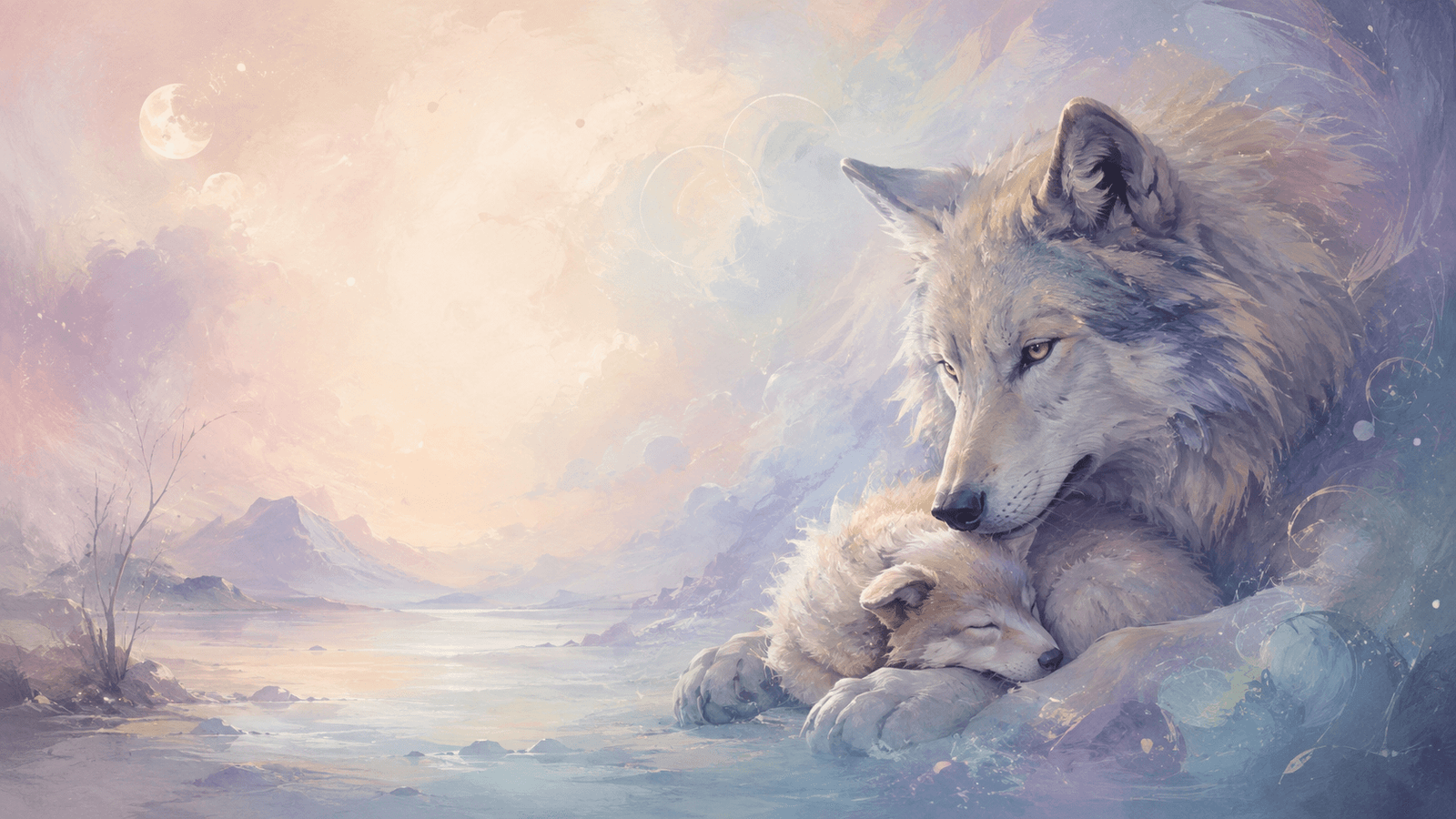
When I am not crafting strange psychological and astrological mash-ups, connecting dots nobody asked me to connect, or staring at some ancient symbol wondering why it suspiciously resembles modern psychology, I am usually dealing with my own wounded-puppy patterns and trying to become something closer to a wise wolf.
I have been dealing with the healing process for decades now. Not the Instagram version with candles, affirmations, and a suspiciously expensive cup of herbal tea, but the ugly version. The one involving old wounds, uncomfortable realizations, relationships changing shape, mistakes repeating themselves until you finally understand what they were trying to teach you.
So here are eight hard truths I learned along the way. Maybe writing them helps me process another few percent of my own journey. Maybe reading them helps you with yours.
Either way, therapy is expensive and words are still relatively cheap.
1. Healing Is Never the Destination. It Is the Journey Itself.
When I began healing, I treated it like a corporate deadline.
By year X, I will be healthier. Calmer. More successful. More patient. More understanding. Less angry. Less affected by the past. Basically some magically upgraded version of myself with excellent boundaries and probably better posture. Yet the deadline kept moving.
Every time I thought I had finally figured myself out, life introduced another situation that exposed something underneath. Another trigger. Another blind spot. Another layer of the onion I apparently had subscribed to without reading the terms and conditions.
Eventually I understood the obvious thing I had somehow missed: healing is not something you complete.
It is maintenance. Awareness. Correction. Integration. Learning how to recognize your own patterns before they start driving the car again.
That may sound terrifying at first. A lifetime of healing? Great. Exactly what everyone wanted. But I no longer see it that way.
Maybe the final stage of healing is realizing there was never some flawless version of you waiting at the finish line. There was only a human being learning how to carry their history without allowing that history to control everything that comes next.
And maybe one day we realize we were never meant to become spotless.
Only conscious. More self-aware. Maybe more sarcastic. Or maybe just not taking everything that happens to us so seriously and literally anymore.
2. Some Parts of My Darkness Are What Make Me Who I Am.
Most people begin healing by declaring war on their darkness.
Inner demons must be defeated. Anger removed. Trauma erased. Bad patterns peeled away like rotten mandarin skin until only the enlightened version remains underneath.
I tried that and it did not work particularly well. It actually backfired more times than I could count.
Don’t get me wrong, some things absolutely need to change. Destructive patterns and no-longer-serving delusions deserve to be challenged. Pain does not become sacred merely because it belongs to us. But eventually I discovered that parts of what I had labelled as my darkness were also carrying my strength.
Anger sometimes contained a violated boundary. Distrust had once been my naivety. Hyper-awareness had developed because ignoring danger was not always an option. Even stubbornness, properly disciplined, could become endurance.
The problem was never simply that these forces existed. The problem was allowing them to operate unconsciously.
It may sound ridiculous, but Naruto actually gives one of the cleanest metaphors for this. The answer was never destroying the demon. It was meeting it, understanding it, accepting that its power existed, and learning to use that power without becoming consumed by it.
That distinction changed something for me. My healing stopped being an exorcism. It became integration.
Your darkness may contain aggression, grief, fear, ambition, resentment, sexuality, hunger, pride, or instincts you were taught to suppress. Some of those forces can destroy you when inverted. The same forces can protect, create, transform, and strengthen when consciously directed.
You do not become whole by amputating half of yourself. You become whole when the parts that once controlled you finally answer to your will.
3. Healing Will Not Automatically Make You Connect With People Better.
This one surprised me because I always believed understanding people would naturally make relationships easier.
The more I learned about trauma, conditioning, attachment, family systems, projection, insecurity, and human behaviour, the easier it became to understand why people act the way they do. I know better than most that people can become versions of themselves they later barely recognize. I would probably have hated teenage me if I met him today.
My understanding made judgment harder. Ironically, it also made tolerance more selective. Because empathy without boundaries is not wisdom. It is self-abandonment wearing a very compassionate hat.
Some people do not want to be understood; sometimes they might even interpret your understanding as a personal attack on their character. What they want instead is permission to be flawed and toxic without anyone raising their eyebrow about it. They want you to understand their wounds deeply enough that they never have to become responsible for what those wounds do to other people. And that is where mature empathy becomes uncomfortable.
You can understand why someone behaves badly without volunteering to become the surface they practise that behaviour on. You can recognize somebody’s pain and still refuse their disrespect. You can forgive somebody internally and still decide they no longer belong close to you. Being empathetic shouldn’t automatically mean becoming an enabler for someone.
For many wounded people, empathy often begins as giving everyone what we once desperately needed ourselves: patience, endless chances, explanations, understanding, support and validation. Eventually it evolves past that.
You have to learn that there is a huge difference between watering a fruit tree and watering a plastic flower. Both become wet, but only one is capable of growing. Water is a limited resource, and eventually you have to stop wasting it on the hope that one day the plastic flower will somehow give you nectar.
4. There Will Always Be Triggers.
Have you ever caught yourself thinking that your wound was finally healed, only for something absurdly small to rip it open again?
One sentence. One facial expression. Somebody dismissing something important to you. A familiar tone of voice. And suddenly you are emotionally transported five, ten, twenty years backward and wondering how the hell you got there.
It can feel humiliating. You thought the chains were gone. Then you started running and discovered there was still an invisible leash attached somewhere behind you.
I used to interpret these moments as failure. If I was still triggered, clearly I had not healed enough. Now I view my triggers under a different light: a trigger does not necessarily mean the wound is still bleeding. Sometimes it means the nervous system remembers where the wound used to be.
The goal is not becoming completely untouchable. I am increasingly suspicious of anyone claiming to have reached that state anyway. Either they achieved enlightenment or they became emotionally unavailable and gave it better branding.
When it comes to triggers, the real goal should be reducing the distance between reaction and awareness. Maybe anger arrives. Maybe resentment arrives. Maybe fear arrives. But eventually you need to recognize the visitor before handing it the house keys. That is the true progress. Not never being triggered again, but returning to yourself faster when you are.
5. Wounds Close. Scars Remember.
No wound bleeds forever. Some take weeks. Others take years. Some require rebuilding parts of your life you assumed would always exist. Eventually the bleeding stops. But sadness might linger just a little longer. Enough to make even the sunniest days feel mellow and blue.
There will always be friendships that could have bloomed differently. Iron brotherhoods eroded by accumulated contempt. Relationships that died because nobody knew how to communicate before resentment became structural. Messages you could have answered differently. Moments where another version of you might have chosen another path.
Healing does not erase those timelines. You may occasionally visit them, and there is nothing shameful about that. A scar does not mean the wound is still open. It means something happened there.
I think we sometimes confuse healing with emotional amnesia. We believe being healed means looking backward and feeling absolutely nothing.
I realized I do not want that. Some things deserve sadness. Some people mattered. Some losses should leave fingerprints.
The point is that grief no longer gets to become the architect of everything that follows. You carry the scar while the scar stops carrying you.
6. Nobody Is Required to Validate Your Growth.
This lesson took me far too long to carve into my mind: healing is almost always invisible.
Nobody watches the nights you sit alone reconsidering your entire worldview. Nobody sees the times you catch yourself repeating an old pattern and consciously choose differently. Nobody gives you an achievement badge because you handled a situation calmly that five years ago would have turned into World War III.
Then you reconnect with somebody from your past and discover they are still speaking to a version of you that no longer exists. Old friends. Former colleagues. Family members. Sometimes even people who contributed to the wounds you later had to heal. They remember the mask. Or even worse: sometimes they need your old mask.
Because relationships quietly develop roles. The successful one. The irresponsible one. The strong one. The failure. The rescuer. The unstable one. The funny one. The difficult one. When one person changes, everybody else’s position shifts slightly too. That can create discord within an established relational system.
People who watched you crawling up the mountain from the comfort of their balconies may become strangely confused when they eventually look upward and discover you built something in the clouds.
Some will question the construction materials. Some will point out that one tower looks crooked. Very few will ask how many times you nearly fell. And that’s completely fine because your growth was never a democratic election and you do not require unanimous approval.
And when somebody desperately tries gluing your old mask back onto your face, you do not necessarily need to treat it as an attack either. Sometimes it is simply evidence that the old version of you made their world easier to understand, and you have simply outgrown that role beyond the point of return.
7. Some Bonds Will Not Survive Your Healing.
This was probably the most painful realization: some relationships are built around love while others are built around familiarity, proximity, mutual wounds, shared circumstances, dependency, or unconscious comparison.
From inside the relationship, they can look identical. Until something changes.
Sometimes people who were comfortable witnessing your misfortune become strangely analytical about your success. Your pain required little investigation, but your progress suddenly deserves a forensic audit.
I experienced this after reconnecting with someone who had been one of my closest friends for almost thirty years.
After everything life had put me through, one of his first reactions to seeing where I was now was: “Since when do you live this good?”
The sentence itself was small. What followed made it heavier.
There was little curiosity about how I got there, but plenty of attention toward finding weaknesses in what he saw. And eventually, old details I had previously chosen to ignore began falling into place, revealing the true nature of our relationship: he was my best friend, but I had never really been his.
That does not automatically make someone evil. Humans compare themselves constantly, often without realizing it. But sometimes a relationship feels safe precisely because both people occupy familiar positions. When one person begins moving, the balance changes.
You once imagined you could go to war beside certain people, completely confident they would cover your back. Then life provides the battlefield. Sometimes nobody arrives. Sometimes you discover a few bullets had suspicious trajectories. And occasionally you realize someone you considered an enemy showed you more honesty than somebody you called a brother. That inversion hurts, but it is also clarifying.
Before discovering who your true friends are, you usually have to discover who they are not.
And strangely, once the illusion dies, you become less lonely rather than more. You stop smelling something rotten beneath the rug while everyone around you smiles and insists the room smells like daisies.
Reality may contain fewer people. But at least they are real.
8. Healing Changes Who You Recognize as Love — and Who Recognizes You.
Losing false bonds creates space for something unexpected: understanding often arrives from people you never imagined would understand you.
Sometimes someone you barely knew listens more carefully than someone who knew you for decades. A stranger respects a boundary your family repeatedly mocked. A newer friend celebrates something an older friend quietly resented.
That can feel bittersweet, but perhaps the painful part is not losing the relationship. It is discovering that the relationship you believed existed had disappeared a long time before you noticed it — or perhaps it never existed in the form you imagined. Either way, healing kills illusions and, strangely, that is one of its greatest gifts. Because once illusions begin dying, love becomes easier to recognize.
Real love does not require you to remain wounded so another person can feel strong. It does not ask you to become smaller so somebody else feels taller. It does not require endless tolerance, silent resentment, obedience, guilt, shame, or self-erasure.
Love can challenge you. Love can disagree. Love can become angry. Love can establish boundaries. But love ultimately wants life to grow. That realization also changes how you react when people misunderstand you.
If you value truth, someone may call you dishonest when your truth threatens their version of events. If you begin setting boundaries, someone who benefited from having none may call you controlling. If you stop sacrificing yourself, somebody accustomed to your sacrifice may call you selfish. If you expose behaviour that everyone quietly tolerated, suddenly you become “difficult.” People feel remarkably confident about reading other people’s minds and hidden intentions, yet somehow they never enter poker tournaments. I wonder why.
Eventually you notice how often people project their own internal stories into you and then respond to the character they created. You cannot spend your life correcting every fictional version of yourself living inside somebody else’s head.
That energy is expensive. And once you stop paying that bill, something interesting happens: the energy returns. You pour it into creativity. Relationships that reciprocate. Your health. Your family. Your work. Your curiosity. Your future. You stop building court cases inside your imagination against people who are not listening anyway. You start building things. And perhaps that is the strangest truth I learned about healing.
Love is still the most powerful force involved in the healing process — but mature love looks very different from wounded love.
Wounded love says: I understand you, so I will tolerate everything.
Mature love says: I understand you, which is exactly why I know what I can and cannot continue participating in.
Wounded love pours wine into an empty bucket and calls the sacrifice beautiful. Mature love learns what can actually receive what it gives.
Healing did not make me stop caring about people. It taught me to stop abandoning myself while doing it. And maybe becoming the wise wolf was never about killing the wounded puppy. Maybe it was simply learning how to protect him better.